
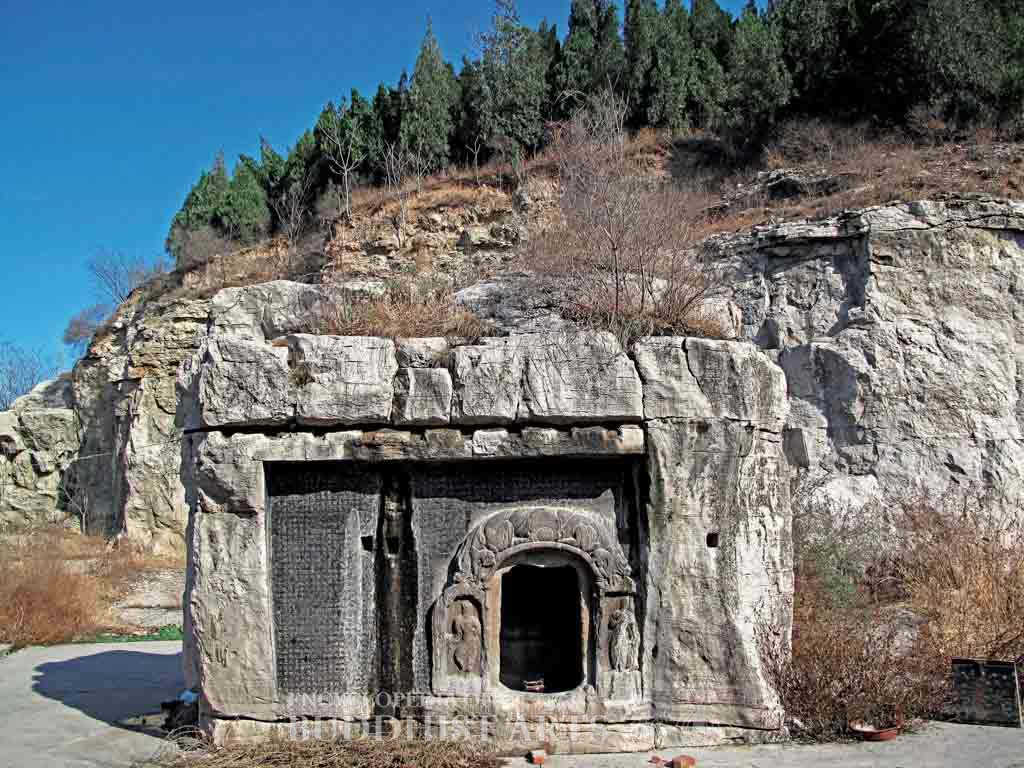
Xiaonanhai Caves: Central Cave
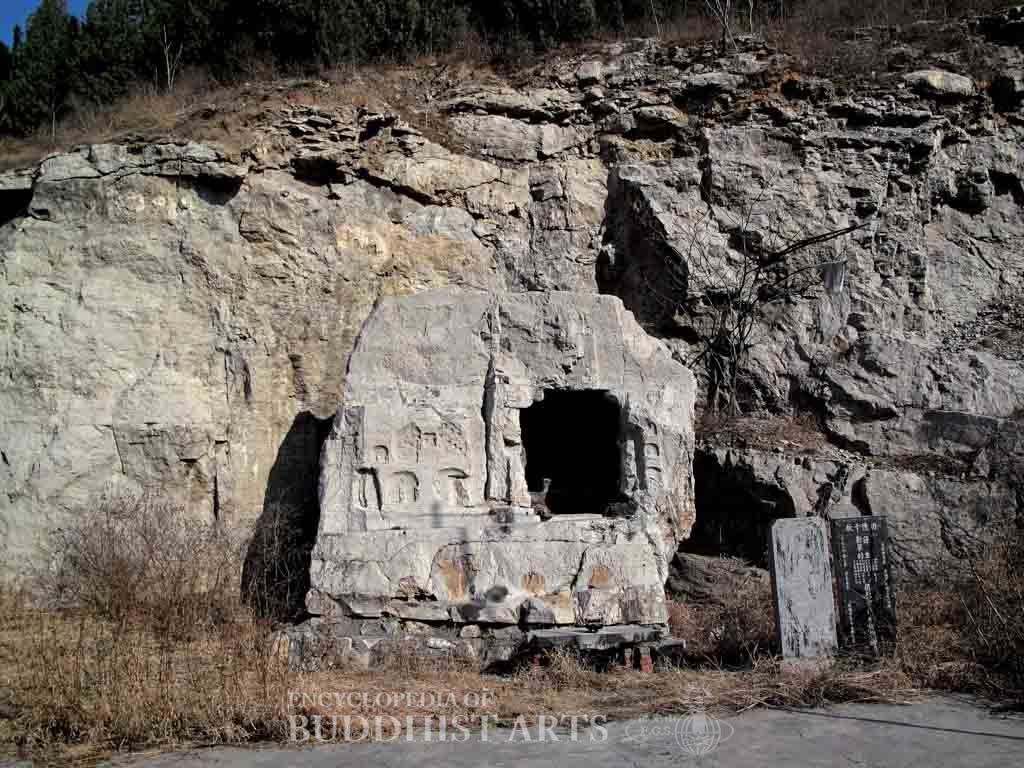
Xiaonanhai Caves: East Cave
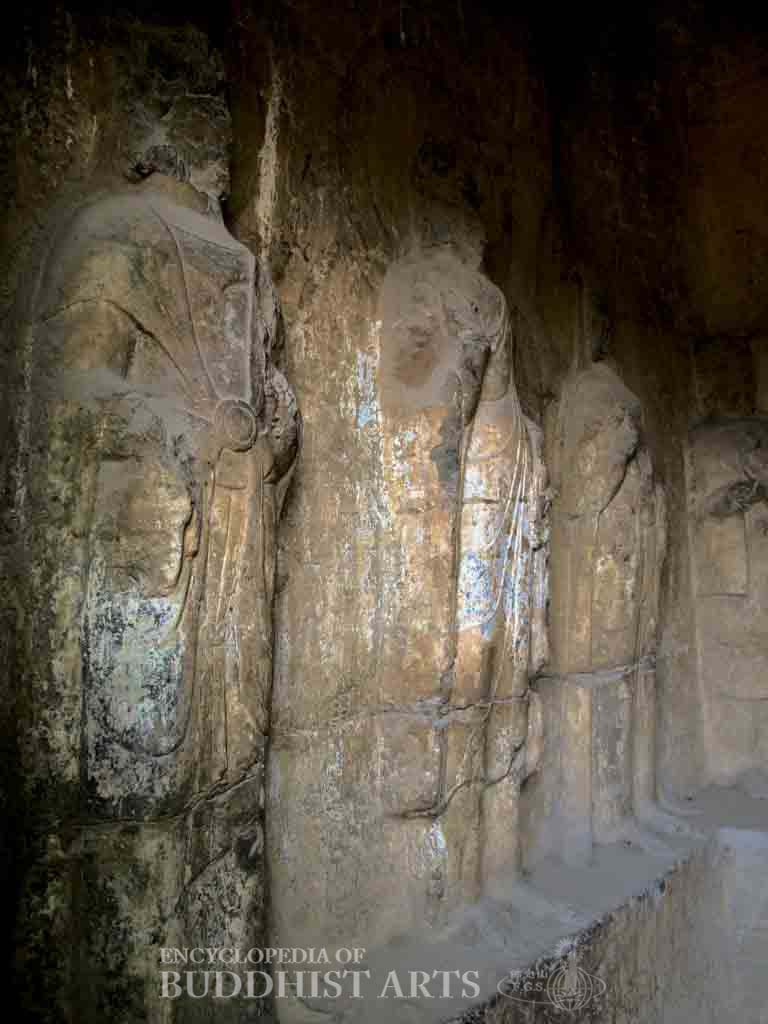
Xiaonanhai Caves: West Cave - Back Wall
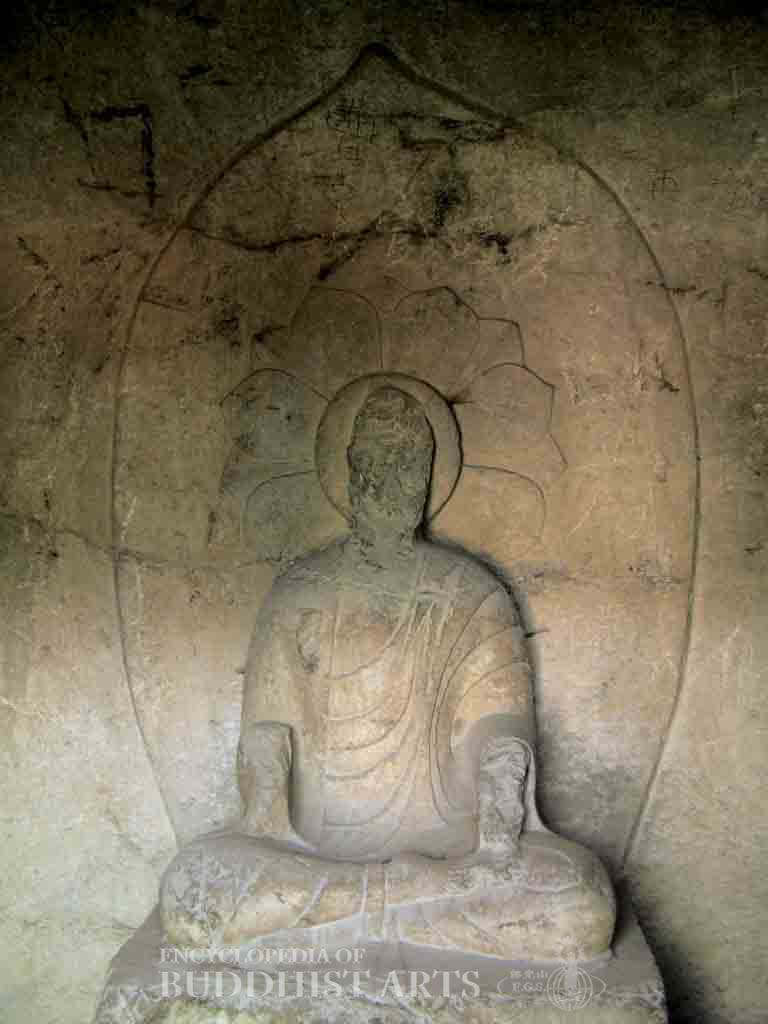
Xiaonanhai Caves: West Cave - Seated Buddha (south wall)
Xiaonanhai Caves
CHINA, Henan, Anyang
Located in the southern foothills of Guigaishan (Turtle Shell Moutain), Xiaonanhai (Little South Sea) Caves were excavated in the Northern Qi dynasty (550–577). The cave system includes three similarly structured small caves. Each cave has a truncated pyramidal ceiling and platforms along the back and side walls. The platforms along the back wall support a Buddha and two disciples, while a Buddha and two Bodhisattvas sit on the other two platforms. The Central Cave and East cave also contain a large number of bas-reliefs, with the richest content and most exquisite carvings found in the Central Cave. The Xiaonanhai Caves were listed as a National Cultural Heritage Site in 2001.
The Central Cave faces south and the entrance is flanked by Heavenly Kings. Underneath the Buddha on the platform on the west side of the cave there is an image of Natural Master Sengchou who was responsible for renovating the cave in 555. He is depicted making offerings. The east wall has relief carvings of Maitreya Bodhisattva teaching the Dharma and Sakyamuni Buddha’s First Turning of the Dharma Wheel. The west wall is illustrated with the Sixteen Contemplations from the Amitayurdhyana Sutra.
The East Cave faces south and measures 1.3 m in width, 1.69 m in height, and 1.29 m in depth. The content of the bas-reliefs inside the East Cave is similar to that in the Central Cave. The back (north) wall has monks and figures making offerings, and the east wall has relief carvings of Maitreya Bodhisattva and Sakyamuni Buddha, as well as an illustration of the Sutra on the Descent of Maitreya. The west wall is also engraved with the Sixteen Contemplations. The West Cave, facing west, measures 1.36 m wide, 1.76 m high, and 1.76 m deep. Outside on the cliff face to the south of the cave entrance there are relief carvings of 40 figures making offerings.
For more details, go to the Encyclopedia of Buddhist Arts: Caves T-Z, page 1519.
Cite this article:
author = Hsingyun and Youheng and Johnson, Peter and Mankuang and Huntington, Susan and Edson, Gary and Neather, Robert,
booktitle = {Encyclopedia of Buddhist Arts: Caves T-Z},
pages = 1519,
title = {{Xiaonanhai Caves}},
volume = 9,
year = {2016}}