
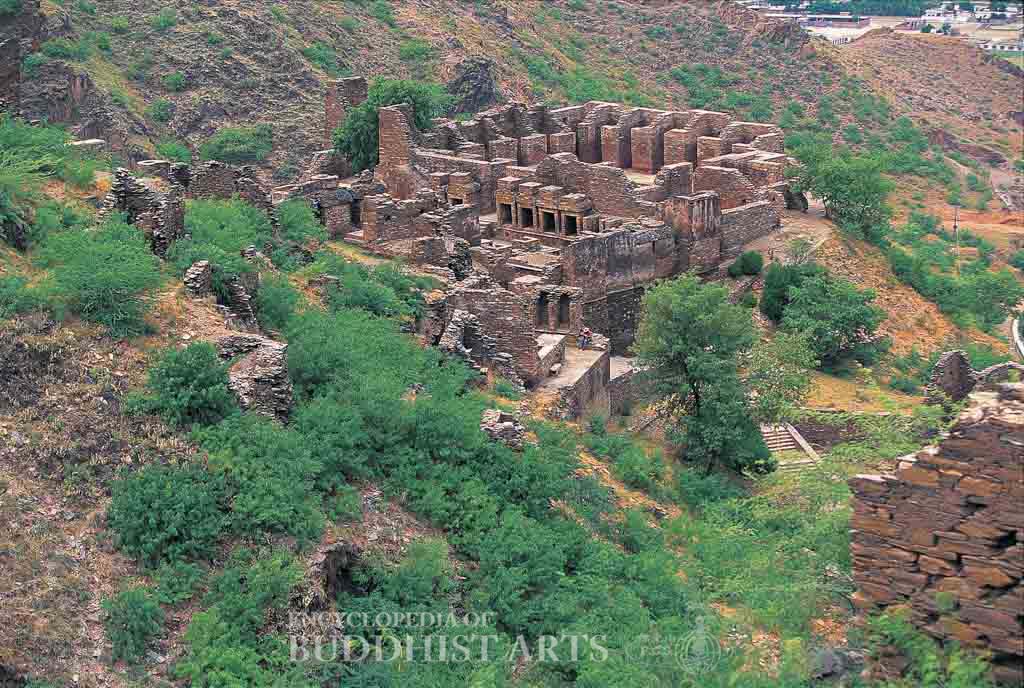
Takht-i-Bahi
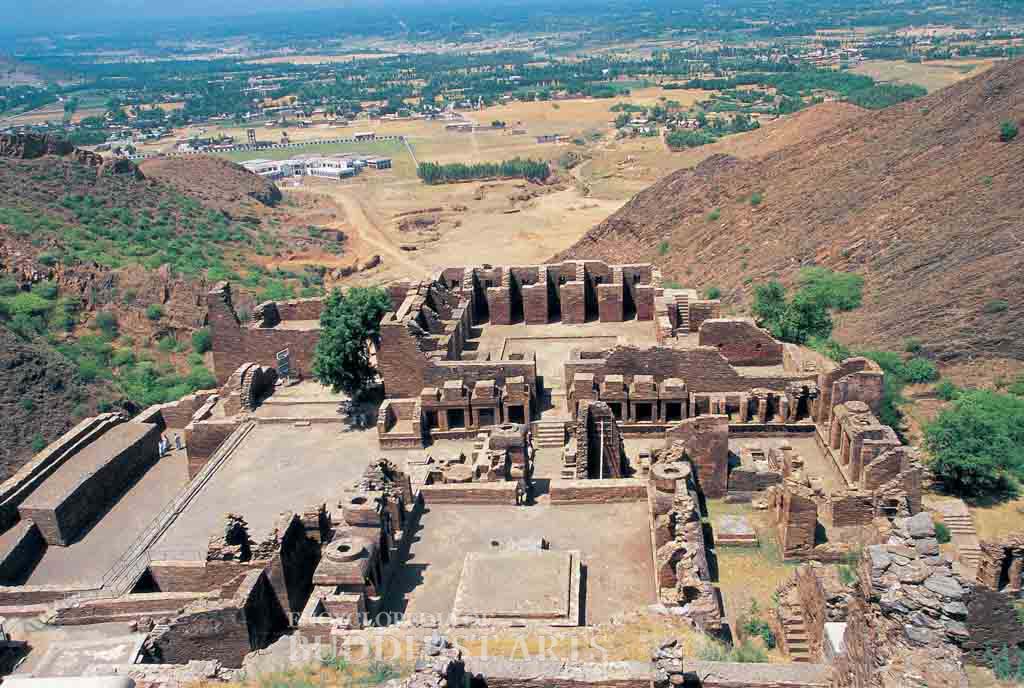
Takht-i-Bahi
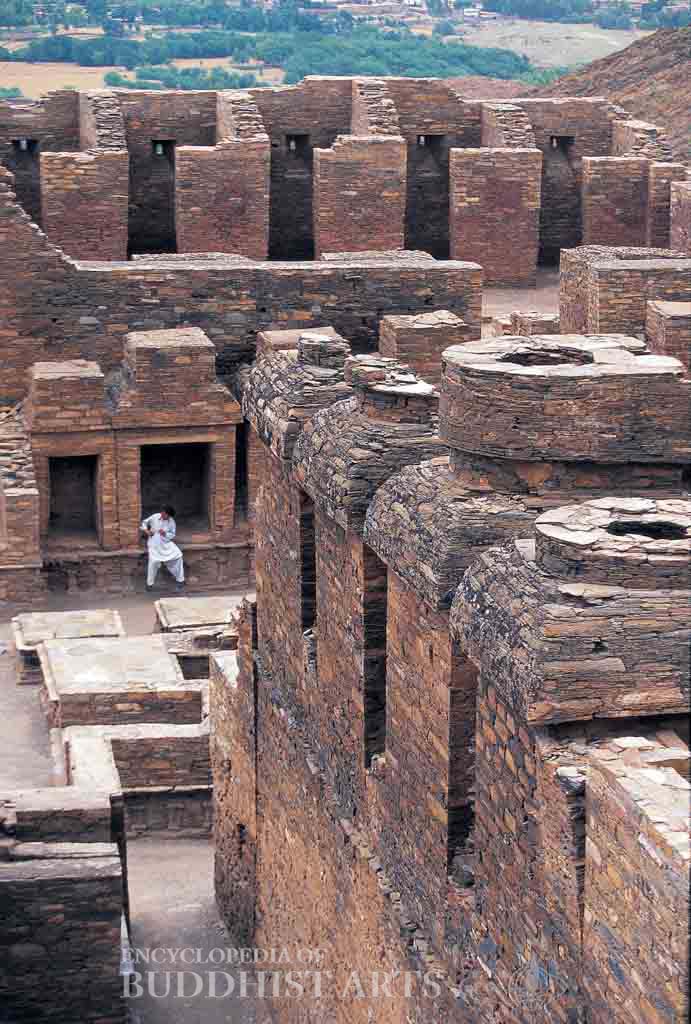
Takht-i-Bahi
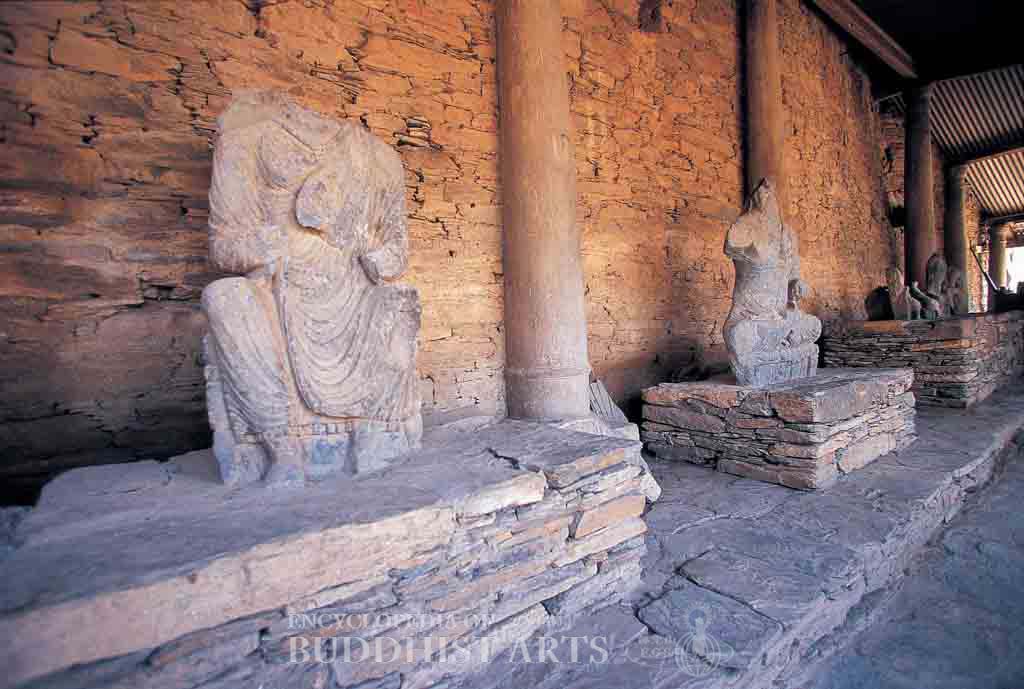
Takht-i-Bahi: Buddha Statues
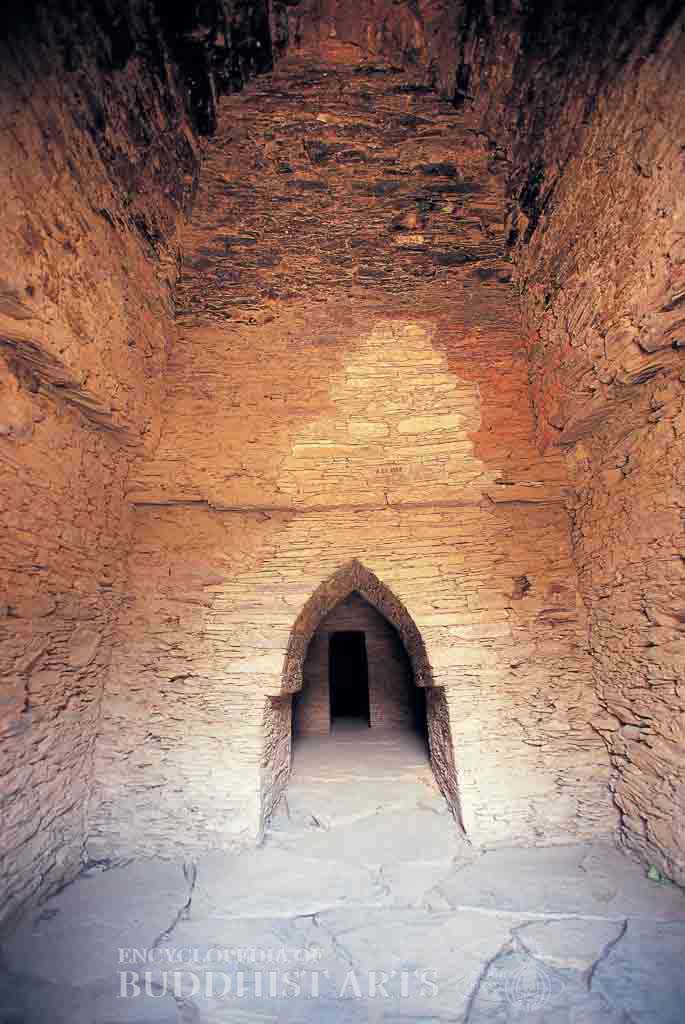
Takht-i-Bahi: Meditation Cell
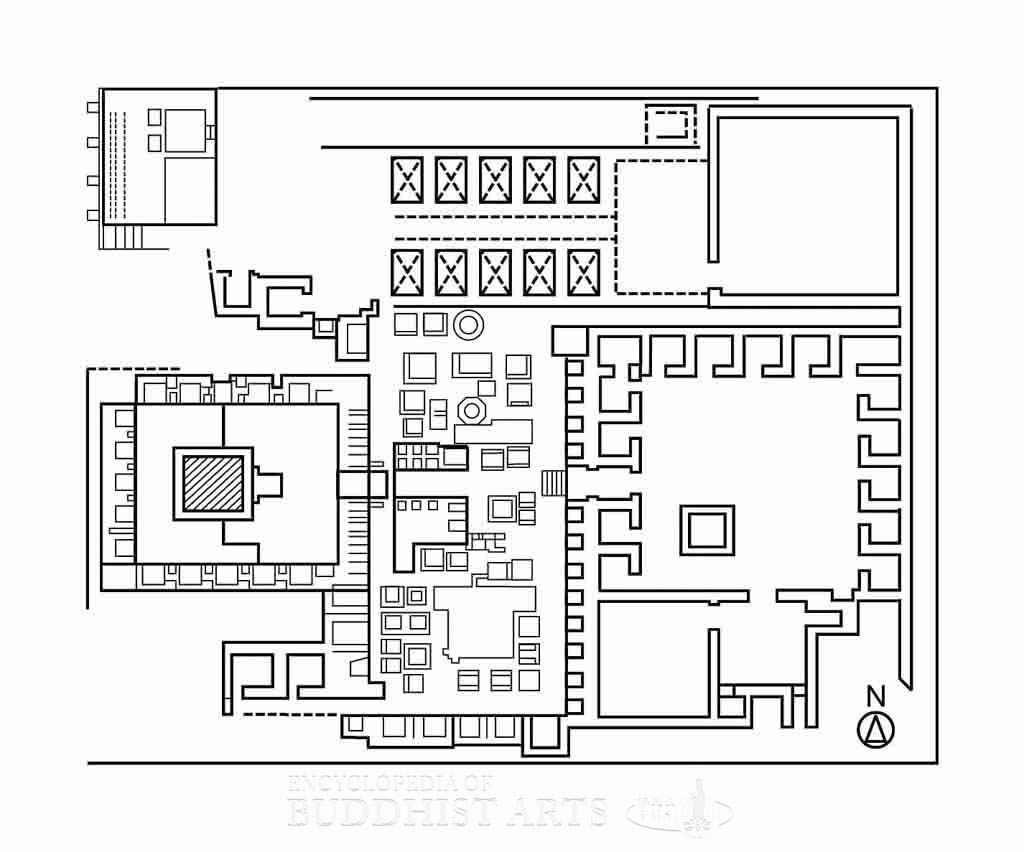
Takht-i-Bahi (site layout)
Takht-i-Bahi
PAKISTAN, Khyber Pakhtunkhwa, Peshawar
In the local language takht means throne, while bahi means spring, which describes its location on a hill adjacent to a stream. The site is located 16 km northwest of Mardan. It was founded during the Indo-Parthian Kingdom in the 1st century. It was expanded during the Kushan period (circa 1st–3rd century) and subsequently, reaching its fullest extent in the 7th century. The site was discovered in 1836 and archaeological excavations began in the 20th century. Since then it has been well-maintained and is the largest existing Buddhist monastery site in the country. It was listed as a UNESCO World Heritage Site in 1980.
The layout of the site is rectangular with all its buildings constructed in stone. The existing structures include stupas, shrine halls, an assembly hall, meditation cells, and monastic quarters. Located on the south side of the site, the main stupa is lined on three sides with small shrines; however, only the stupa base and the shrines remain. A group of stupas in the east is also surrounded by small shrines. Each shrine probably housed a Buddha or Bodhisattva statue. The monastic quarters are located in the north and northeast. They are thought to have been two-story buildings surrounding a courtyard, with a kitchen and dining hall attached. The assembly hall is located in the northwest. In the southwest there are three more ruins of stupas and a great wall.
For more details, go to the Encyclopedia of Buddhist Arts: Architecture T-Z, page 1086.
Cite this article:
author = Hsingyun and Youheng and Johnson, Peter and Mankuang and Lancaster, Lewis,
booktitle = {Encyclopedia of Buddhist Arts: Architecture T-Z},
pages = 1086,
title = {{Takht-i-Bahi}},
volume = 4,
year = {2016}}