
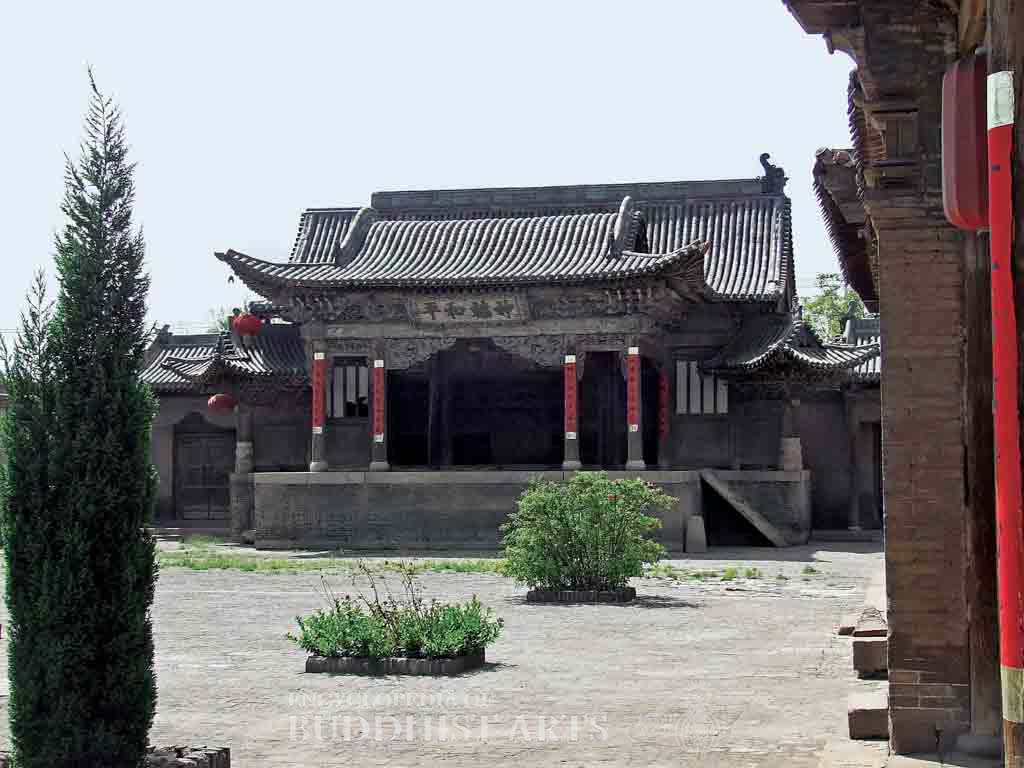
Jingxin Temple: Performing Stage
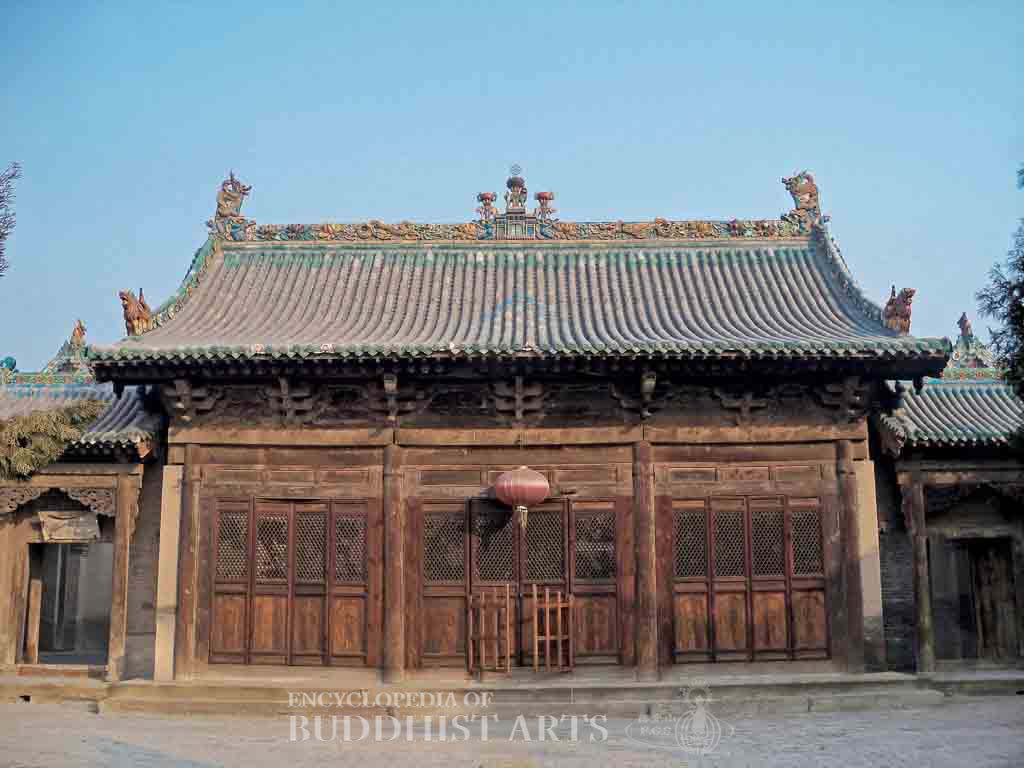
Jingxin Temple: Hall of the Three Buddhas
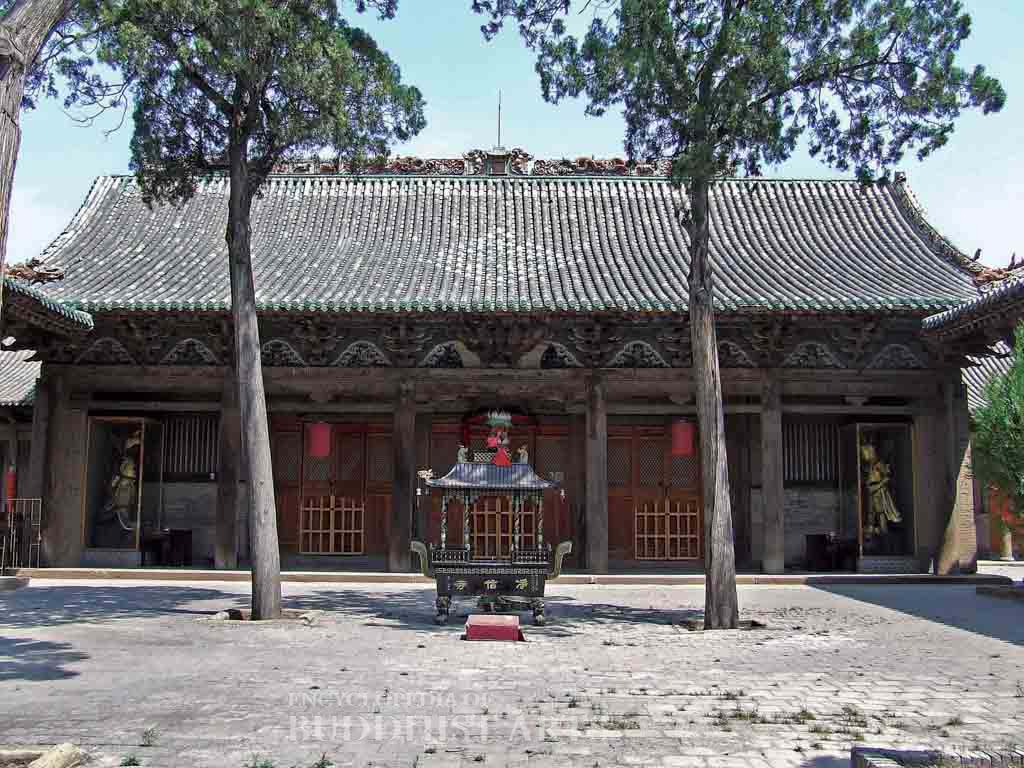
Jingxin Temple: Vairocana Hall
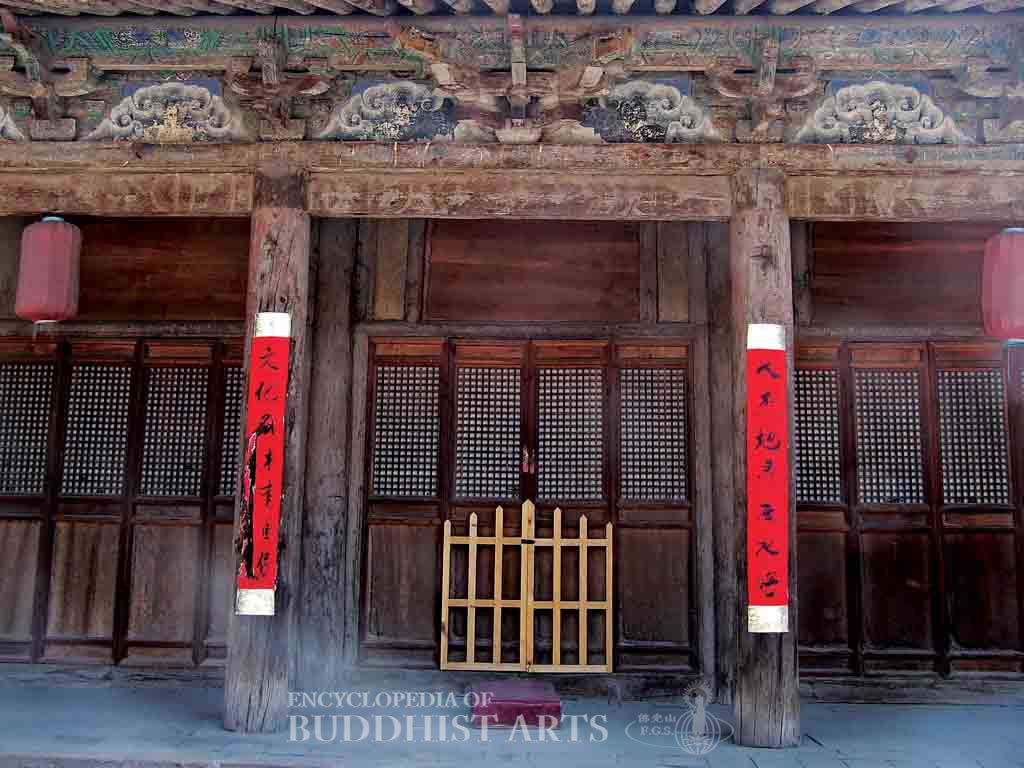
Jingxin Temple: Vairocana Hall (detail)
Jingxin Temple
CHINA, Shanxi, Jinzhong
Meaning Pure Faith Temple, Jingxin Temple was built in 713 during the Tang dynasty. It was initially a nunnery but was later converted to a temple. Repairs and renovation were regularly undertaken. Most of the surviving buildings date from the reigns of Emperor Zhengde (reigned 1506–1521) and Emperor Jiajing (reigned 1520–1566) of the Ming dynasty. The temple was listed as a National Cultural Heritage Site in 2006.
The temple faces south, occupies 3,629 sq m and consists of two courtyards. Structures located along the central axis include the Performing Stage, Hall of the Three Buddhas, and the Vairocana Hall. The smaller halls and the bell and drum towers are located on either side. The Performing Stage is constructed upon a 1.8 m high platform. The rear section has a single-eave overhanging gable roof and a three-bay by four-rafter structure. The stage itself has a curved hip-and-gable roof and a three-bay by five-rafter structure. It is dated to 1824 of the Qing dynasty. The building is highly decorated with carvings of dragon heads featured on the architraves and the tips of the cantilevers. The sparrow brace and the boards onto which bracket sets adhere are decorated in intricate latticework.
The side halls of the front courtyard contain statues of the Four Heavenly Kings and two warriors. The side halls are split into two sections: the Heavenly King Hall in one section and the Warrior Hall in the other. Such layout is rarely seen in Buddhist temples.
The Hall of the Three Buddhas has a single-eave overhanging gable roof and a three-bay by four-rafter structure. Inside the hall, murals depicting scenes from the Life of the Buddha occupy all of the east and west walls, as well as the two side bays on the north wall. The Vairocana Hall has a single-eave overhanging gable roof and a five-bay by six-rafter structure. Murals occupy its east and west walls as well as the two outermost bays of the north wall.
For more details, go to the Encyclopedia of Buddhist Arts: Architecture G-L, page 529.
Cite this article:
author = Hsingyun and Youheng and Johnson, Peter and Mankuang and Lancaster, Lewis,
booktitle = {Encyclopedia of Buddhist Arts: Architecture G-L},
pages = 529,
title = {{Jingxin Temple}},
volume = 2,
year = {2016}}