
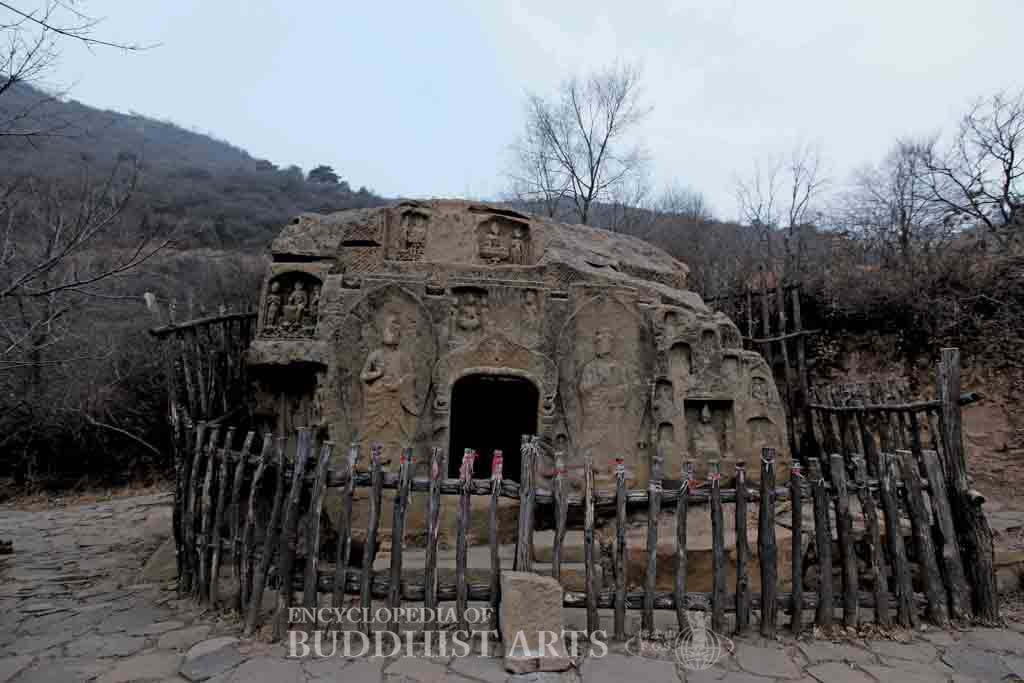
Yangtoushan Caves: Cave 7
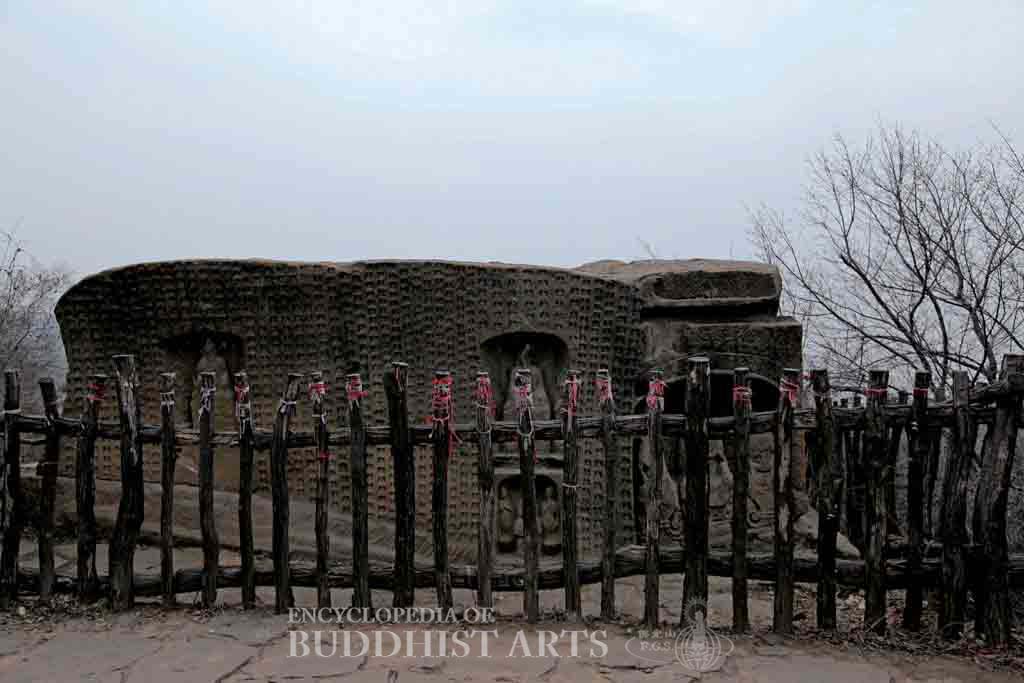
Yangtoushan Caves
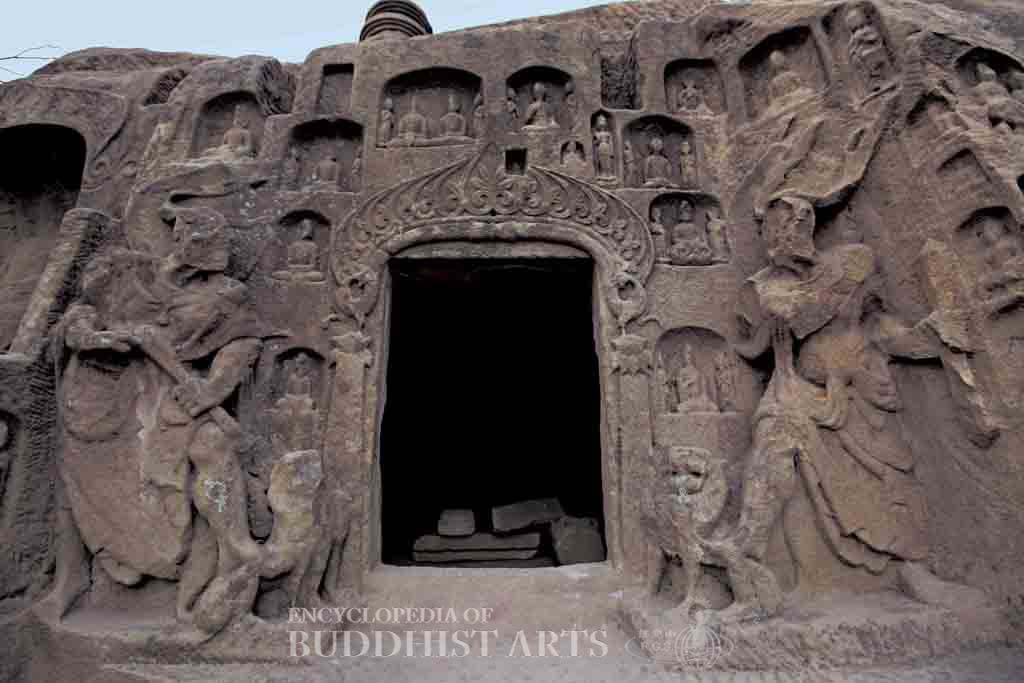
Yangtoushan Caves: Cave 6
Yangtoushan Caves
CHINA, Shanxi, Jincheng
These caves are situated 18 km north of Gaoping, Shanxi, on the south slope of Yangtoushan (Goat Head Mountain). The name was derived from a stone sculpture in the shape of a goat’s head on top of the mountain. Niches can be found sculpted on the boulders scattered along the winding paths of Yangtoushan. In total, there are more than 40 caves and over 80 niches spanning from the top to the bottom of the mountain. In addition, there is also a Northern Wei dynasty (386–534) stele, four pagodas, and a temple at the site. The niches contain statues originating from the Northern Wei to Tang (618–907) dynasties. Sculptures and niches at Yangtoushan generally exhibit characteristics typical of the Tang dynasty. This set of caves was listed as a National Cultural Heritage Site in 2006.
The caves of the Northern Dynasties are either rectangular or square in layout, with other truncated pyramidal ceiling or there are low platforms along the walls of the caves. The entrances are flanked with warrior sculptures, and above the doors ogive lintels are ornamented with honeysuckle or flame patterns. Cave 7 is a large cave with a square layout and a truncated pyramidal ceiling. The statues in this cave have been lost, but the remaining ogive lintel above the arched doorway is decorated with twin dragons. Two niches containing Buddhas are carved on each side of the door. The figures stand on lotus pedestals and form the abhaya (fearlessness) mudra. A square stone tower found atop the mountain has four faces, each carved with a Northern Wei-style niche, although over time the niches have been severely eroded. Nearby, a stele decorated with the Thousand Buddha motif is situated on the mountainside and a niche housing a Buddha and two Bodhisattva statues is found in the center of the stele.
Near the foot of the mountain, niches constructed during the Tang dynasty can still be found illustrating the Western Pure Land, as well as Sakyamuni Buddha Teaching the Dharma.
For more details, go to the Encyclopedia of Buddhist Arts: Caves T-Z, page 1539.
Cite this article:
author = Hsingyun and Youheng and Johnson, Peter and Mankuang and Huntington, Susan and Edson, Gary and Neather, Robert,
booktitle = {Encyclopedia of Buddhist Arts: Caves T-Z},
pages = 1539,
title = {{Yangtoushan Caves}},
volume = 9,
year = {2016}}