
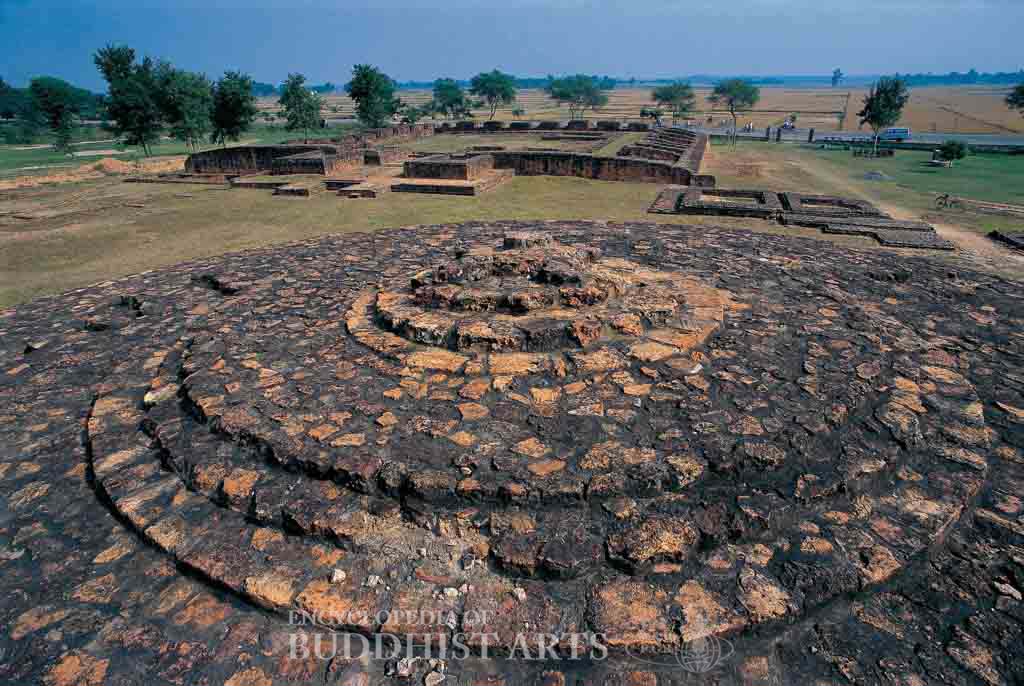
Kapilavastu at Piprahwa
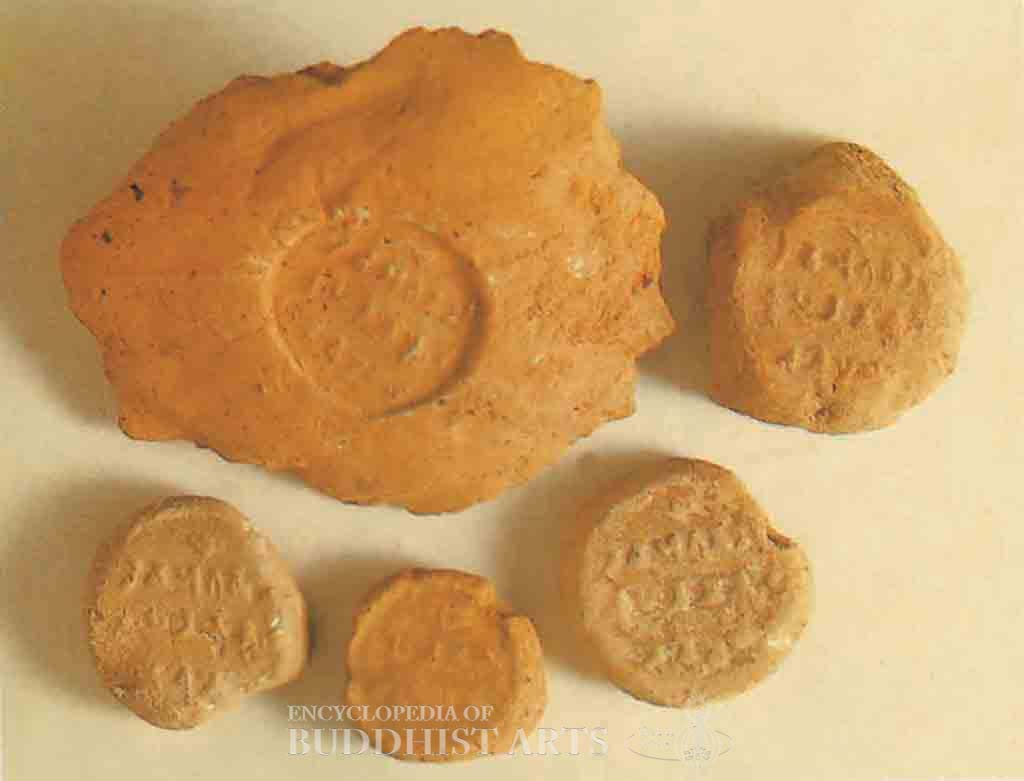
Kapilavastu at Piprahwa: Inscription on Sealings
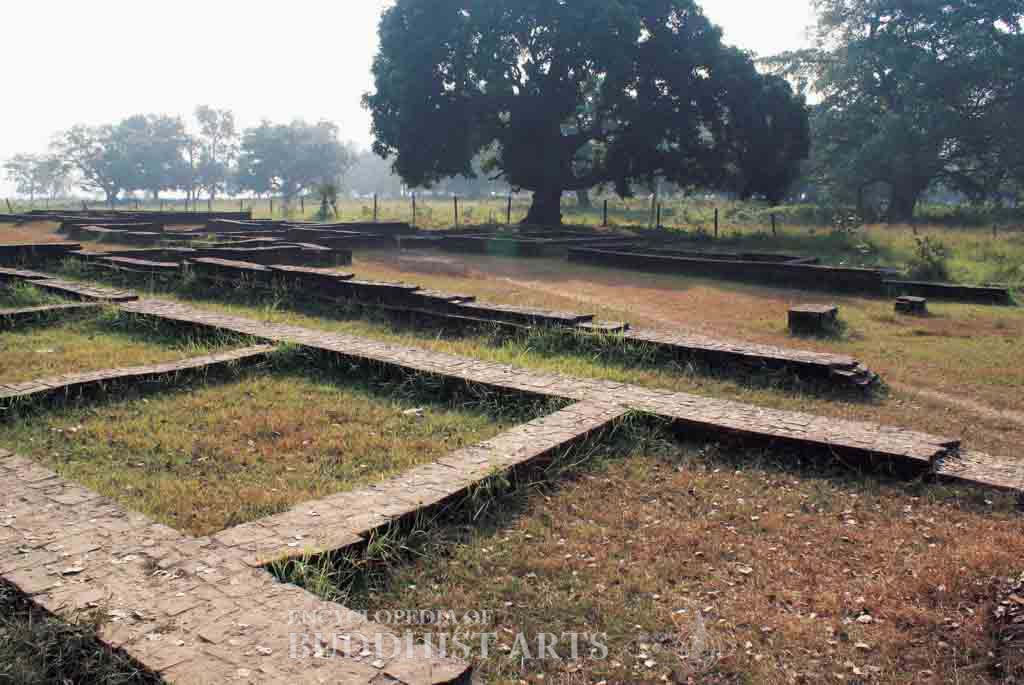
Kapilavastu at Tilaurakot
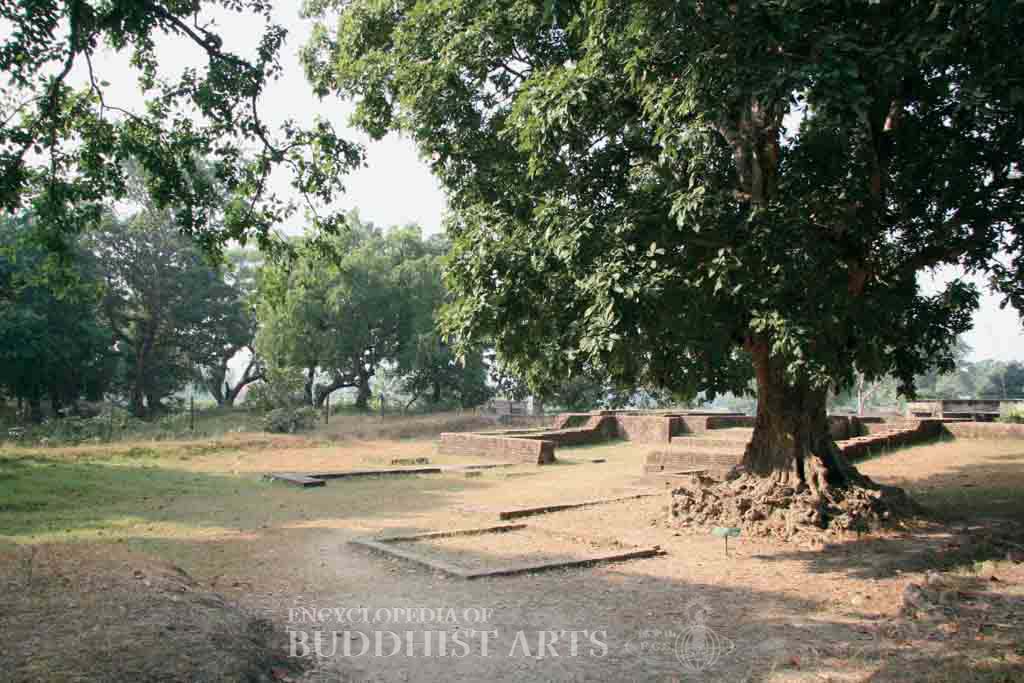
Kapilavastu at Tilaurakot
Kapilavastu
NEPAL, Tilaurakot; INDIA, Piprahwa
Kapilavastu is the capital city of Sakyamuni Buddha’s homeland, the place where he grew up as a prince before renouncing. While most of the pilgrimage sites related to the Buddha have been excavated and identified, the exact location of Kapilavastu has been debated for many years. One theory suggests that it is situated at Piprahwa in Uttar Pradesh in India, but an alternative theory claims that it is located in Tilaurakot in present-day Nepal.
In 1898 the British archaeologist William C. Peppe discovered a large sandstone box containing five caskets in a damaged stupa in Piprahwa. An inscription on the lid of a casket suggested that they contained the relics of the Buddha. According to excavations conducted from 1971 to 1977, the ruins of this stupa can be dated to three distinct periods. It is estimated to have been first built soon after Buddha’s parinirvana. It was enlarged during the time of King Asoka (reigned circa 269–232 BCE) and then expanded further in later years. About 40 inscribed terracotta seals were found north of the stupa. Some of these seals refer to Kapilavastu, thus supporting the case for Piprahwa as the possible location of Kapilavastu. At present, all the excavated artifacts are stored in museums in New Delhi and Kolkata.
However, between 1967 and 1972, Nepalese archaeologists discovered two stupas to the north of Tilaurakot. It is believed that they were built in memory of the Buddha’s father, King Suddhodhana, and his aunt and foster mother, Queen Mahapajapati. At about the same time, Japanese archaeologists discovered a structure nearby that is believed to be King Suddhodana’s palace. This excavation revealed 3,000 coins dating from the 5th century BCE. In 1997, Nepalese and British archaeologists began another excavation with funds from UNESCO. They discovered the remains of an ancient city and gray pottery fragments from the 9th to the 6th century BCE. The area of the site at Tilaurakot is approximately 518 m by 396 m. It includes a moat, and city walls that are 3 m wide. There are the remains of what could be the Eastern Gateway, through which the Buddha is believed to have walked during his Great Departure. Even though no structures are visible on the surface, the excavation revealed the line of a major street running east-west from the Eastern Gateway, and smaller streets intersecting at right angles to form residential blocks. The Kapilavastu Museum was established to incorporate the ruins at Tilaurakot and house a collection of artifacts found at the site.
According to Buddhist texts, Kapilavastu was located on a river called Bhagirathi. There are no signs of a river near Piprahwa. Tilaurakot, however, is near the banks of the Banganga River. On the basis of recent evidence, Tilaurakot is considered the most likely site of Kapilavastu.
For more details, go to the Encyclopedia of Buddhist Arts: Architecture G-L, page 592.
Cite this article:
author = Hsingyun and Youheng and Johnson, Peter and Mankuang and Lancaster, Lewis,
booktitle = {Encyclopedia of Buddhist Arts: Architecture G-L},
pages = 592,
title = {{Kapilavastu}},
volume = 2,
year = {2016}}