
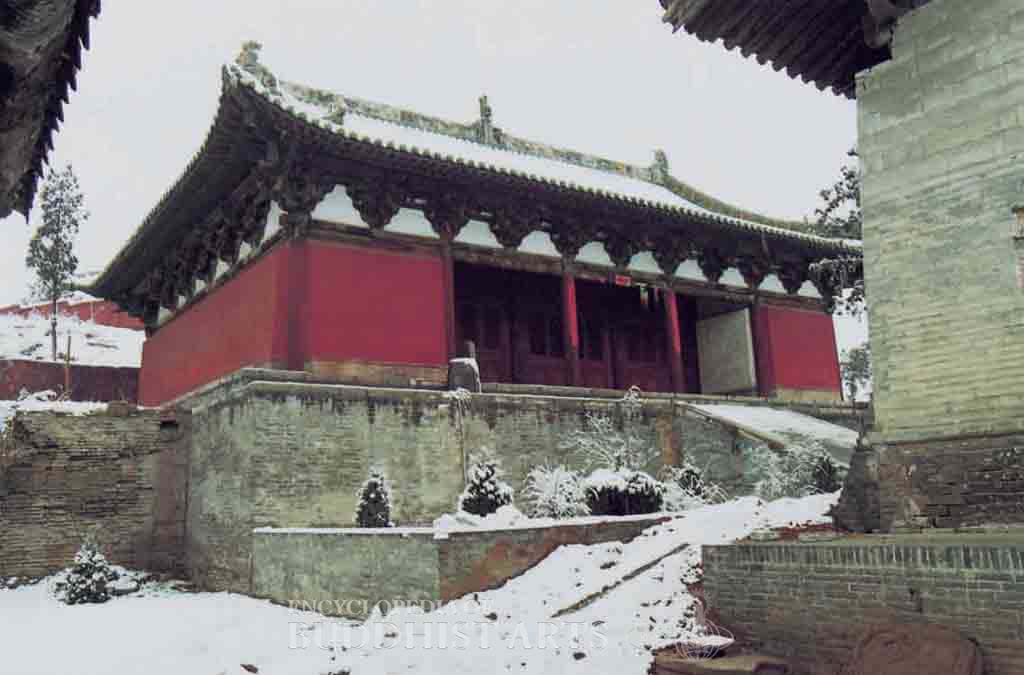
Xiangyan Temple: Great Hero Hall
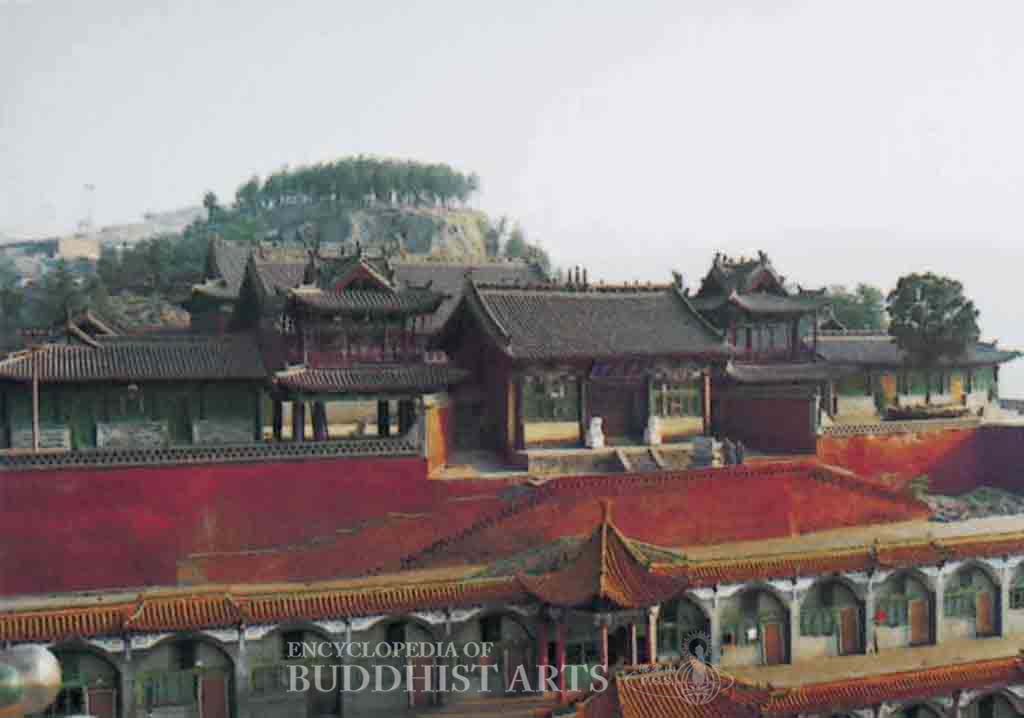
Xiangyan Temple
Xiangyan Temple
CHINA, Shanxi, Luliang
Xiangyan means Permeated with Fragrance. The temple was built in 639 during the Tang dynasty. Apart from the Great Hero Hall, which was constructed during the Jin dynasty (1115–1234), the rest of the buildings date to the Yuan (1271–1368) or Ming (1368–1644) dynasties. The temple was listed as a National Cultural Heritage Site in 2001.
The temple occupies 6,160 sq m and faces south with its south, east, and west sides ending in steep cliffs. The temple consists of two compounds built side by side surrounded by a protective wall. The buildings within the east compound include the main temple gate, Heavenly King Hall, Great Hero Hall, and the Vairocana Hall. Side buildings include the bell and drum towers, Hall of the Ten Kings, and the Sangharama Hall. The west compound contains the sutra repository and the Rear Buddha Hall.
The Great Hero Hall was constructed on top of a 1.4 m high platform. The five-bay by six-rafter hall has a single-eave hip-and-gable roof. The eaves are supported with two-tier bracket sets along with two sets of downward-pointing cantilevers. At the back of the building, two interior columns have been omitted. The roof is supported by three rows of columns upon which there are tie beams, which are four rafters wide in the front and two rafters wide at the back.
The Vairocana Hall is located on a high platform. The five-by-three bay structure has a single-eave hip-and-gable roof. Inside the building, Yuan architectural features can be seen, such as column reduction method and an exposed roof frame.
Most of the buildings found within the temple feature glazed roofs from the Ming dynasty. However, it is the iron-brown and black glazed tiles used in subsequent repairs which are unique and rarely seen in other temples.
For more details, go to the Encyclopedia of Buddhist Arts: Architecture T-Z, page 1315.
Cite this article:
author = Hsingyun and Youheng and Johnson, Peter and Mankuang and Lancaster, Lewis,
booktitle = {Encyclopedia of Buddhist Arts: Architecture T-Z},
pages = 1315,
title = {{Xiangyan Temple}},
volume = 4,
year = {2016}}