
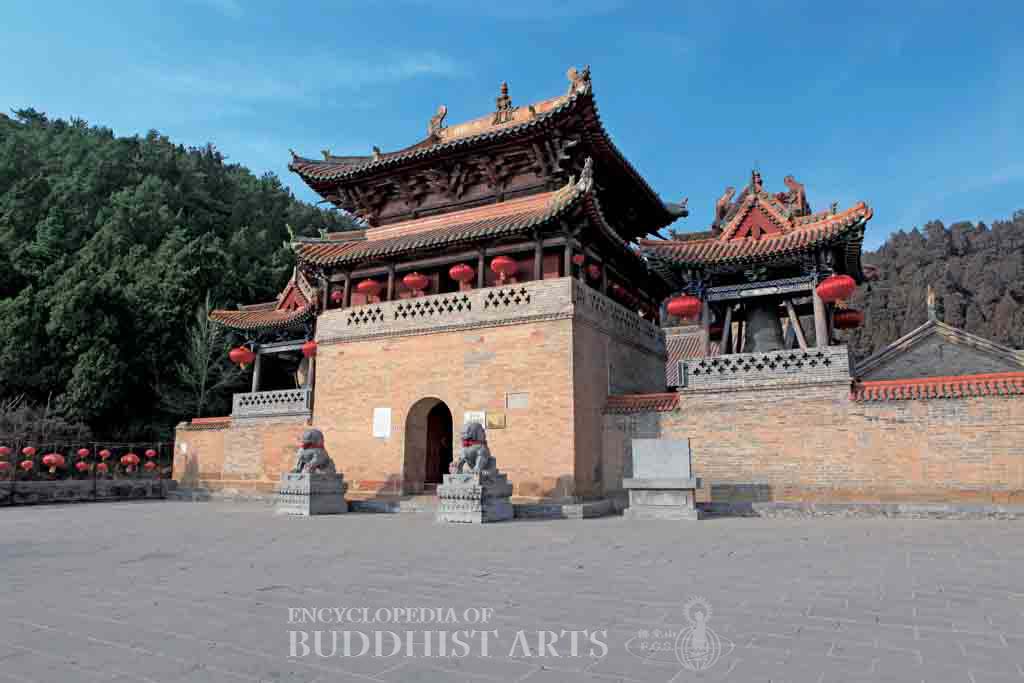
Kaihua Temple: Great Compassion Pavilion
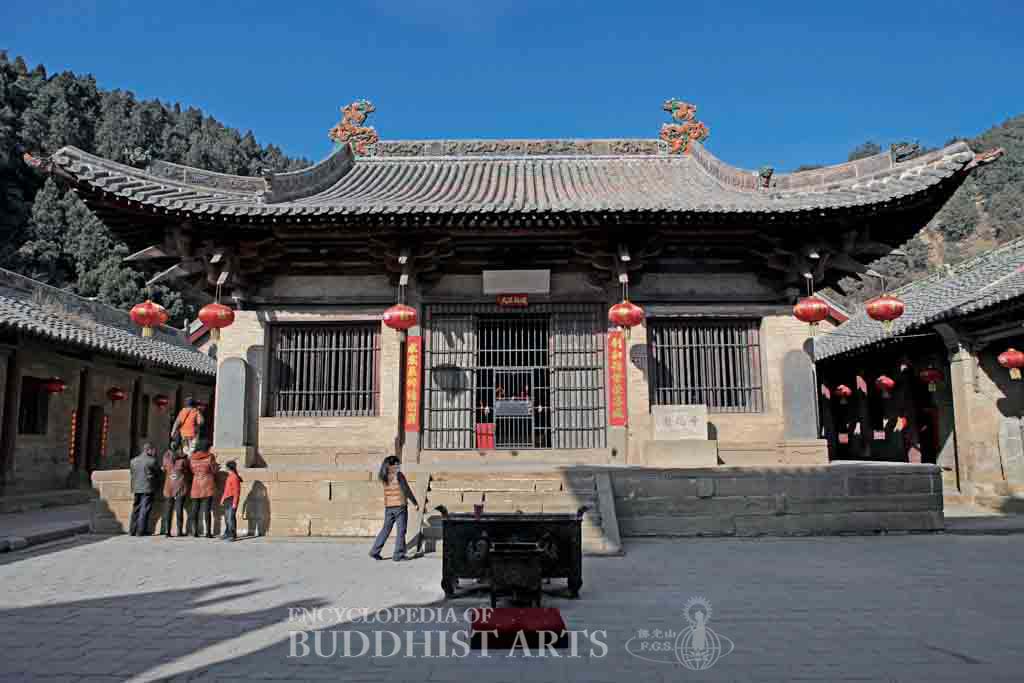
Kaihua Temple: Great Hero Hall
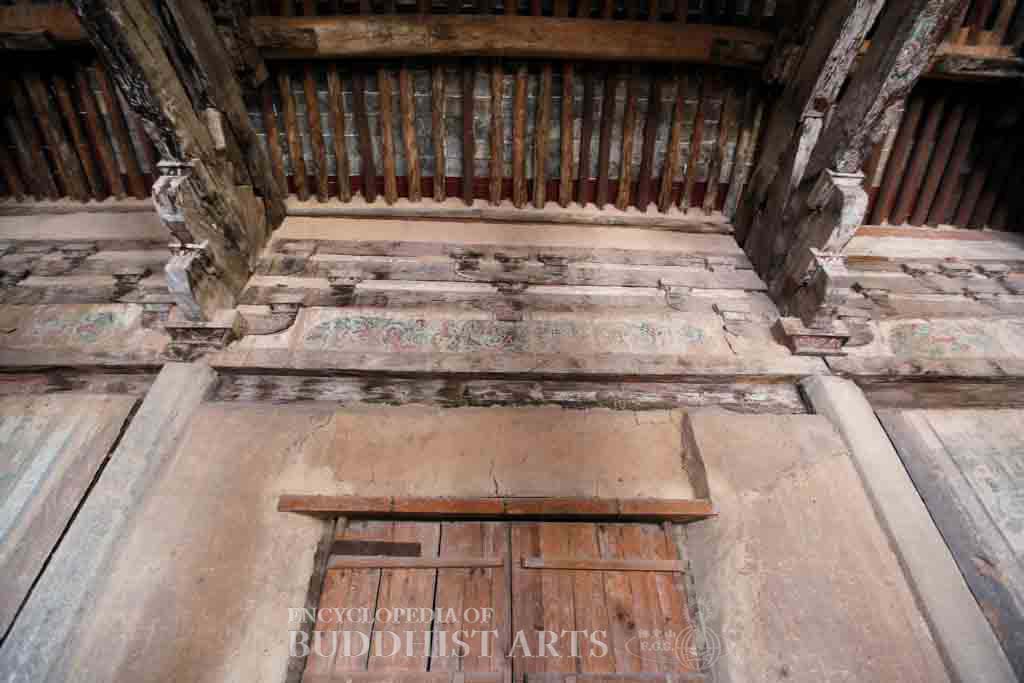
Kaihua Temple: Great Hero Hall (interior)
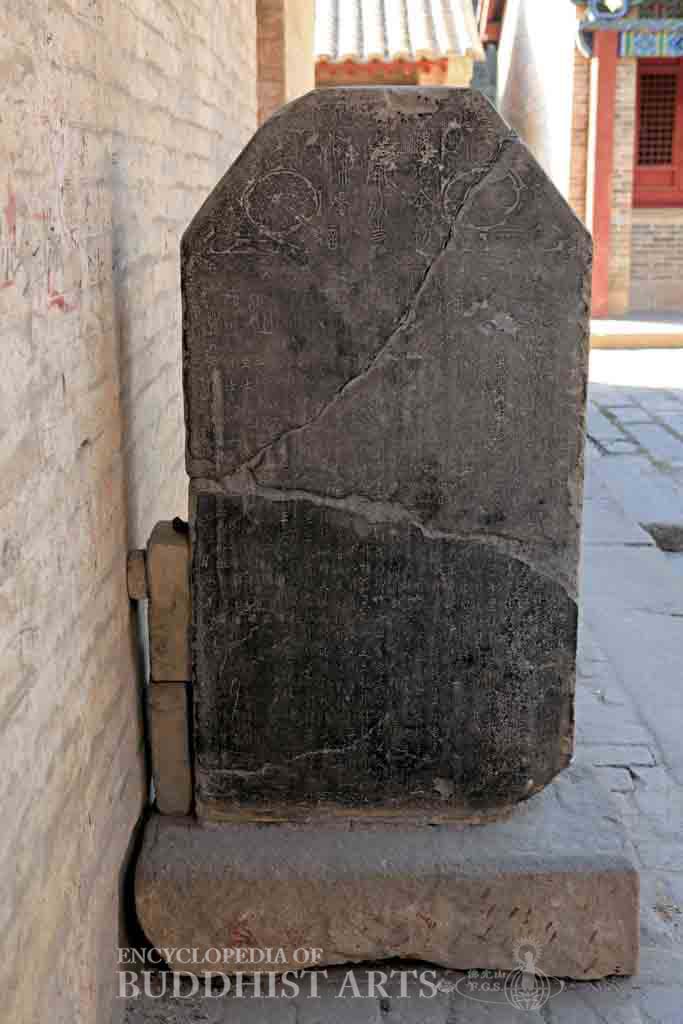
Kaihua Temple: Stele
Kaihua Temple
CHINA, Shanxi, Jincheng
According to the records, the temple was built between 904 and 907 during the Tang dynasty and repairs were undertaken in subsequent dynasties. It was listed as a National Cultural Heritage Site in 2001.
Facing south and consisting of two courtyards, the buildings along the central axis include the Great Compassion Pavilion, Great Hero Hall, Dharma Lecture Hall, and the side halls. The three-by-three bay Great Hero Hall was built in 1073 during the Northern Song dynasty and has a single-eave hip-and-gable roof covered with gray cylindrical tiles. Inside, murals cover the entire north, east and west walls, taking up almost 88 sq m of wall space. According to various inscriptions, the artist Guofa and other artists started these murals in 1096 during the Northern Song dynasty and completed them a year later. It is clear that the murals were painted with great care and detailed planning. Most of them are signed and dated by the artists themselves and are therefore very unique among temple murals.
The temple houses a stone relic pagoda of Chan Master Dayu from the Later Tang dynasty, as well as a stele naming the donors of Kaihua Temple erected in 1110 during the Northern Song dynasty.
For more details, go to the Encyclopedia of Buddhist Arts: Architecture G-L, page 571.
Cite this article:
author = Hsingyun and Youheng and Johnson, Peter and Mankuang and Lancaster, Lewis,
booktitle = {Encyclopedia of Buddhist Arts: Architecture G-L},
pages = 571,
title = {{Kaihua Temple}},
volume = 2,
year = {2016}}