
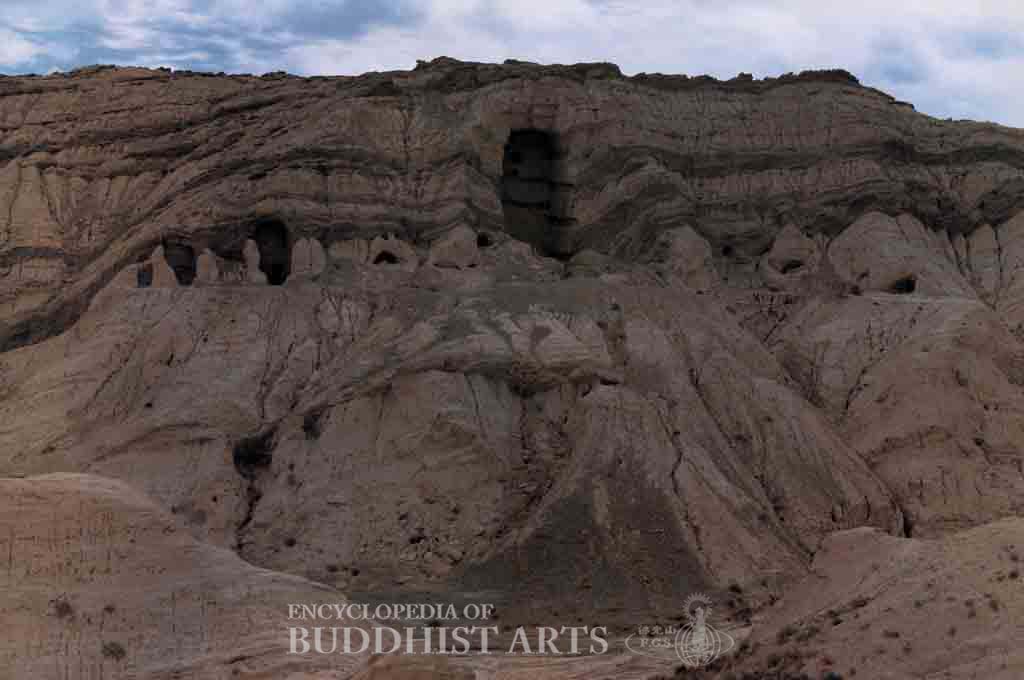
Simsen Caves
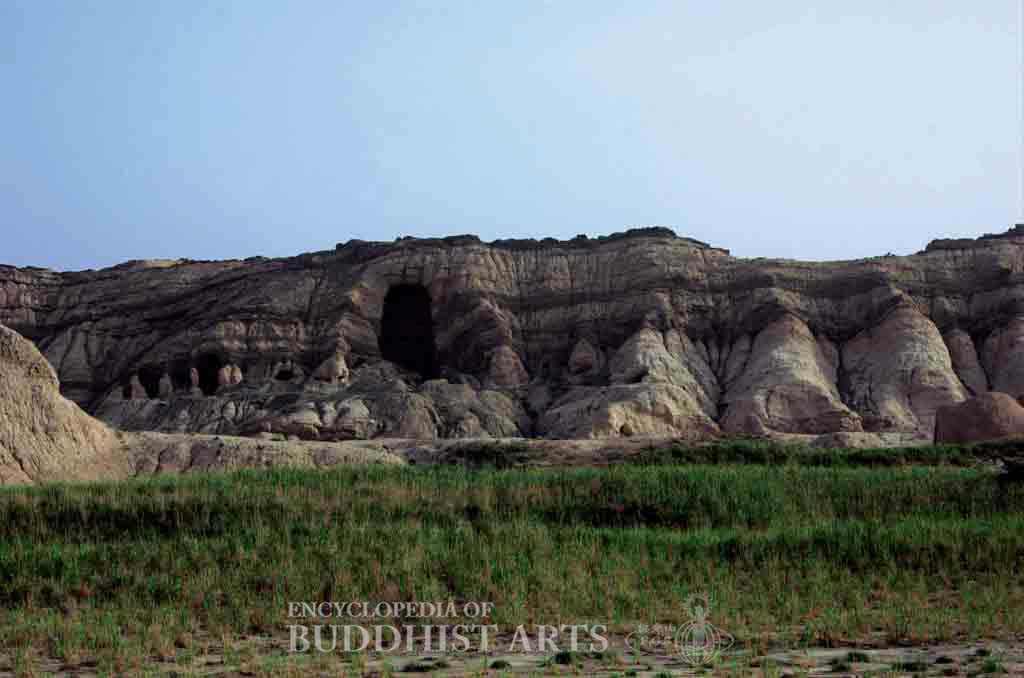
Simsen Caves: South Area
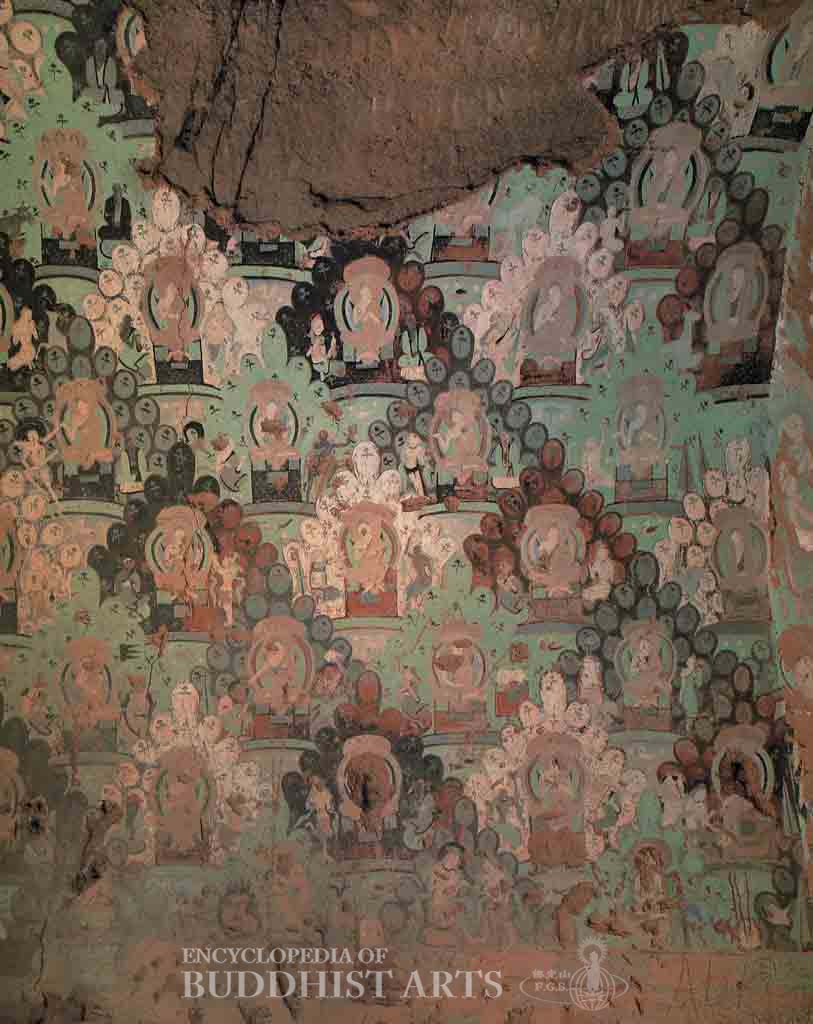
Simsen Caves: Cave 1 - Ceiling
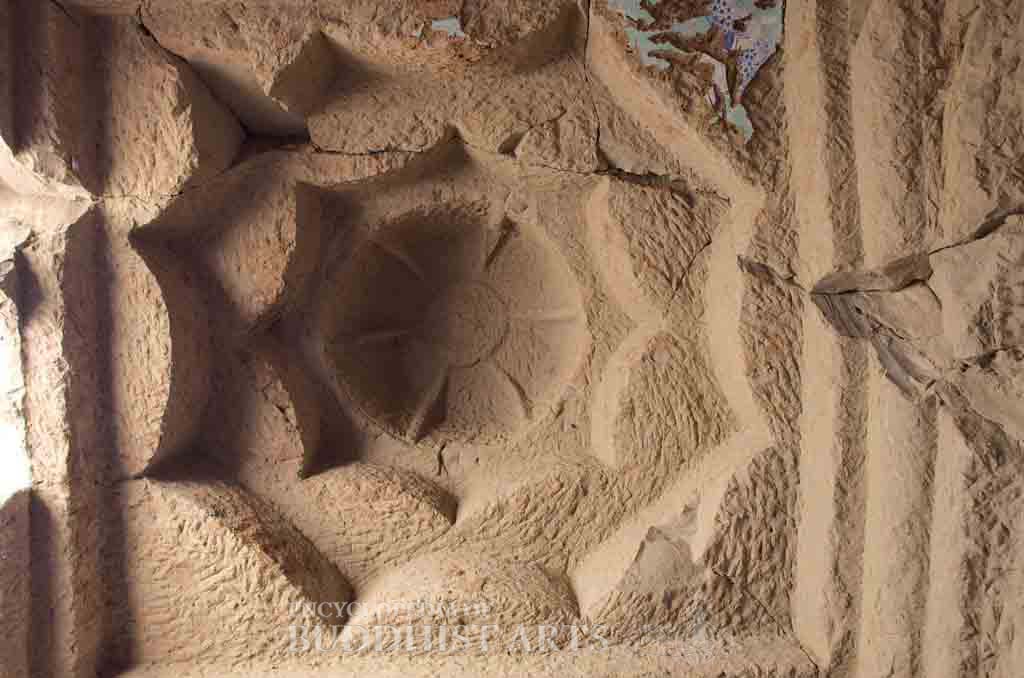
Simsen Caves: Cave 15 - Ceiling
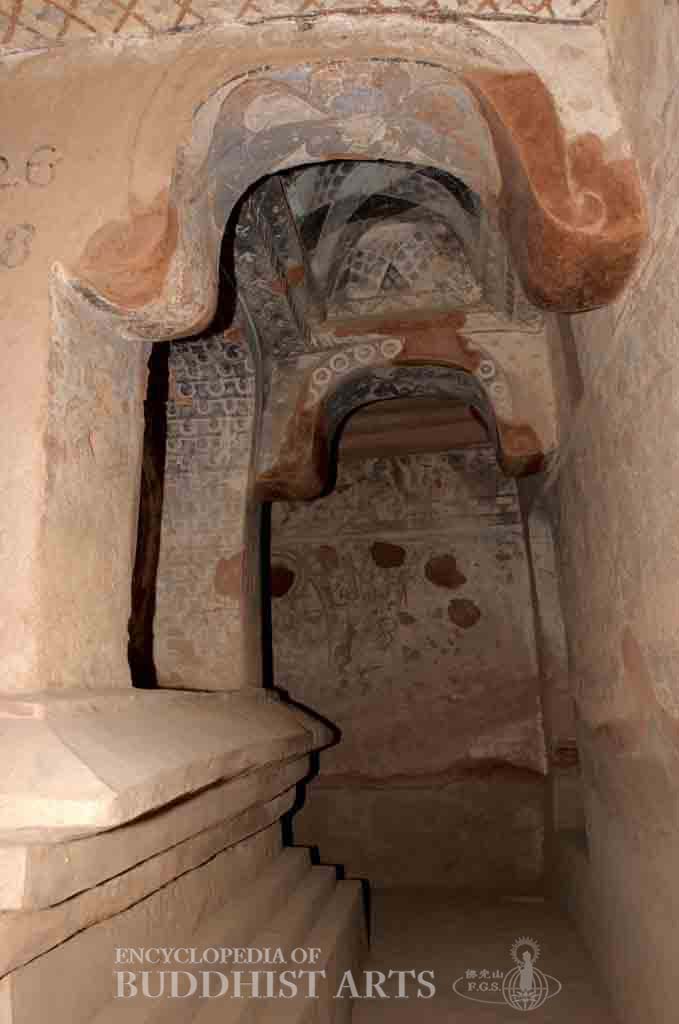
Simsen Caves: Cave 26 - Right Corridor
Simsen Caves
CHINA, Xinjiang, Aksu
These caves are located on the east and west cliffs along the Queletage Mountain pass, with the majority being in the northern area, 20 km east of Kuqa county. The caves were developed beginning in the 4th century and were in use until the 9th century. They are divided into east, south, west, north, and central areas, and there are 57 caves in total. The caves were listed as a National Cultural Heritage Site in 1996.
Caves 24, 26 to 33 are typical central pillar caves in the Kuchean style, built between the 4th and 5th century. Each cave has a niche on the back wall of the main chamber, and a central pillar, around which is a series of corridors for circumambulation. The corridors have barrel-vaulted ceilings, and a window is cut on either the left or right side wall to allow sunlight to enter. The niche statues on the back wall are now gone, but there are reliefs surrounding the central niche. Murals depicting stories from the Life of the Buddha are painted on the side walls and ceiling slopes of the corridor and main chamber. The images are typical of the narrative illustrations found in other Kuchean caves. The illustrations in the rear corridor portray scenes from the Buddha’s Parinirvana.
Many new caves were built in the 6th and 7th centuries. In addition to central pillar caves inherited from the earlier period, great Buddha caves and rectangular caves also appeared in this period. Caves 1, 41, and 48 are representative of central pillar caves of this time. Replacing the reliefs around the niche were illustrations of the Buddha teaching the Dharma. Heavenly beings are painted in the main chamber, and the slopes of barrel-vaulted ceilings in the side corridors depict karma stories. The illustrations of the Buddha’s parinirvana in the rear corridor became more sophisticated and with broader content, including scenes of disciples in mourning, the cremation, and the construction of stupas. Caves 11 and 43 are great Buddha caves, situated opposite each other on the east and west cliff faces. Cave 11 is 15 m high, with a Buddha installed on the back wall. Cave 42 is rectangular with a vaulted ceiling and on the walls are illustrations from the Life of the Buddha. Figures clad in luxurious clothes and exhibiting characteristics of the Kuchean people are depicted in the illustrations. The use of thin and solid lines, and washes in thick colors are highly expressive and indicative of the typical Kuchean style.
Kucha was occupied twice by the Tibetan Empire, once in the 7th century and again in the 8th century. Following the defeat of the Tibetans by the Uighurs in the 9th century, the development of the Simsen Caves regained momentum, with new caves incorporating features that had become popular during Tibetan rule. A series of octagonal caves with multi-tier ceilings from this period are still preserved, such as Caves 3, 4, 7, 10, 14, and 15. Central pillar caves, including Caves 44 and 45, and rectangular caves with vaulted ceilings, such as Caves 39 and 40, are representative of caves from the Uighur period. These caves exhibit sophisticated floral designs in various shades painted within the diamond motifs on the ceiling, a divergence from the symmetrical illustrations of the karma stories typical of earlier periods. The later murals preserve characteristics of Kuchean murals and incorporate Tibetan, Uighur, and Chinese cultural themes. A series of horizontal illustrations with Kuchean inscriptions, portraying scenes from the Life of the Buddha, are depicted within the main chamber. These illustrations reflect a new style, which emerged during this period. Warm colors, such as yellow and red ocher, are largely used, dotted with mineral green and white, a major characteristic of Uighur murals.
For more details, go to the Encyclopedia of Buddhist Arts: Caves Mo-S, page 1410.
Cite this article:
author = Hsingyun and Youheng and Johnson, Peter and Mankuang and Huntington, Susan and Edson, Gary and Neather, Robert,
booktitle = {Encyclopedia of Buddhist Arts: Caves Mo-S},
pages = 1410,
title = {{Simsen Caves}},
volume = 8,
year = {2016}}