
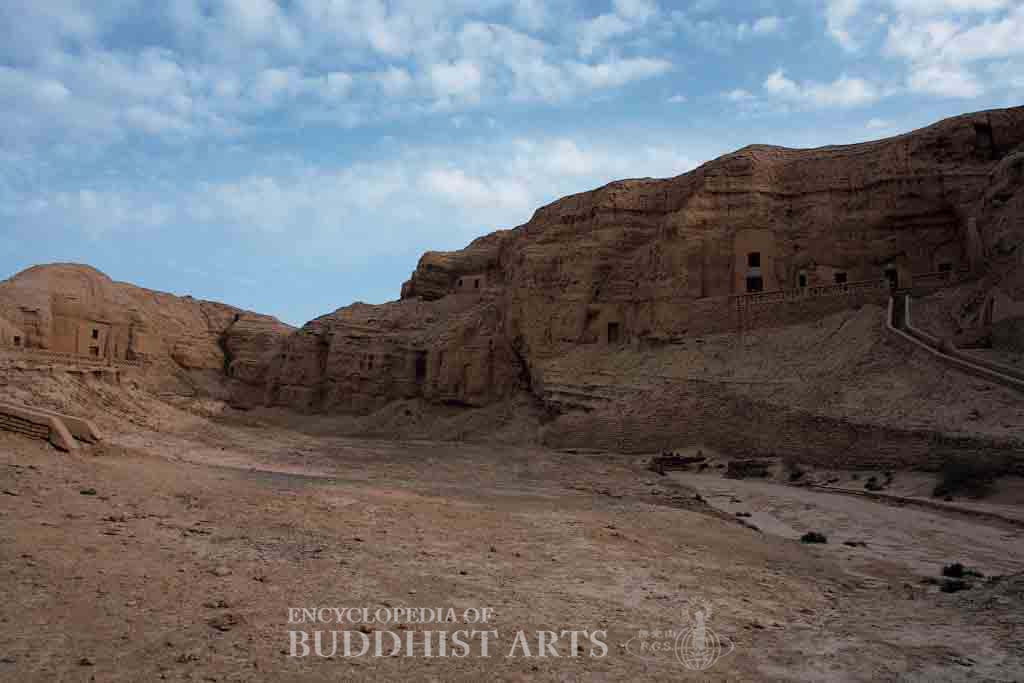
Kizilgaha Caves: Northern Section
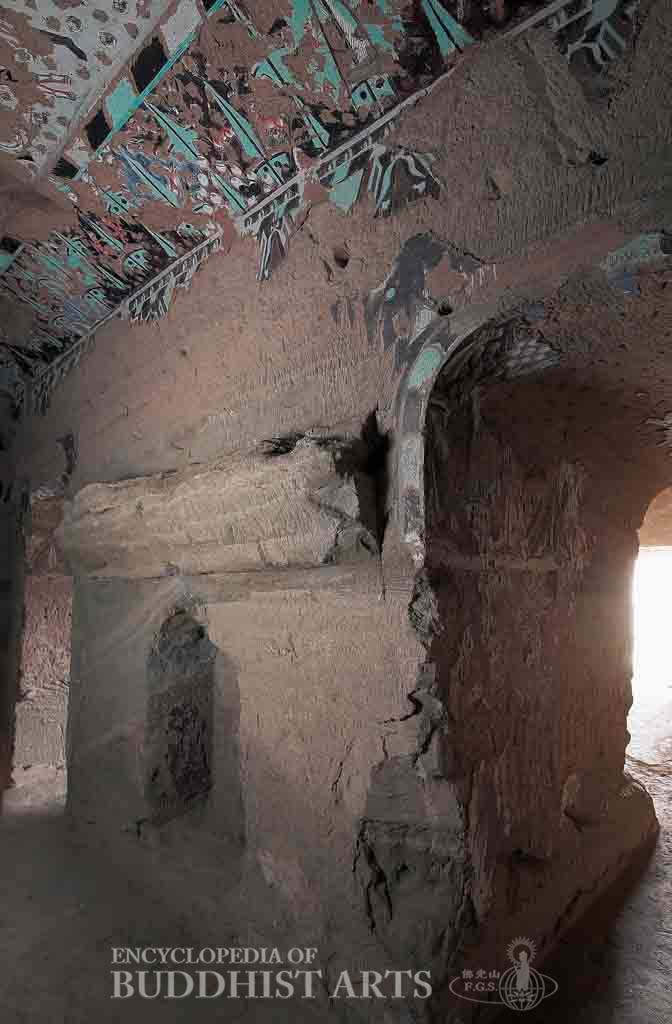
Kizilgaha Caves: Cave 23
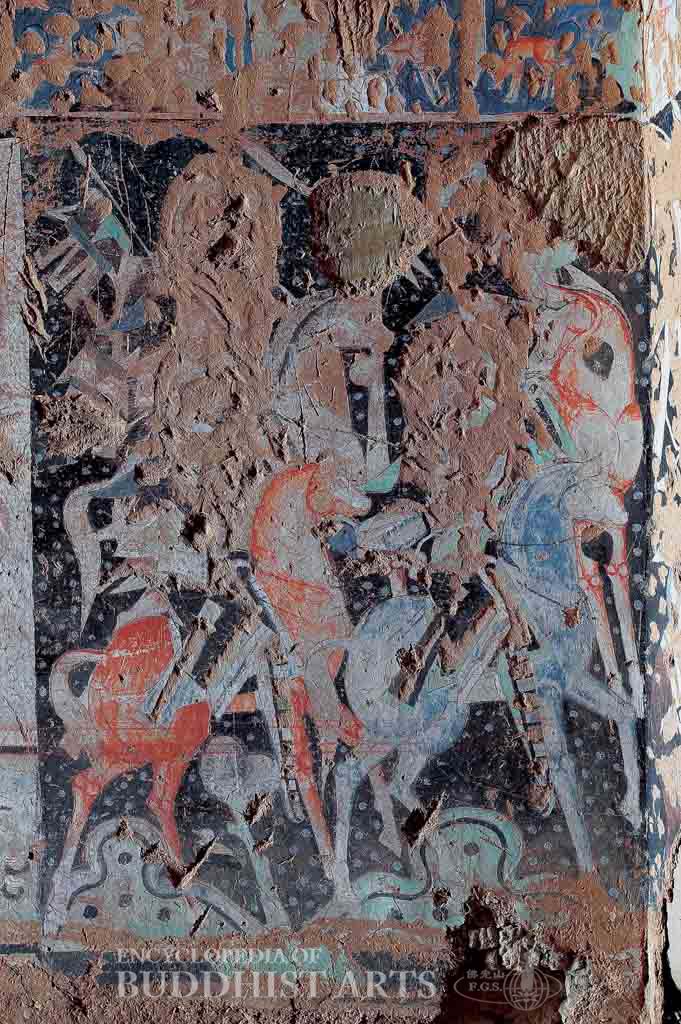
Kizilgaha Caves: Cave 14 - Distribution of Relics Among the Eight Kings (rear corridor)
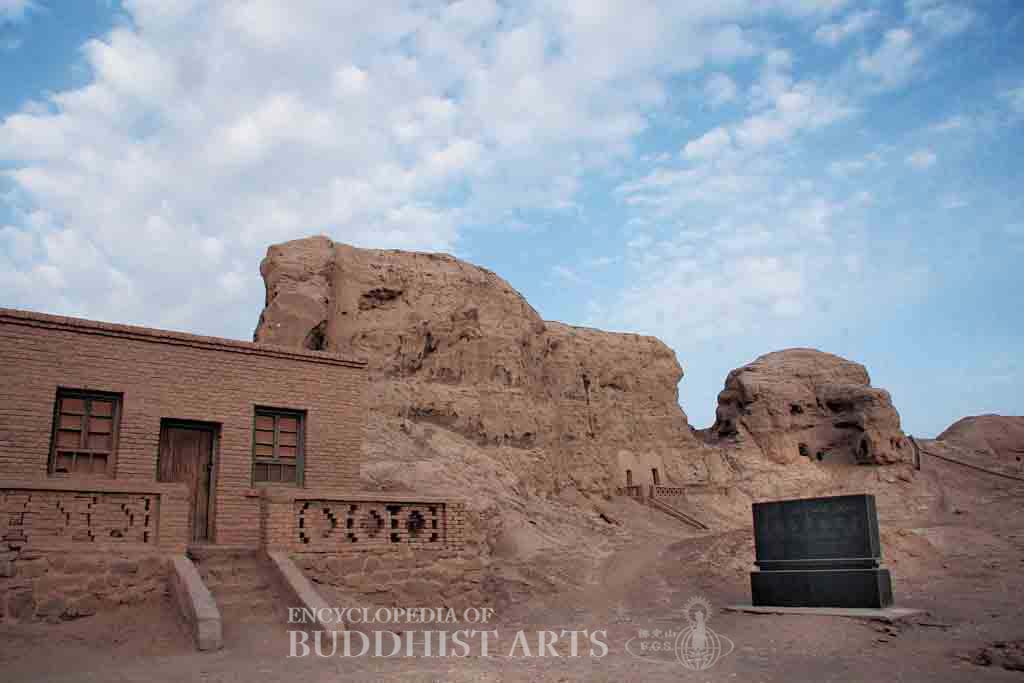
Kizilgaha Caves
Kizilgaha Caves
CHINA, Xinjiang, Aksu
The Kizilgaha Caves are located in the hilly region of the Queletage Mountains, 12 km northwest of Kuche county in Aksu. Situated next to the site of the Kizilgaha Beacons, these caves are near the ancient Kuchean capital city of Kucha, and contain several murals painted during the height of Buddhist artistic development in Kucha. Distributed among the cliffs in the north, east, and west faces of the valley, the caves at this site were excavated during the later phase of the Kuchean caves. There are currently 52 formally numbered caves, 35 of which are intact and relatively well preserved. Included among them are great Buddha caves, vihara caves, central pillar caves, rectangular caves, and cliffside sculptures. The caves were listed as a National Cultural Heritage Site in 2001.
Excavation of the site is divided into two periods, the earlier being from the 6th to 7th century, during which the most representative caves were the great Buddha caves and the central pillar caves. Caves 16 and 23 of the great Buddha caves were created in the 6th century. Large sculptures measuring over 7 m were once contained in these two caves but have long since collapsed. Remaining are only the small semicircular platforms at the back walls of the main chambers, on either side of which are illustrations of apsaras. At the central ridge of the barrel-vaulted ceilings are heavenly beings making offerings, with diamond-patterned illustrations of karma stories and Jataka tales. Above the doorway on the front walls of the caves are illustrations of Maitreya Bodhisattva Teaching the Dharma. Illustrations of heavenly beings are found on the central ridge of the barrel-vaulted ceilings of the left and right corridors, and on both sides are diamond-patterned depictions of Jataka tales or meditating monks. The rear corridors house a platform with a parinirvana scene and other accompanying murals, much of which are now missing.
Caves 11, 13, 14, and 30 of the central pillar caves contain niches that are cut into the back walls. For each of the caves, the statues on the main niche no longer remain, however, mural remnants of apsaras and mountains are still discernable. Depictions of astrological signs are located on the central ridge of the barrel-vaulted ceiling, with diamond-patterned illustrations of karma stories on both sides. There are additional illustrations of karma stories, as well as the Life of the Buddha, on the side walls. Large square murals of the Jataka tales are illustrated on the outer walls of the left and right corridors. These murals represent new styles which emerged during that period. An illustration of the Buddha’s parinirvana is found on the outer wall of the rear corridor, with an illustration of the Buddha’s cremation above the doorways on the inner wall. Illustrations on the outer wall are rich in content, including Distribution of Relics Among the Eight Kings and the parinirvana scene. Kings and members of their families are common subjects in cave murals of this period. Furthermore, it can be observed that the earlier illustrations of the Kizilgaha Caves place an emphasis on the three-dimensional effects created by the use of lines and colors, a style of illustration that was popular in the ancient Kucha region.
The second period of cave reconstruction took place during the rule of the Tibetan Empire in the 7th to 8th century. In addition, several murals were repainted by the Uighurs after the year 840. Among these, Caves 31 and 32 are representative of those reconstructed by the Tibetans. Cave 31 is a central pillar cave with a barrel-vaulted ceiling and illustrations of garudas at the four corners. Cave 32 is an rectangular cave with a diamond-in-square ceiling, the center of which is embellished with lotuses. The sutra content of the cave murals and their layout differ from that of earlier periods; for example, in the illustrations on the Jataka tales, there is more emphasis on depicting good deeds, and the costumes of the figures have prominent cultural styles. The contours of the figures in the murals are achieved by using lines of varying thicknesses and outlining cloth folds. Without the use of three-dimensional coloring techniques, the illustrations employ simple and elegant colors such as mineral green, mineral blue, black, and white. Few of the Uighur caves remain, with representatives being Caves 21 and 30. Their murals, characteristic of artworks from the Central Plains, feature standing Buddhas with Uighur disciples holding lanterns in reverence by their sides.
For more details, go to the Encyclopedia of Buddhist Arts: Caves R-L, page 596.
Cite this article:
author = Hsingyun and Youheng and Johnson, Peter and Mankuang and Huntington, Susan and Edson, Gary and Neather, Robert,
booktitle = {Encyclopedia of Buddhist Arts: Caves R-L},
pages = 596,
title = {{Kizilgaha Caves}},
volume = 6,
year = {2016}}