
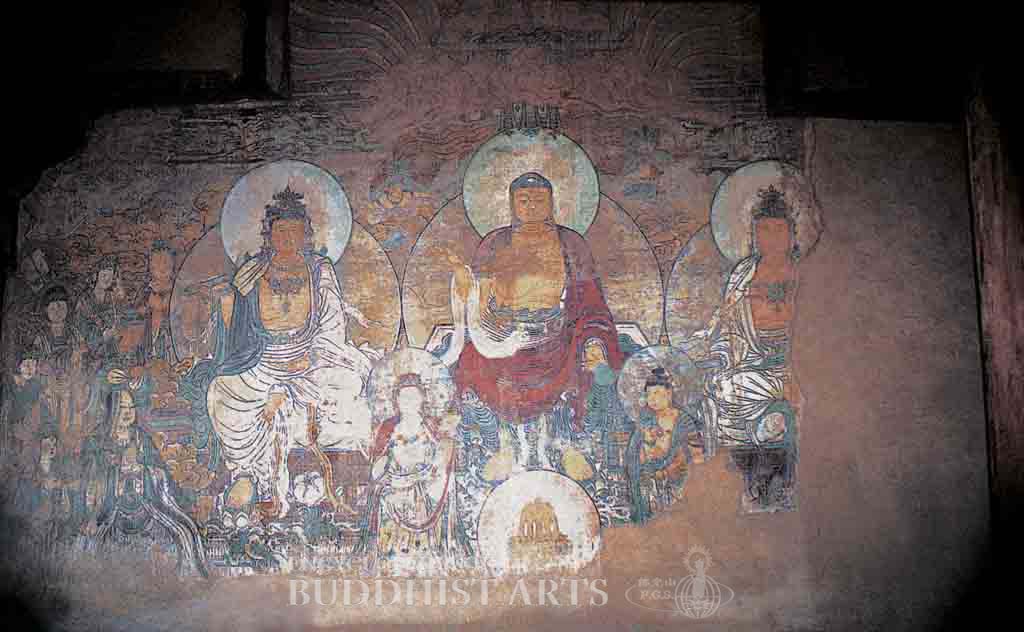
Qinglong Temple Murals: Great Hero Hall - Maitreya Teaching the Dharma (west wall)
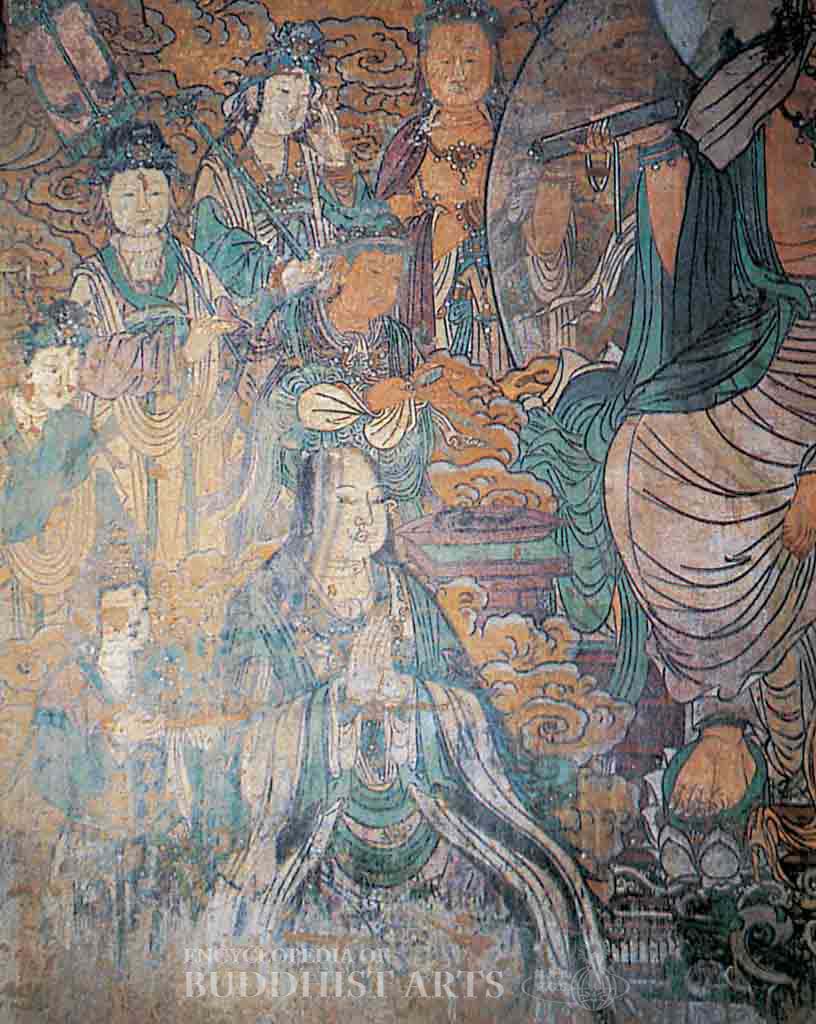
Qinglong Temple Murals: Great Hero Hall - Tonsure Ceremony for Samivati (detail) (west wall)
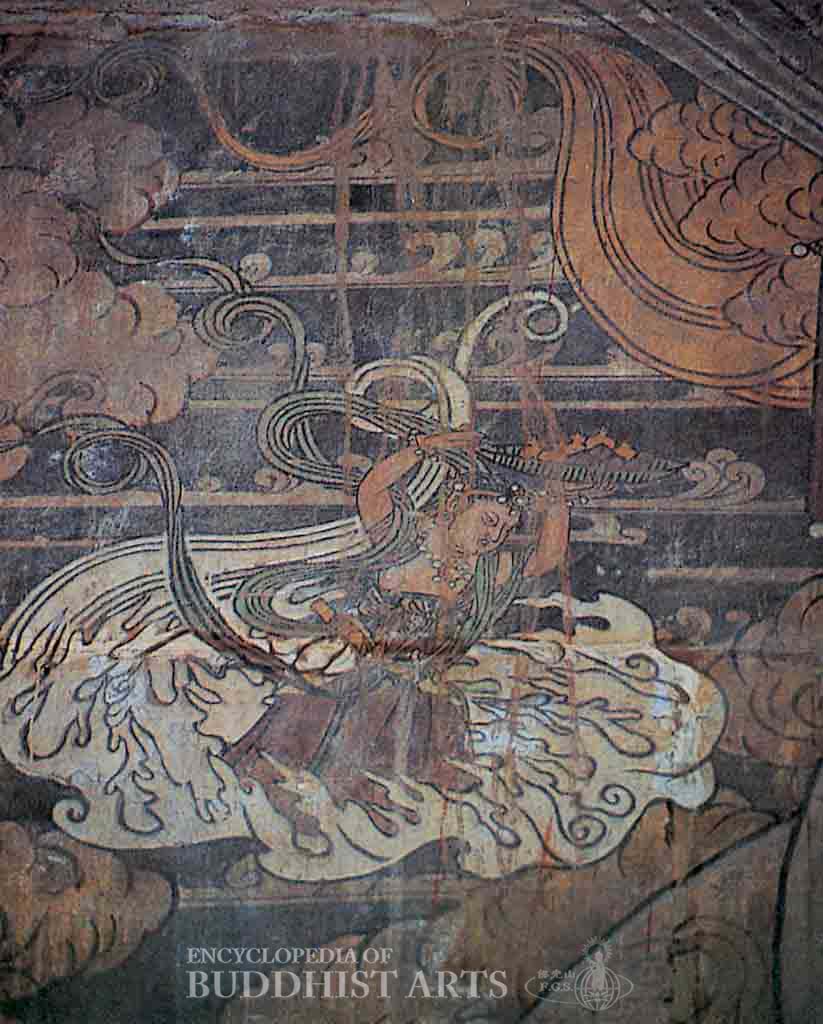
Qinglong Temple Murals: Great Hero Hall - Apsara (detail) (east wall)
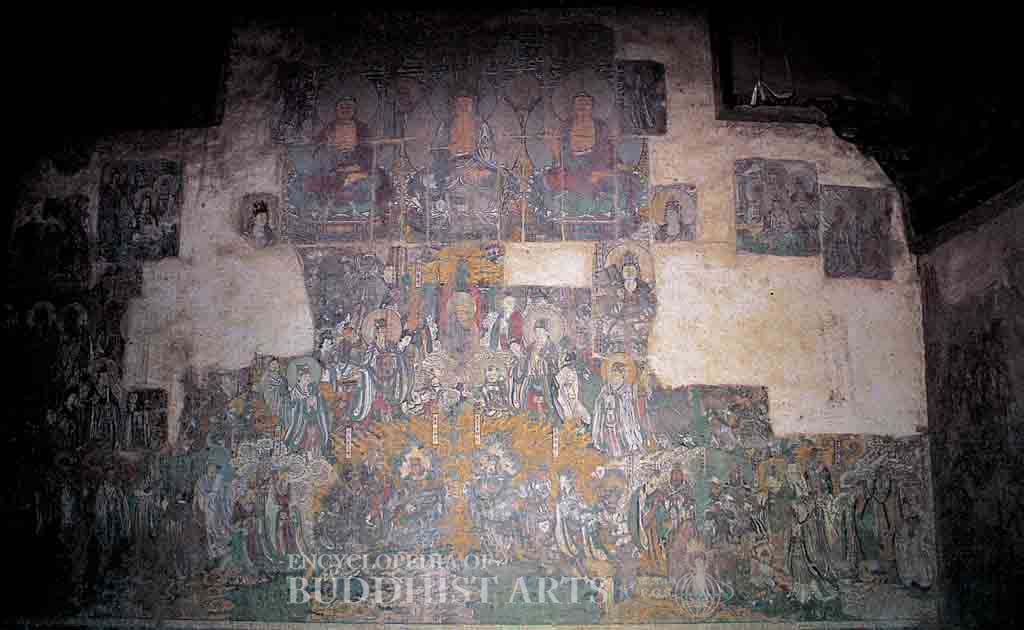
Qinglong Temple Murals: Middle Hall - Water and Land Dharma Service
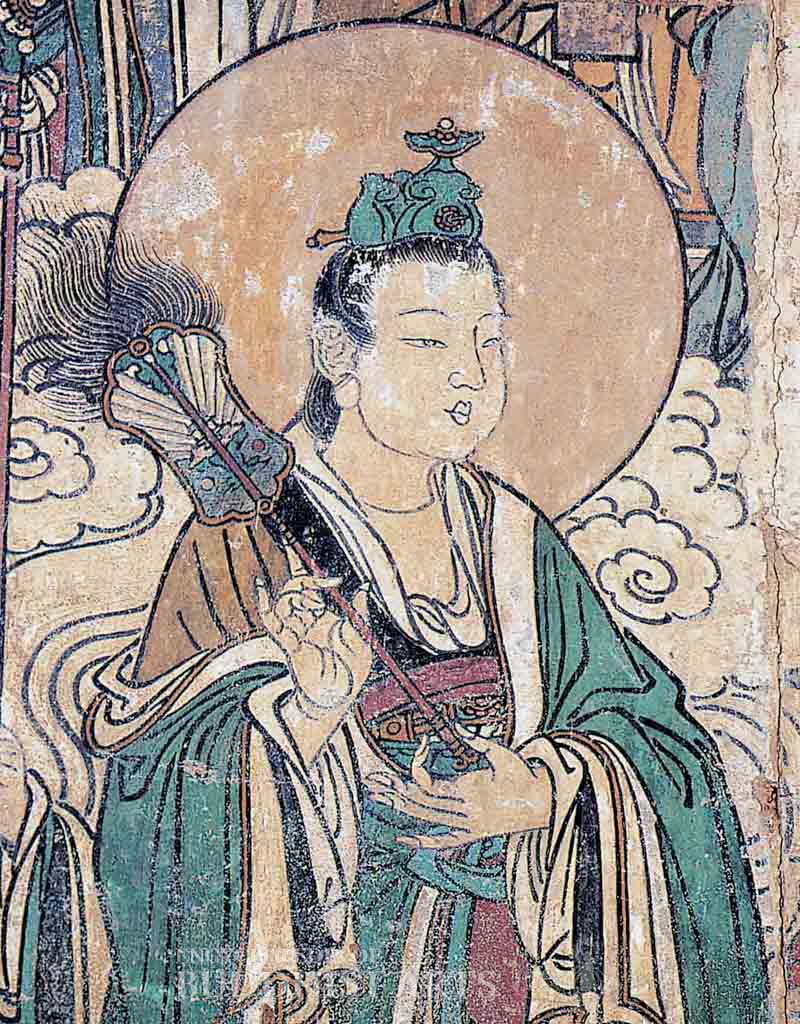
Qinglong Temple Murals: Middle Hall - Sacred Mother (detail)
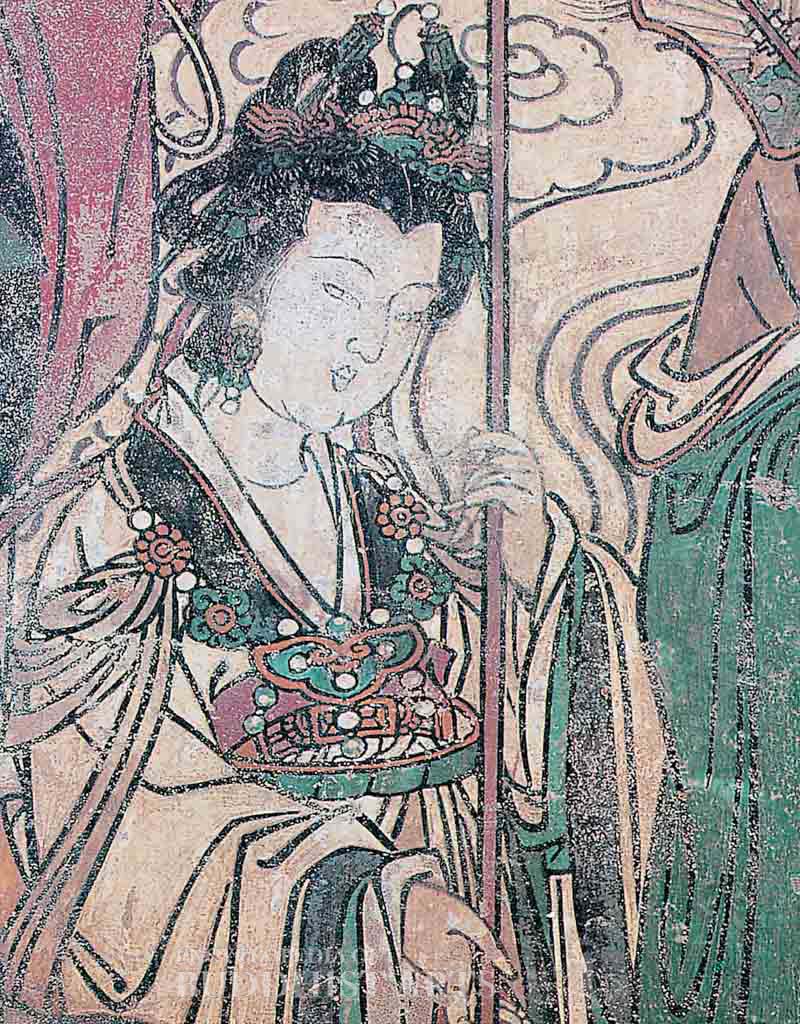
Qinglong Temple Murals: Middle Hall - Lady Holding a Banner (detail)

Qinglong Temple Murals: Middle Hall - Trikaya Buddhas (detail)
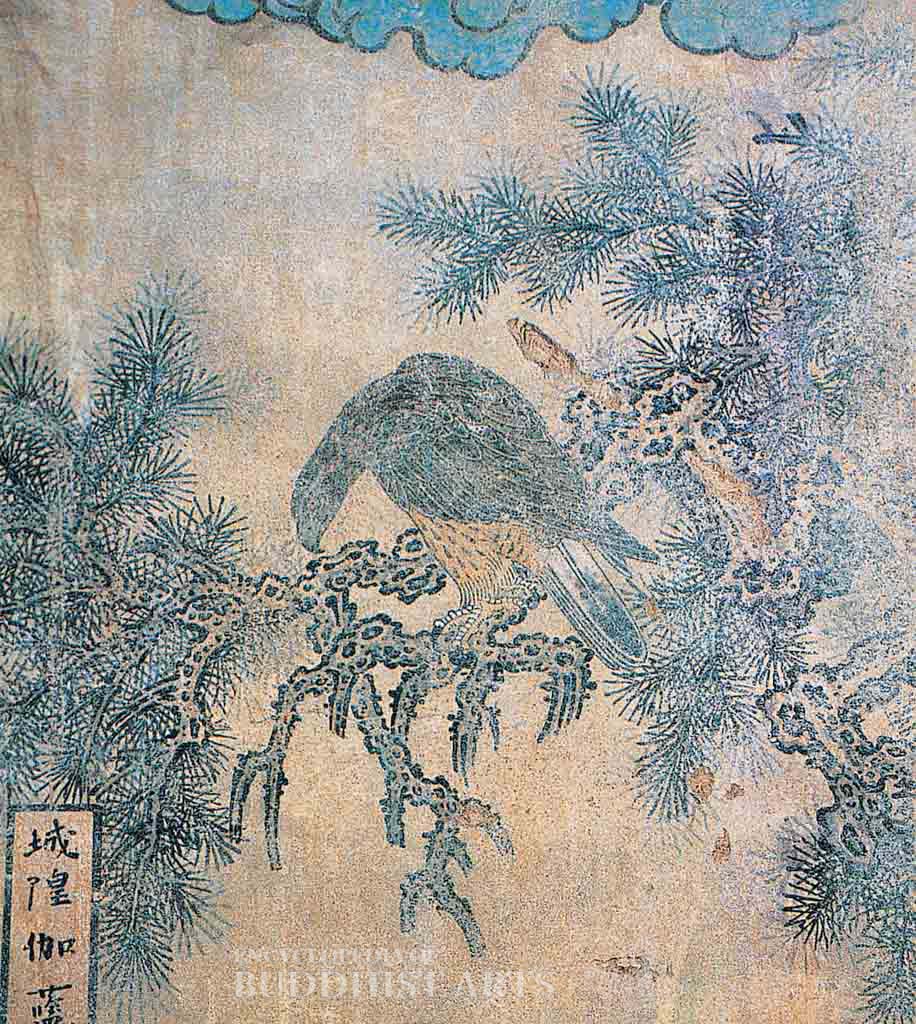
Qinglong Temple Murals: Middle Hall - Birds (detail)
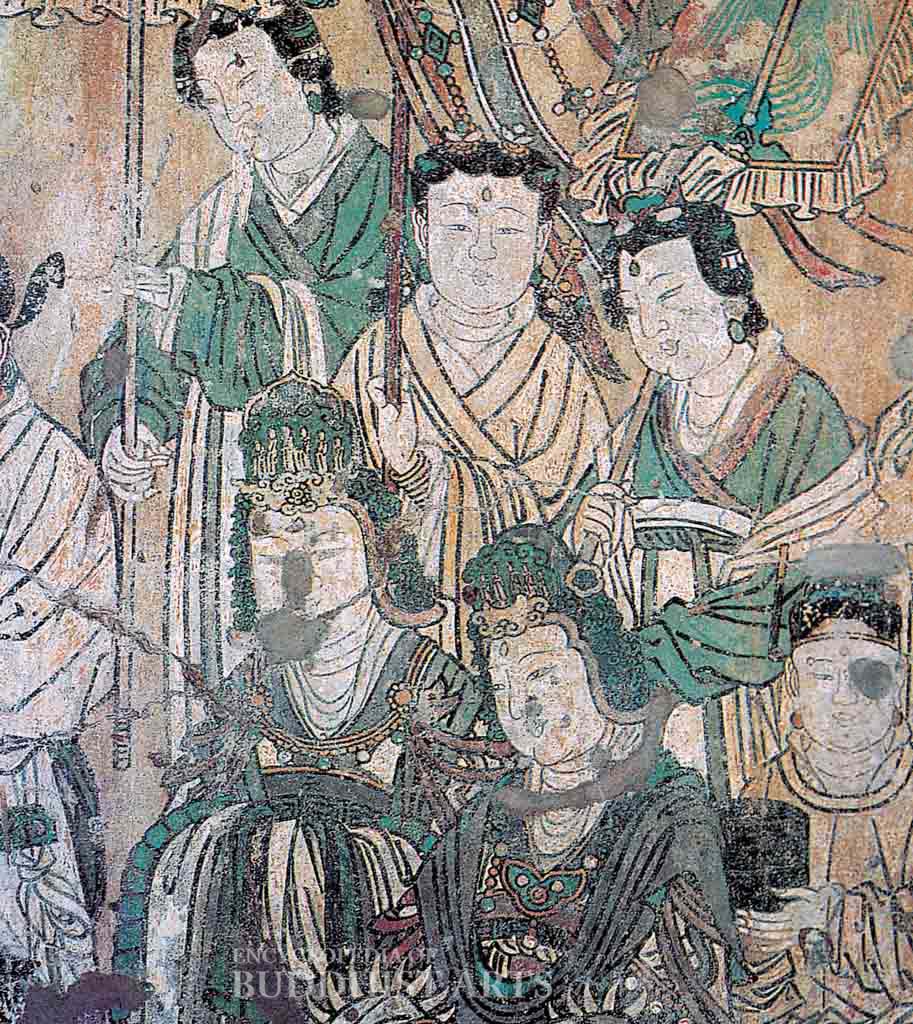
Qinglong Temple Murals: Middle Hall - Deceased Imperial Concubines (detail)
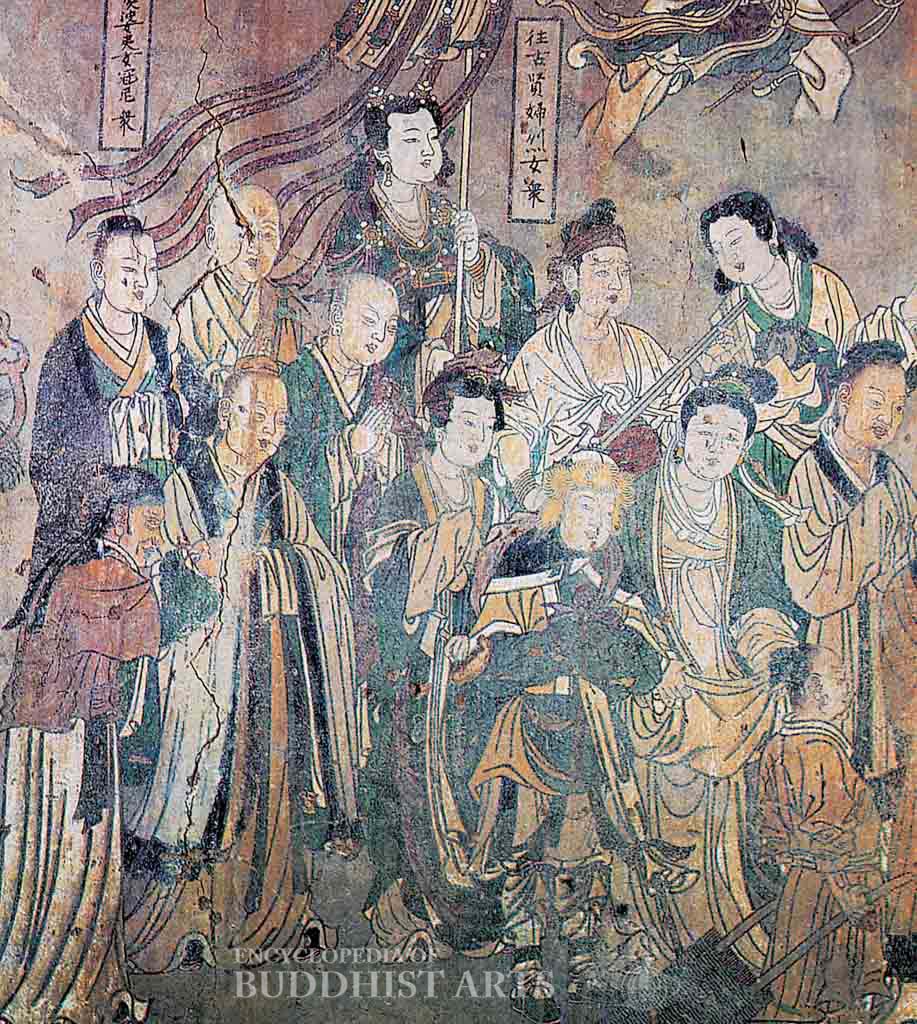
Qinglong Temple Murals: Middle Hall - Deceased Females (detail)
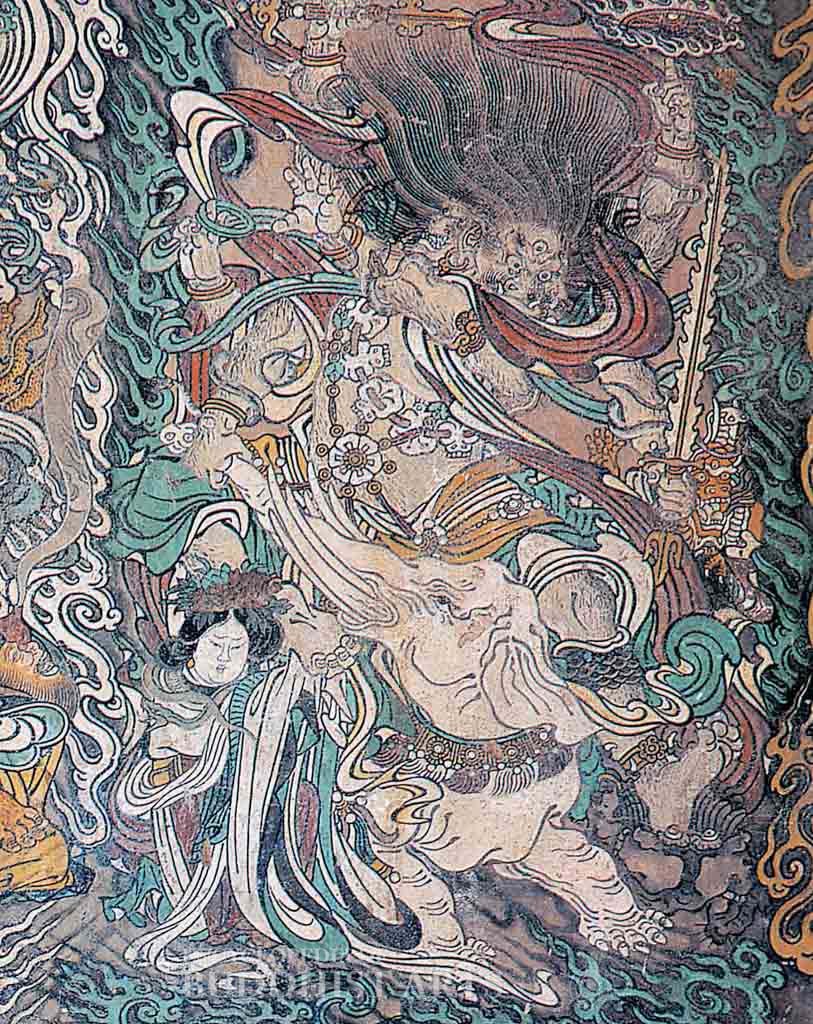
Qinglong Temple Murals: Middle Hall - Wisdom King (detail)
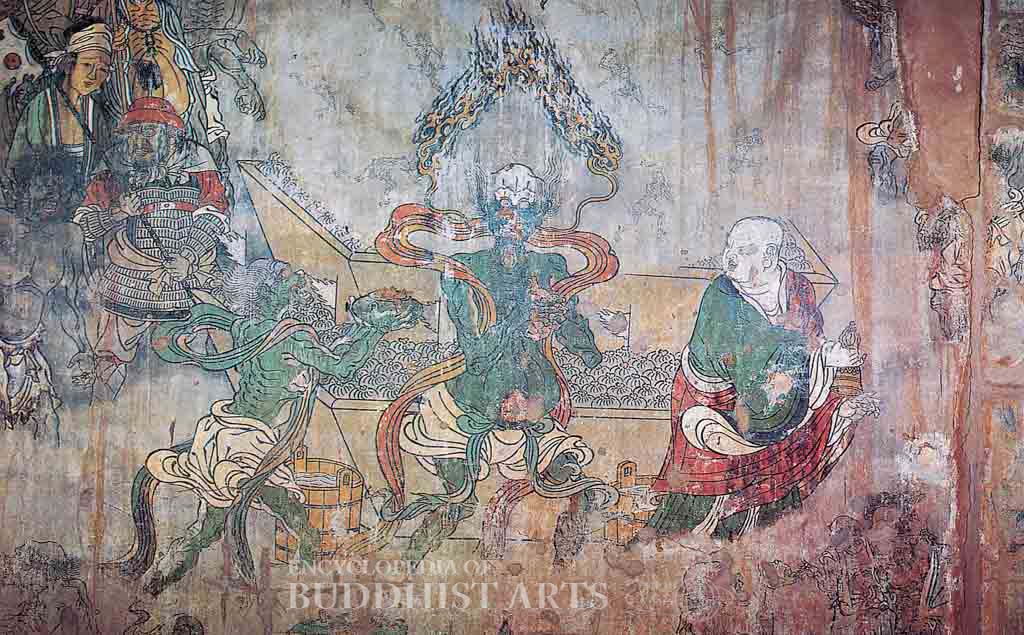
Qinglong Temple Murals: Middle Hall - Hell (detail)
Qinglong Temple Murals
CHINA, Shanxi, Yuncheng; Yuan dynasty
The murals in Qinglong Temple cover a total area of 186.08 sq m. They are mainly painted on the four walls of the middle hall and the east and west walls of the Great Hero Hall. There are also two small murals in the Sangharama Hall.
On the east wall of the Great Hero Hall, there is an illustration of the Buddha teaching the Dharma. Sakyamuni Buddha is in the center, sitting in lotus position on a lotus throne. Manjusri and Samantabhadra Bodisattva are beside the Buddha, each holding a scripture. Mahakasyapa and Ananda stand below. Beside the nimbus of the Buddha, apsaras emerge from the clouds, holding up offerings. Brahma, Sakra, warriors, and disciples gather on the sides of the illustration to listen to the Dharma.
A similar scene, but with Maitreya as the central figure, is painted on the west wall. Maitreya sits with legs pendent and feet resting on lotus pedestals. Fahualin (Lotus Grove) and Damiaoxiang (Great Wonderful Appearance) Bodhisattvas are beside the Buddha. Below, two smaller attendant Bodhisattvas stand beside an altar. Kalavinkas fly through the sky beside Maitreya’s nimbus. The tonsure ceremonies for King Sankha and his daughter Samivati described in the Sutra on the Descent of Maitreya are painted on the sides of the mural. The image of the king has been damaged; only the ceremony for Samivati is visible.
The Water and Land Dharma Service murals in the middle hall were painted in 1289 of the Yuan dynasty and restored in 1406 of the Ming dynasty. These murals, covering a total of 125.19 sq m, are some of the most highly regarded murals in the temple. The figures in Water and Land Dharma Service murals are separated into an upper hall and a lower hall. The upper hall is for Buddhas, Bodhisattvas, Sravakas, Pratyekabuddhas, Wisdom Kings, and the Eight Classes of Dharma Protectors. Beings from the six realms of existence occupy the lower hall.
The murals on the four walls all differ in composition. The figures are arranged in a seemingly random manner, characteristic of murals painted during the transition from the Yuan (1271–1368) to the Ming (1368–1644) dynasty. The Trikaya Buddhas are painted in the upper register of the west wall. Maitreya and Ksitigarbha Bodhisattvas are depicted beside the Buddhas. In the middle and lower registers there are illustrations of Brahma, Sakra, Hariti, Dharma protectors, and yaksas.
The top portion of the east wall has crumbled away, damaging images of Buddhas and attendant Bodhisattvas. Only the illustrations of the Arctic Emperor Ziwei and the Antarctic Emperor Tianhuang are intact. The Buddha figure in the middle of the upper register on the south wall is also damaged; only the Bodhisattva and Wisdom Kings flanking the Buddha can be discerned. On the north wall, there are images of the Sixteen Arhats and the hell realm.
The vivid figures, identified by inscriptions within rectangular cartouches, are illustrated with iron-wire and orchid-leaf lines. The billowing clouds in the background and the body-fitting garments worn by the figures are reminiscent respectively of styles by painters Wu Daozi and Cao Zhongda. The nuanced and elegant images are created by applying several coats of paint in alternating warm and cool hues.
For more details, go to the Encyclopedia of Buddhist Arts: Painting P-Z, page 760.
Cite this article:
author = Hsingyun and Youheng and Youlu and Wilson, Graham and Manho and Mankuang and Huntington, Susan,
booktitle = {Encyclopedia of Buddhist Arts: Painting P-Z},
pages = 760,
title = {{Qinglong Temple Murals}},
volume = 16,
year = {2016}}