
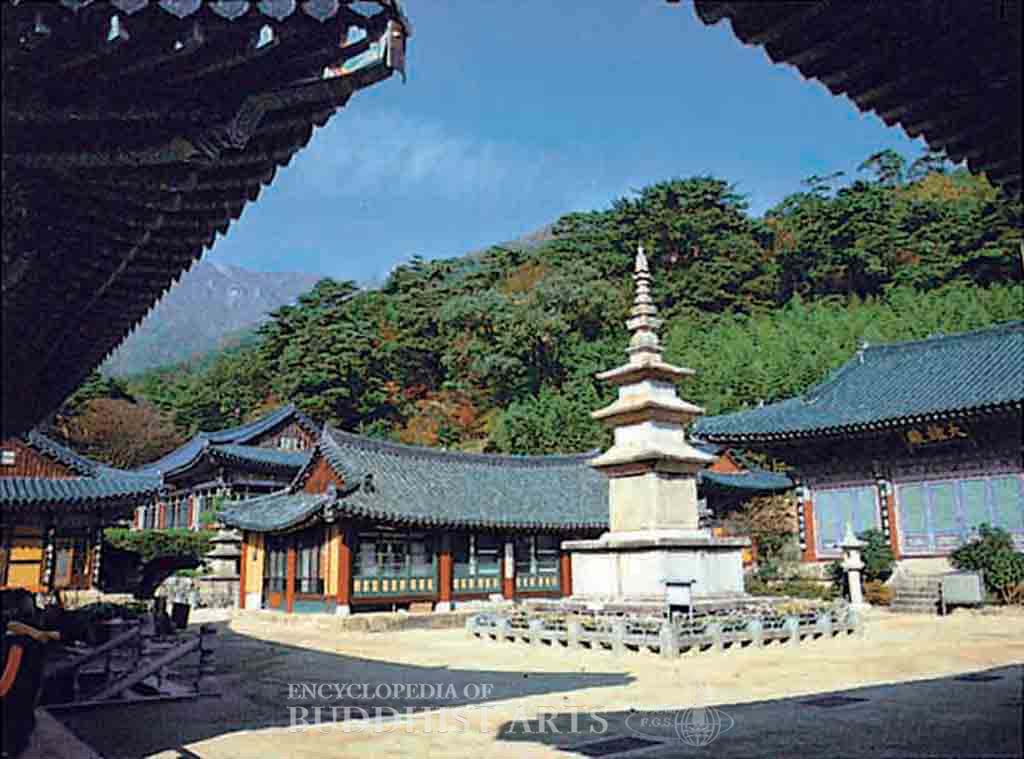
Seongnamsa Temple
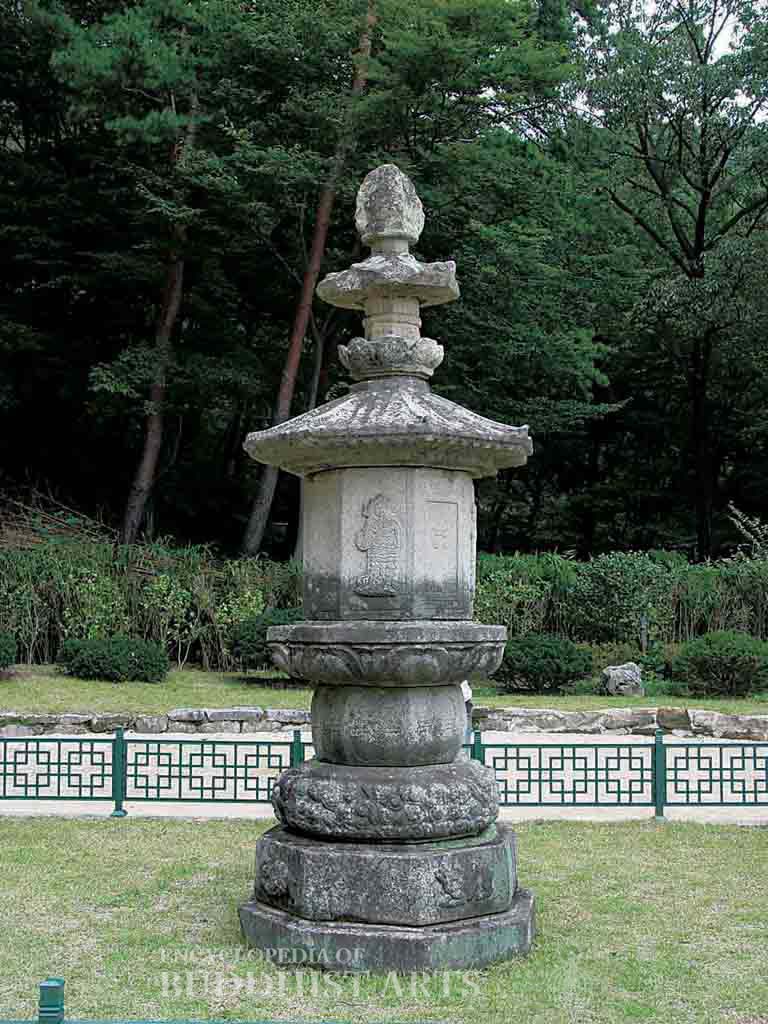
Seongnamsa Temple: Stupa
Seongnamsa Temple
SOUTH KOREA, South Gyeongsang, Ulsan
Seongnamsa means Temple to the South of the Rock and refers to the location of the temple, which is south of Gajisan Mountain. It was established in 824 during the Silla dynasty by National Master Doui. It was reconstructed in 1674 by Seon Masters Takyoung and Sunchol, and underwent restoration work in 1803 during the Joseon dynasty. The temple was partly destroyed in 1950 during the Korean War, and it currently belongs to the Bhiksuni Buddhist Order.
The major buildings at the temple include the Great Hero Hall, Ultimate Bliss Hall, meditation hall, Patriarch Hall, Sacred Mountain Hall, bell tower, Mind Sharpening Hall, and a stupa. The Great Hero Hall was built in 1725 during the Joseon dynasty. It has a single-eave hip-and-gable roof and is three bays wide. Statues of Amitabha Buddha, Manjusri and Samantabhadra Bodhisattvas are enshrined within the hall. The Ultimate Bliss Hall, built in 1791 during the Joseon dynasty, contains statues of Sakyamuni Buddha, Avalokitesvara and Mahasthamaprapta Bodhisattvas.
The stupa, listed as Treasure No. 369 in 1953, is octagonal and is 3.5 m high. Its base consists of multiple layers, with designs of lions and rolling clouds in the lower section, and carvings of lotus and other flower motifs in the upper section. The stupa body is decorated with reliefs of Dharma protectors on each side of the false door. The octagonal roof supports a spire consisting of a lotus base, a canopy, and a jewel. When the stupa was being repaired in 1962, a rectangular reliquary was discovered in the stupa body.
For more details, go to the Encyclopedia of Buddhist Arts: Architecture M-S, page 959.
Cite this article:
author = Hsingyun and Youheng and Johnson, Peter and Mankuang and Lancaster, Lewis,
booktitle = {Encyclopedia of Buddhist Arts: Architecture M-S},
pages = 959,
title = {{Seongnamsa Temple}},
volume = 3,
year = {2016}}