
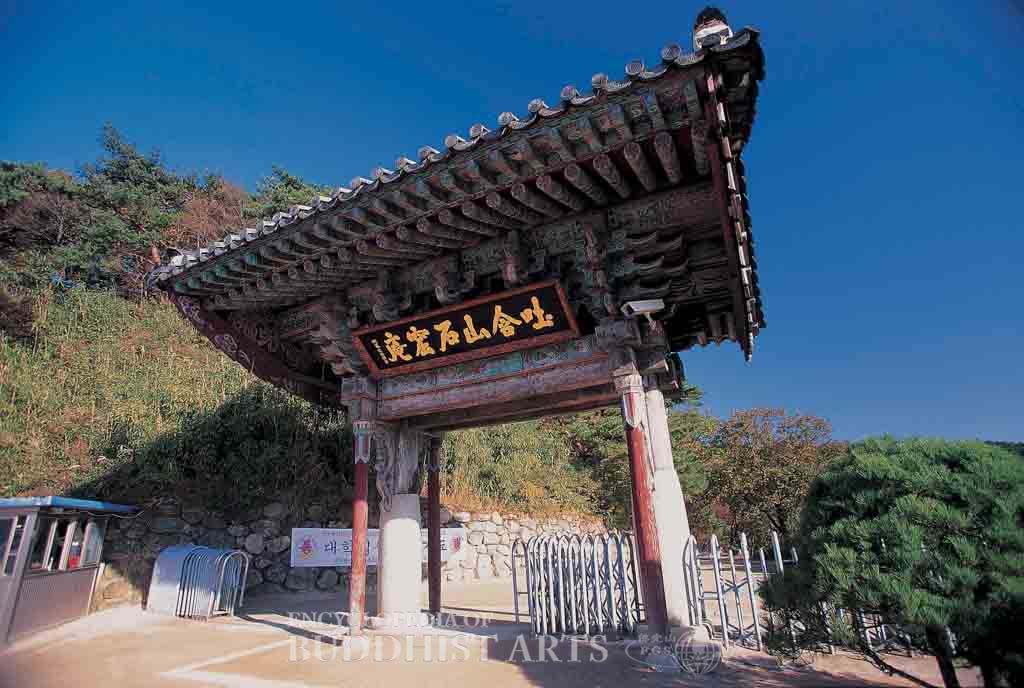
Seokguram Grotto
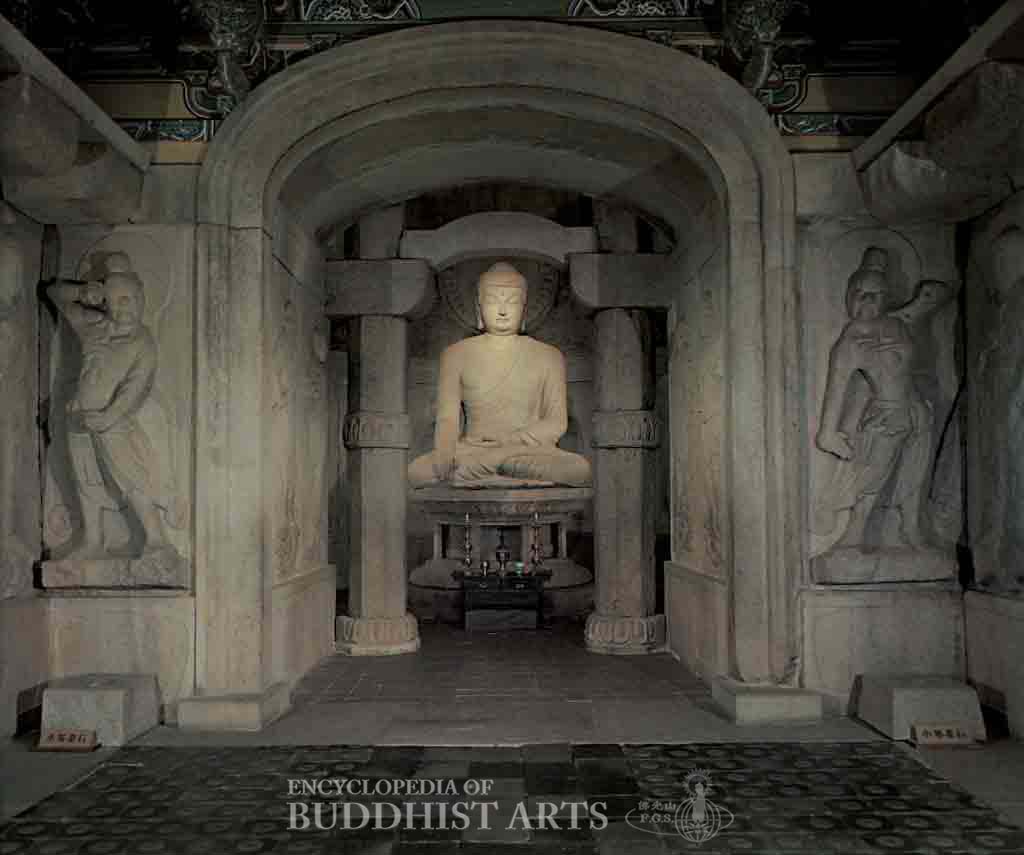
Seokguram Grotto
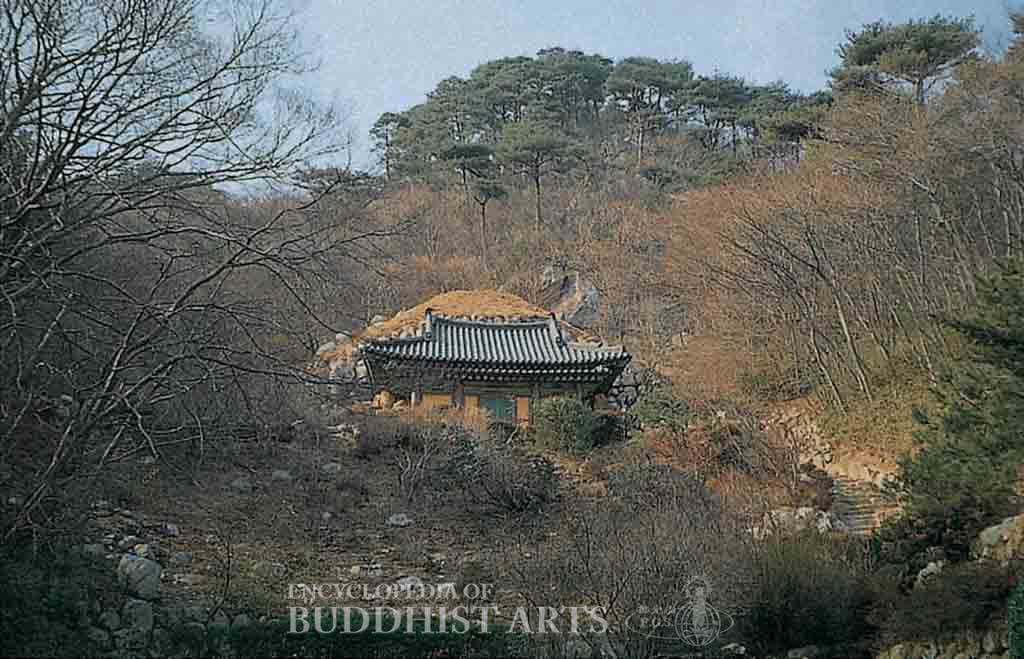
Seokguram Grotto

Seokguram Grotto (plan)
Seokguram Grotto
SOUTH KOREA, North Gyeongsang, Gyeongju
Seokguram Grotto is located on the summit of Tohamsan (East Big Mountain) in North Gyeongsang. Started in 751 and completed in 774, the grotto was an expansion of Bulguksa Temple designed by Prime Minister Gim Daeseong. It has been suggested that the Prime Minister undertook the construction to pay respect to his parents. The grotto looks out over a cliffside on the east Korean coast. Since ancient times, Japanese ships landed in this area, so the grotto was built for protection against incoming enemies. The Seokguram Grotto was listed as National Treasure No. 24 in 1962, and was listed as a UNESCO World Heritage Site in 1995.
The grotto is made of white granite. It consists of an antechamber, corridor, and a main chamber. The antechamber is rectangular, measuring 6.54 m by 3.39 m. Statues of the Eight Classes of Dharma Protectors are depicted on each side. A Vajrapanibalin stands on either side of the corridor entrance. The corridor is 3.37 m wide, and on each side wall stand two of the Four Heavenly Kings. The main chamber is circular with a 7.15 m diameter and a vaulted ceiling. A seated Sakyamuni Buddha is found inside the chamber. The wall surrounding the Buddha contains many relief carvings, including Manjusri and Samantabhadra Bodhisattvas, an Eleven-Headed Avalokitesvara Bodhisattva, Brahma, Sakra, and the Ten Great Disciples. Scholars have theorized that the combination of a rectangular antechamber and round main chamber is an influence from India’s caitya cave, while others say that the grotto is similar to the Twin Column Tomb from the Goguryeo Kingdom (37 BCE–668). These are the most significant sculptural works created during the Unified Silla dynasty (668–935).
For more details, go to the Encyclopedia of Buddhist Arts: Caves Mo-S, page 1349.
Cite this article:
author = Hsingyun and Youheng and Johnson, Peter and Mankuang and Huntington, Susan and Edson, Gary and Neather, Robert,
booktitle = {Encyclopedia of Buddhist Arts: Caves Mo-S},
pages = 1349,
title = {{Seokguram Grotto}},
volume = 8,
year = {2016}}