
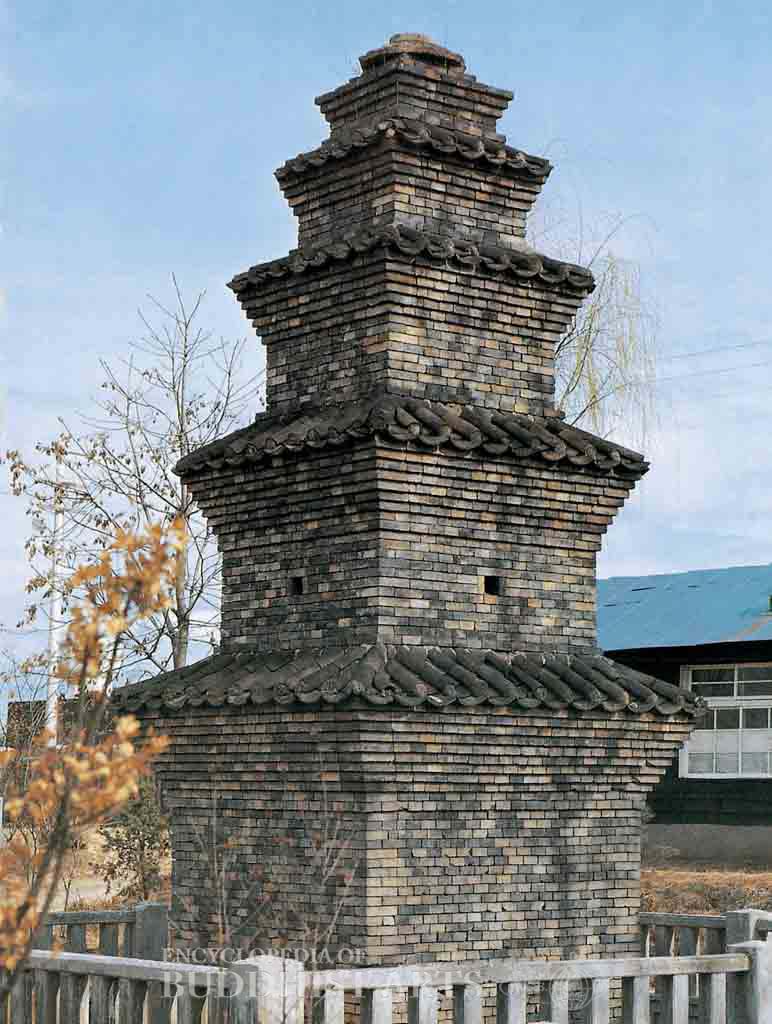
Dongbudong Five-Story Pagoda
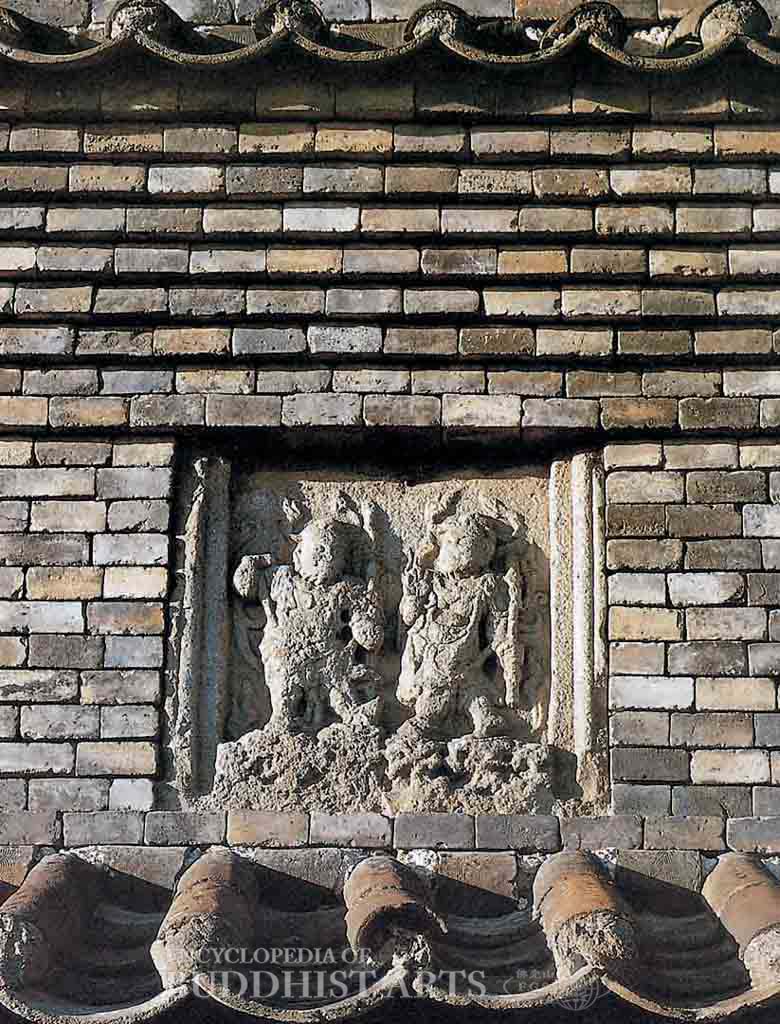
Dongbudong Five-Story Pagoda: Dharma Protectors
Dongbudong Five-Story Pagoda
SOUTH KOREA, North Gyoengsong, Andong
Based on the records, the pagoda was built during the Unified Silla dynasty (668–935) on the site of Beopnimsa (Dharma Forest Temple). The pagoda was originally seven stories high. It underwent major renovations during the Joseon dynasty (1392–1910). The gilt bronze spire was lost in 1598 and the pagoda was further damaged during the Korean War (1950–1953). It was repaired in 1962 resulting in its present appearance. It was listed as Treasure No. 56 in 1963.
The pagoda is 8.4 m high and stands on a three-layered granite base. The first story is relatively higher than the remaining stories, which decrease significantly with height. The south face of the first story has a small niche made of granite. The second story has small niches on all four sides, with two images of Dharma protectors on the south face. There is also a small niche on the south face of the third story. The width of the eaves is shorter than is the case with stone pagodas because they are made of brick. The eaves are covered in cylindrical tiles. The layers of corbeling underneath the eaves decrease with height, starting with ten on the first story down to three on the topmost story. All that remains of the spire is an inverted stone bowl structure.
For more details, go to the Encyclopedia of Buddhist Arts: Architecture A-F, page 247.
Cite this article:
author = Hsingyun and Youheng and Johnson, Peter and Mankuang and Lancaster, Lewis,
booktitle = {Encyclopedia of Buddhist Arts: Architecture A-F},
pages = 247,
title = {{Dongbudong Five-Story Pagoda}},
volume = 1,
year = {2016}}