
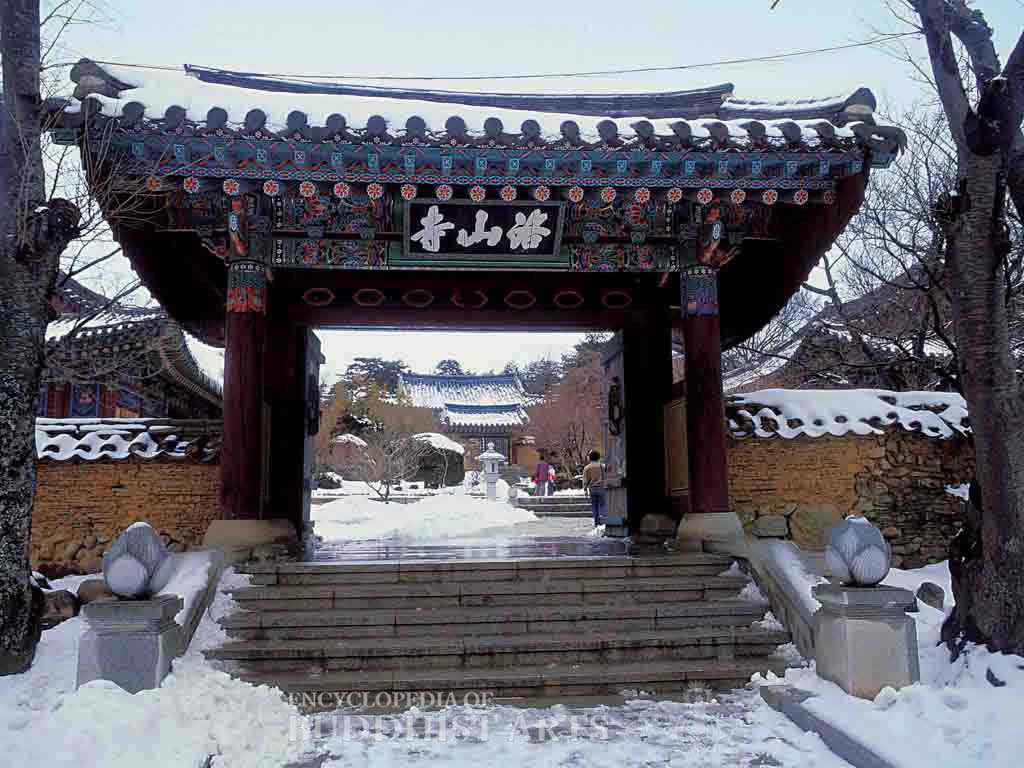
Naksansa Temple
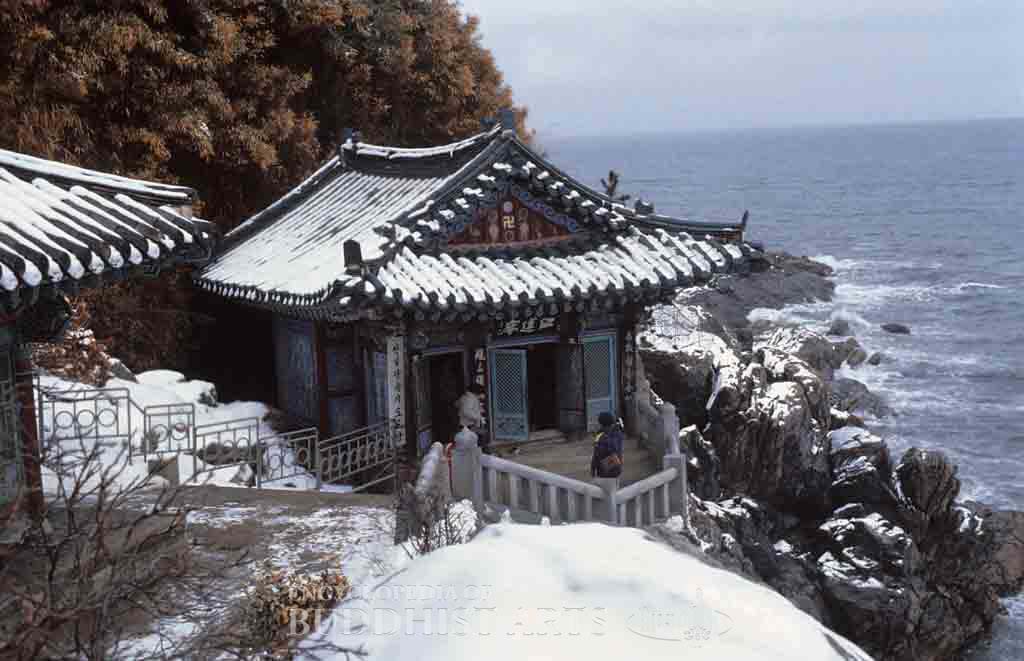
Naksansa Temple: Red Lotus Hermitage
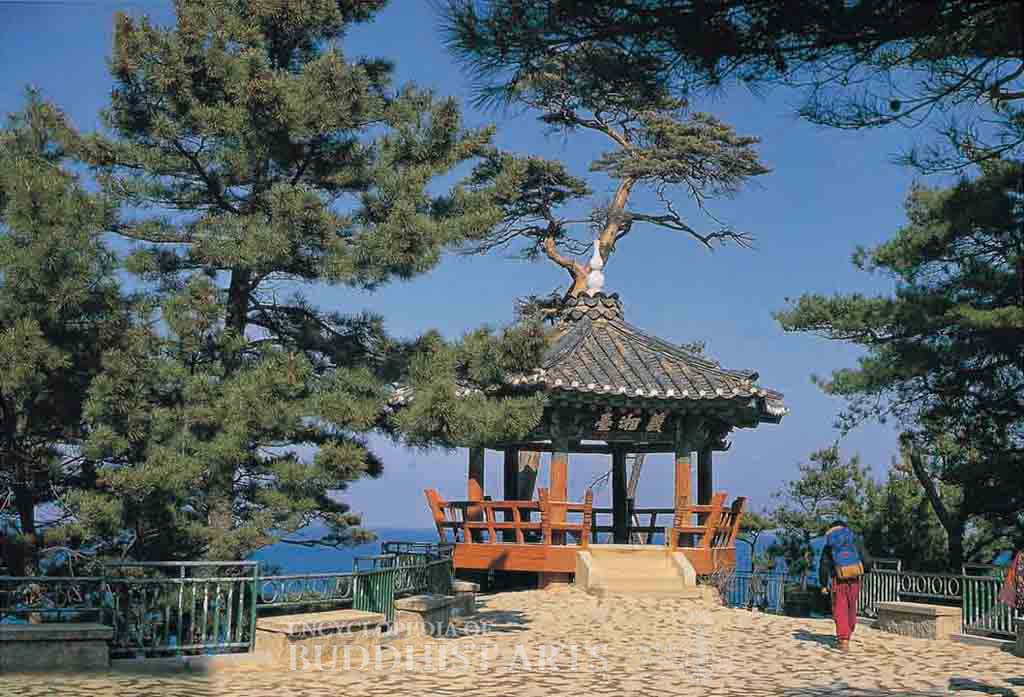
Naksansa Temple: Uisang Pavilion
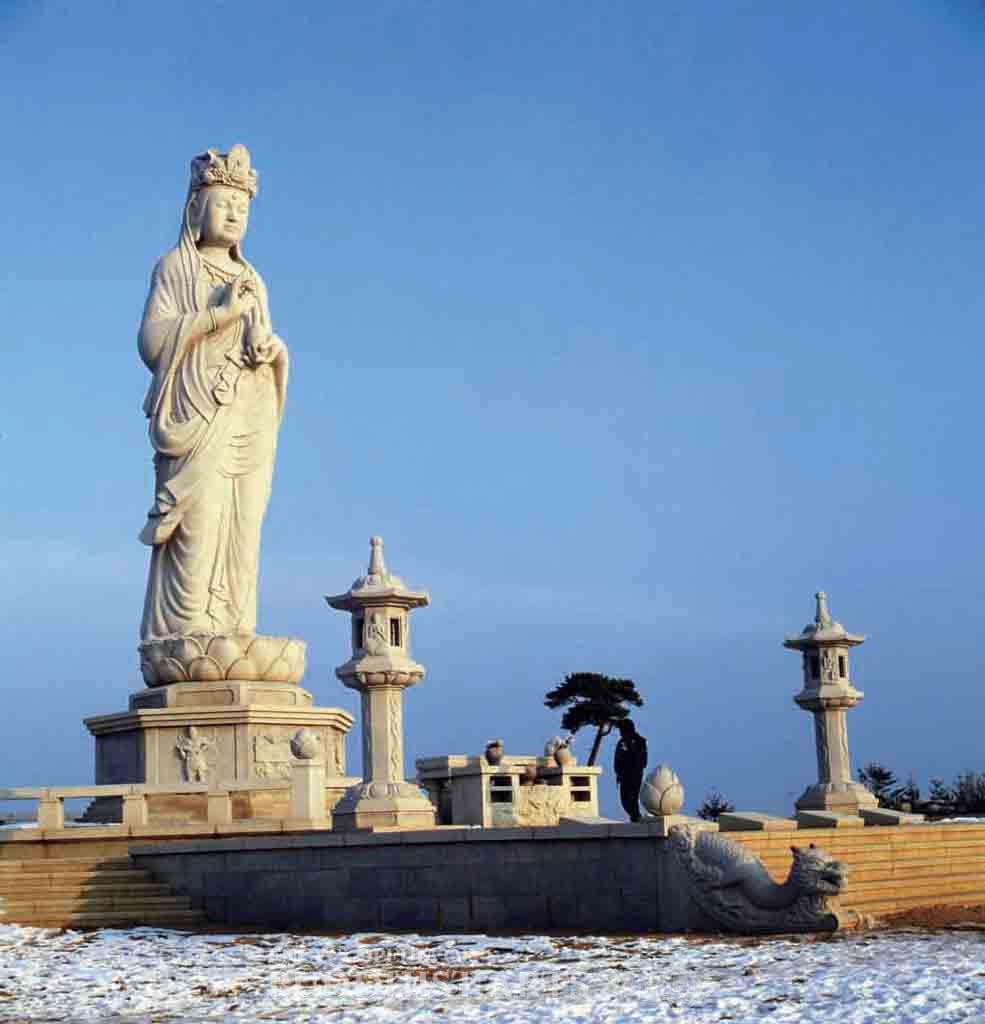
Naksansa Temple: Seawater Avalokitesvara
Naksansa Temple
SOUTH KOREA, Gangwon, Yangyang
Naksan is an abbreviated form of the Korean term Botarakgasan (Potalaka Mountain), the place where Avalokitesvara Bodhisattva is said to reside. It is an ancient temple and one of the few Korean temples by the sea. The temple was founded by Master Uisang in 671 during the Silla dynasty. According to legend, after Master Uisang came back to Korea from his studies in China during the Tang dynasty (618–907), he saw Avalokitesvara Bodhisattva during meditation. Under the guidance of the Bodhisattva, he built a temple and named it Naksansa. The temple has undergone several renovations during its history, including a major reconstruction in 1953. The temple was again rebuilt after the fire of 2005, when most of the buildings were burnt down.
The temple originally had a total of 37 structures, including the One Pillar Gate, Rainbow Gate, arched stone gate, Great Hero Hall, Perfect Understanding Hall, Dharma Hall, bell tower, Uisang Pavilion, Red Lotus Hermitage, and seven-tier stone pagoda. However, only the Uisang Pavilion and Red Lotus Hermitage survived the fire of 2005, when more than 20 structures were destroyed. Fortunately, state-recognized treasures such as the seven-tier stone pagoda and a lacquered statue of a seated Avalokitesvara Bodhisattva, as well as Buddhist paintings and Tangible Cultural Properties of Gangwon-do, were preserved as they had been relocated to the underground repository. However, a bronze bell, more than five hundred years old, was destroyed during the fire.
Uisang Pavilion, located on the cliff overlooking the sea, is a hexagonal pavilion constructed in 1925 to commemorate Master Uisang, who used to sit and meditate there. To the right of the pavilion, along the foot of the mountain, there is a 16 m high white statue of Seawater Avalokitesvara standing on a lotus pedestal facing east. Red Lotus Hermitage is built above a stone cave and it has an opening in the floor through which the cliff and seawater below can be seen.
For more details, go to the Encyclopedia of Buddhist Arts: Architecture M-S, page 771.
Cite this article:
author = Hsingyun and Youheng and Johnson, Peter and Mankuang and Lancaster, Lewis,
booktitle = {Encyclopedia of Buddhist Arts: Architecture M-S},
pages = 771,
title = {{Naksansa Temple}},
volume = 3,
year = {2016}}