
True and Not False
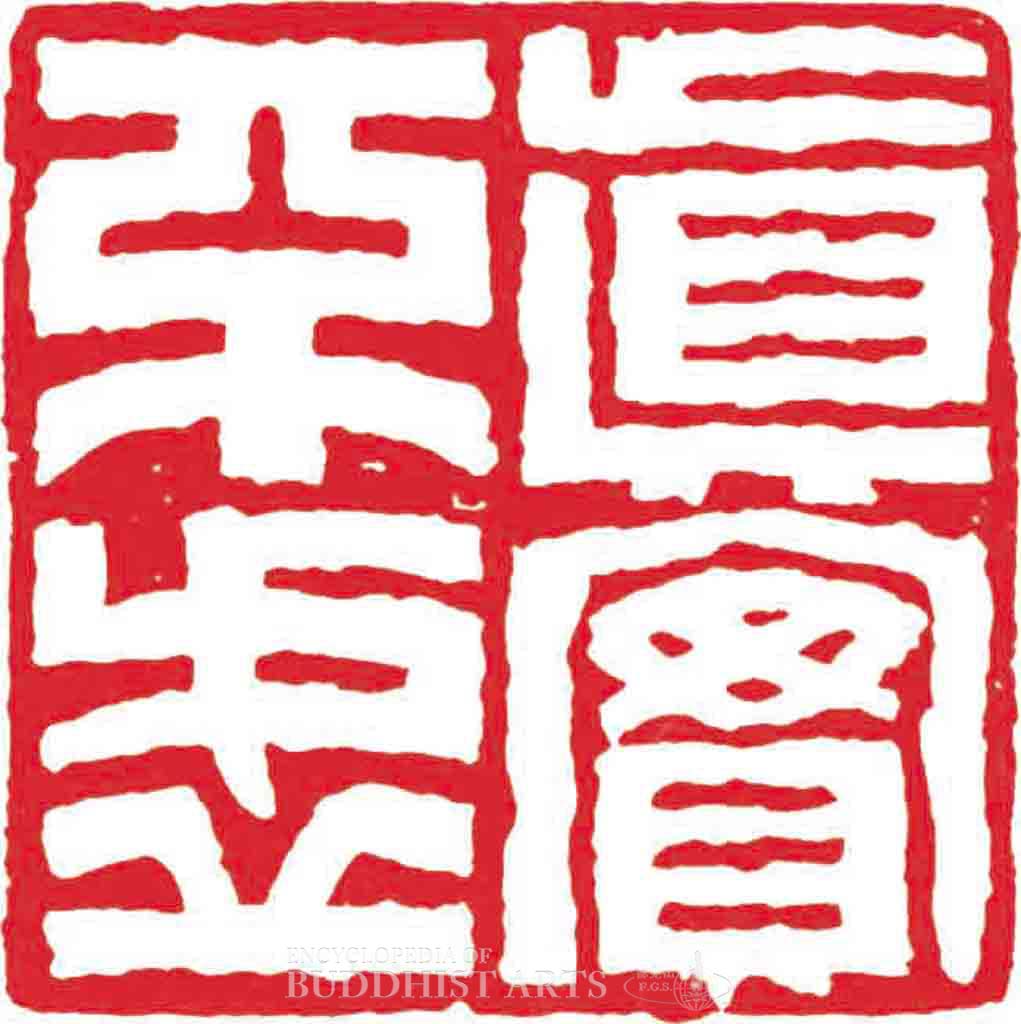
White-character square seal
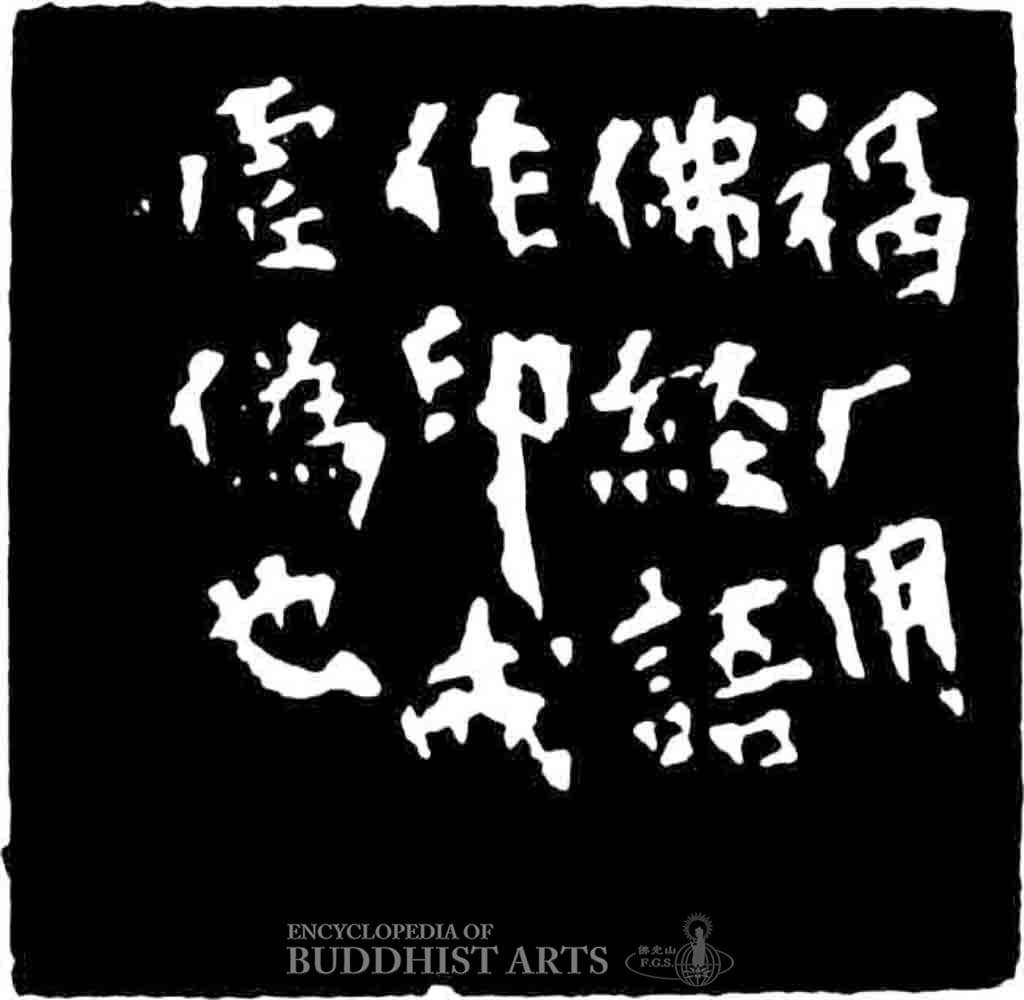
True and Not False (side colophon)
True and Not False
CHINA
The side colophon of this seal reads, “Seals crafted by Wang Ti employ Buddhist proverbs.” The quoted text of the seal, in combination with this colophon inscription, is a testimony to the artist’s persistent inclination towards a true and pure mind.
The cutting of this seal utilized the Zhejiang school method, gaining the spirit of Han seals by strictly adhering to the curves and angles of the characters. The two characters on the right side of the seal are comprised of mostly complicated strokes; however, as to avoid throwing off the balance of the piece, the radicals of both characters were deliberately simplified, reducing them to minor protrusions. In contrast, the character “bu” (not), on the top of the left side, was substantiated with additional strokes, while the character “xu” (false) underneath was also somewhat simplified.
Wang Ti was originally named Shouqi and also known as Fuguang, among several other aliases. A native of Hangzhou, Zhejiang, he lived most of his life in Shanghai. In addition to calligraphy, he specialized in seal engraving, and in particular the styles of the Zhejiang and Anhui schools. He was renowned as one of the founders of the Xiling Seal Art Society.
For more details, go to the Encyclopedia of Buddhist Arts: Calligraphy, page 334.
Cite this article:
author = Hsingyun and Youheng and Youlu and Pokorski, Stefanie and Mankuang and Edson, Gary,
booktitle = {Encyclopedia of Buddhist Arts: Calligraphy },
pages = 334,
title = {{True and Not False}},
volume = 17,
year = {2016}}