
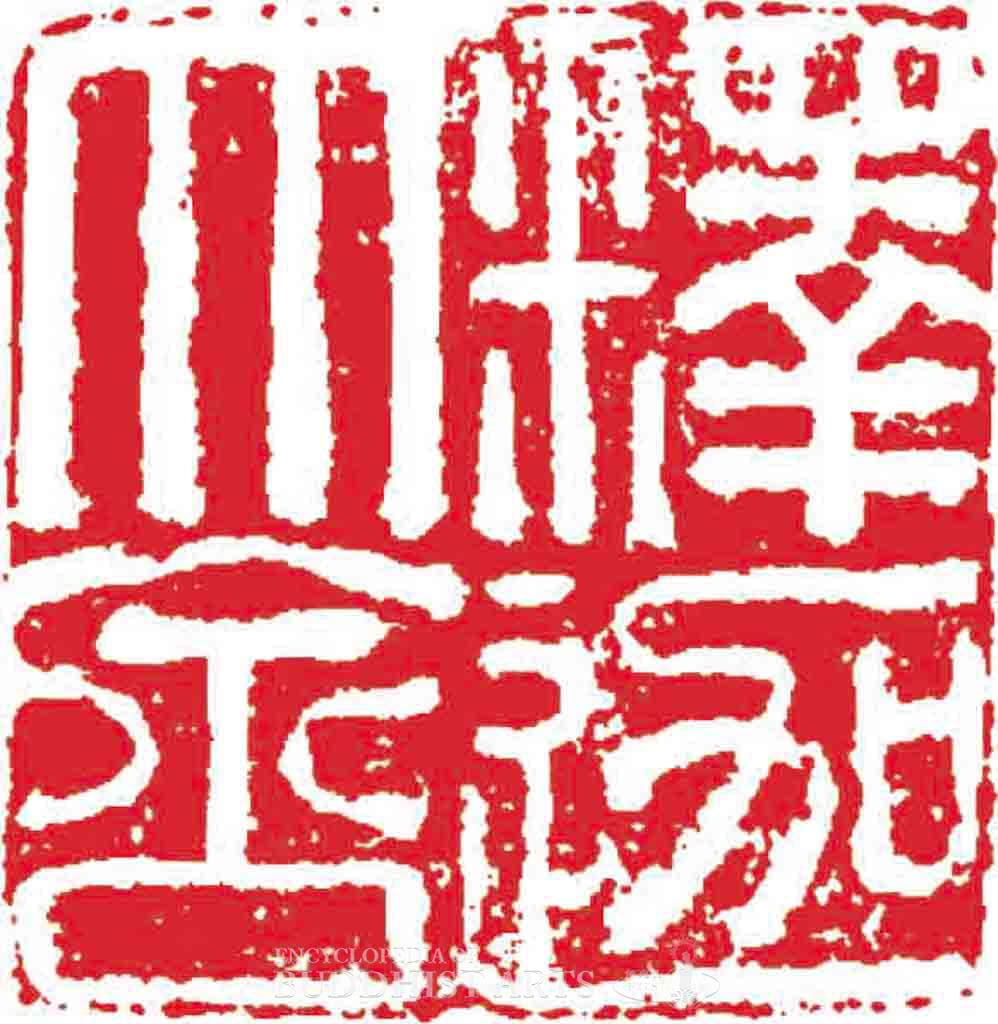
Sakya Immense Capacity
White-character square seal
Sakya Immense Capacity
JAPAN; Edo period
A Sanskrit word meaning “able,” “Sakya” implies the name of Sakyamuni, the founding sage of Buddhism, who is most commonly referred to as the Buddha. The term “immense capacity” indicates a large, broad mind embracing all phenomena.
This four character seal was based on Han style. However, as evinced by the disproportionate sizing between the top and bottom characters, the layout of this particular work is not as strict as traditional Han seals. The seal script utilized exhibits calligraphic influences and was executed with a subdued carving method. As a whole, the seal is imbued with a deep and natural sincerity.
The artist Rai Sanyo was born in Osaka during the Edo period (1615–1868) and was a prominent figure in Japanese literati history. Known to be a keen learner and vastly intelligent since a young age, he excelled in various artistic endeavors.
For more details, go to the Encyclopedia of Buddhist Arts: Calligraphy, page 323.
Cite this article:
author = Hsingyun and Youheng and Youlu and Pokorski, Stefanie and Mankuang and Edson, Gary,
booktitle = {Encyclopedia of Buddhist Arts: Calligraphy },
pages = 323,
title = {{Sakya Immense Capacity}},
volume = 17,
year = {2016}}