
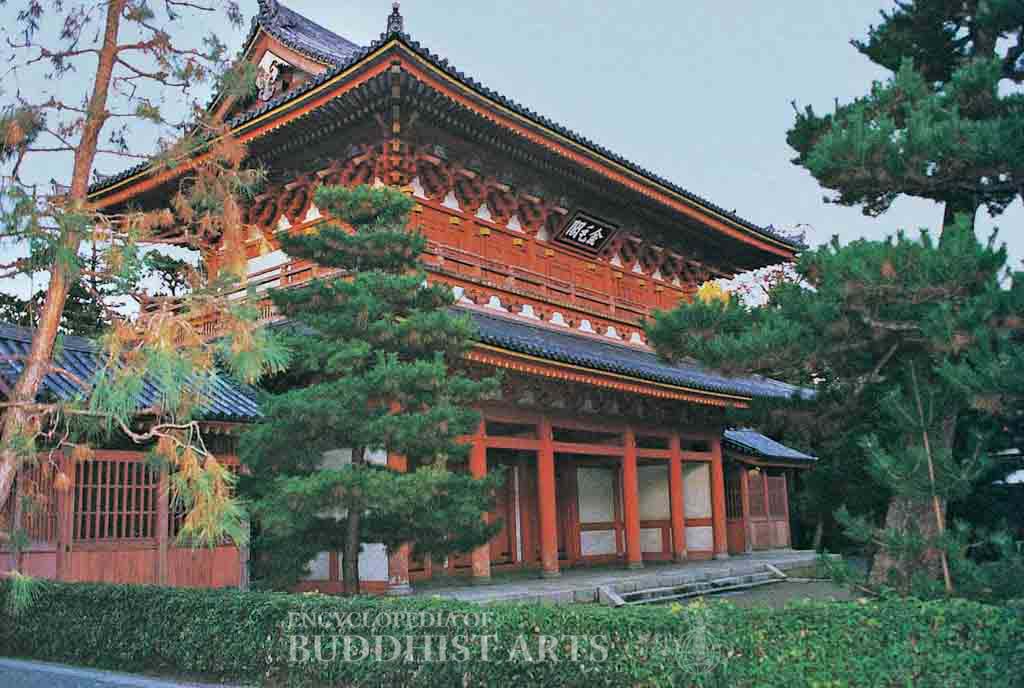
Daitokuji Temple: Main Temple Gate
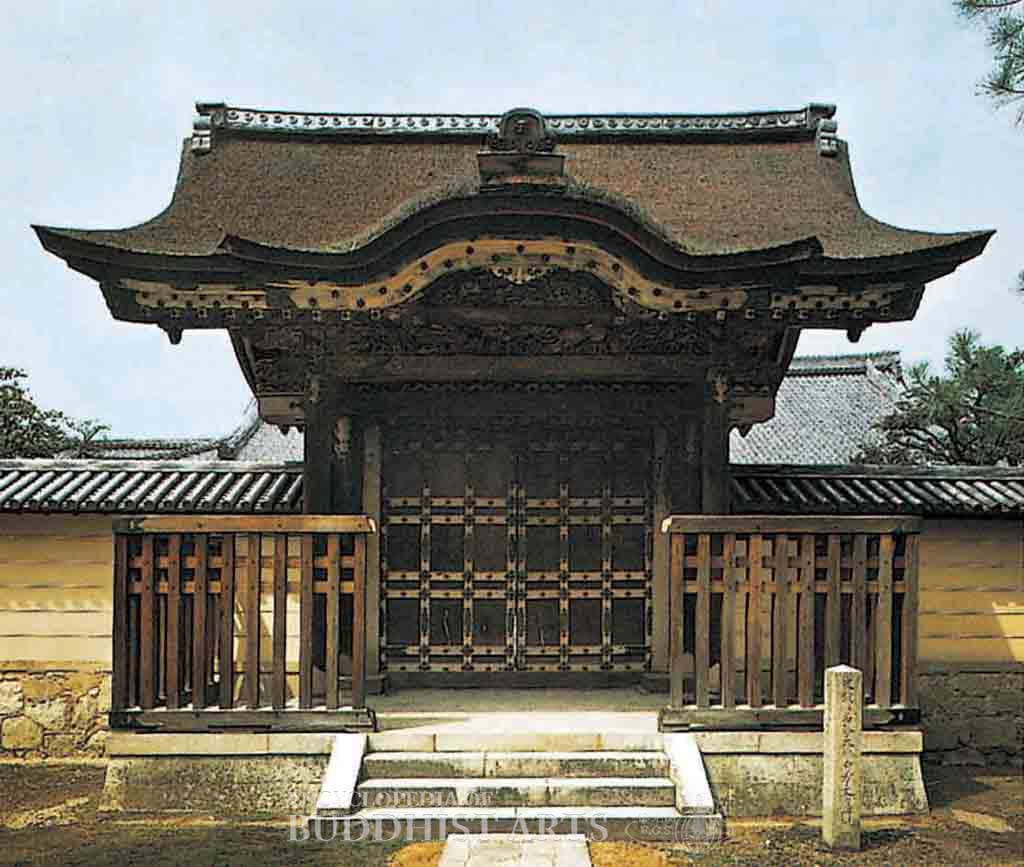
Daitokuji Temple: Chinese Gate
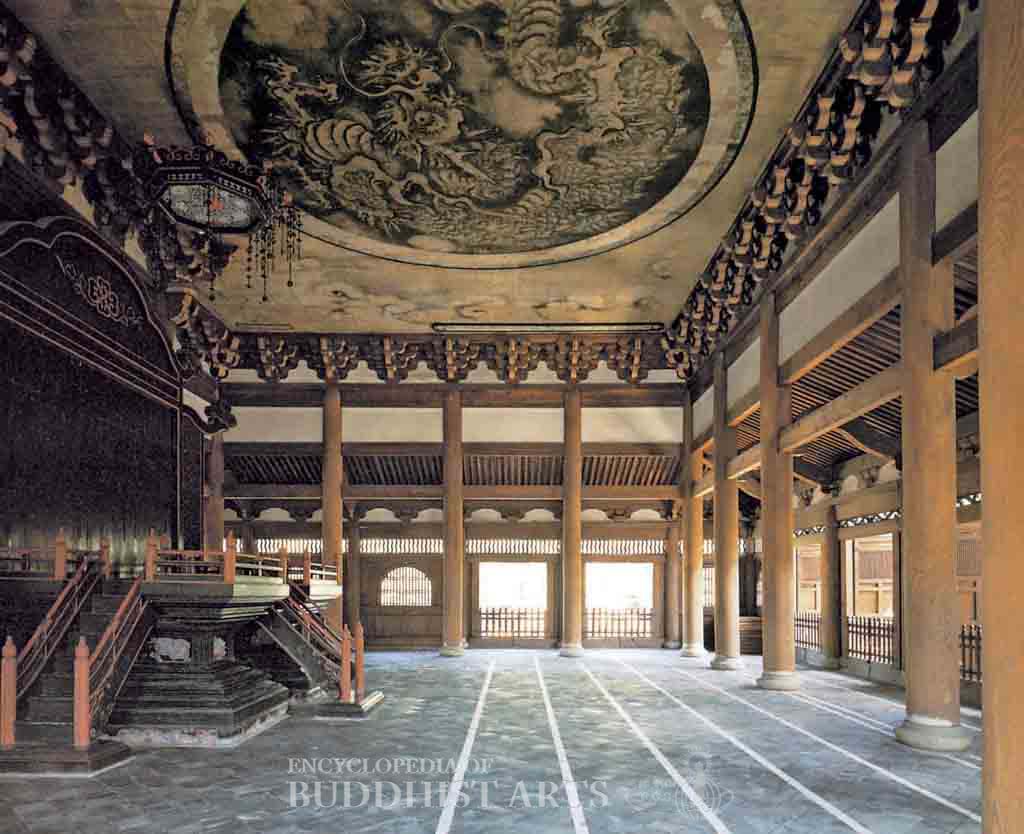
Daitokuji Temple: Dharma Hall (interior)
Daitokuji Temple
JAPAN, Kyoto
Daitokuji is the head temple of the Daitokuji branch of the Rinzai lineage of Zen Buddhism. It was built by National Master Shuho Myocho in 1326 during the late Kamakura period. The temple was damaged by fire on a number of occasions and subsequently rebuilt.
The temple has a classical Zen monastery layout of Kamakura and Muromachi periods. The major buildings include the Imperial Messenger Gate, main temple gate, Buddha Hall, Dharma Hall, abbot’s quarters, Chinese gate, sutra repository, and bell tower. The Chinese gate and the abbot’s quarters were listed as National Treasures in 1952 and 1956, respectively.
The five-bay two-story main temple gate is also known as Golden Hair Building. It was completed in two stages: the first story in 1529 during the Muromachi period, and the second story in 1589 during the Azuchi-Momoyama period. Its double-eave hip-and-gable roof is covered with cylindrical tiles. The columns inside the gate and the doors are all painted in vermilion.
The three-by-three bay Buddha Hall was built in 1665 during the Edo period. It has a double-eave hip-and-gable roof covered in cylindrical tiles. A statue of Sakyamuni Buddha is enshrined within the hall.
The five-by-four bay Dharma Hall, rebuilt in 1636 during the Edo period, has a double-eave hip-and-gable roof covered in cylindrical tiles. A Sumeru throne within the hall is used by the abbot during Dharma teachings. The medallion on the ceiling is illustrated with clouds and dragons. The abbot’s quarters has a single-eave hip-and-gable roof covered with wavy square tiles. It consists of eight rooms, four on either side. It houses 84 ink landscape paintings by famous painter Kano Tanyu.
The three-bay Chinese gate has an overhanging gable roof covered in cypress bark. The bargeboards are exquisitely carved with images of dragons, a mythical animal called a kirin, peacocks, and other auspicious animals, as well as floral patterns.
The temple houses National Treasures, such as the painting of the Avalokitesvara, a Monkey, and a Crane, and a portrait of Master Shuho Myocho, calligraphy by Zen Master Kido Chigu, and writings by Emperor Go-Daigo (reigned 1318–1339) of the Kamakura period.
For more details, go to the Encyclopedia of Buddhist Arts: Architecture A-F, page 199.
Cite this article:
author = Hsingyun and Youheng and Johnson, Peter and Mankuang and Lancaster, Lewis,
booktitle = {Encyclopedia of Buddhist Arts: Architecture A-F},
pages = 199,
title = {{Daitokuji Temple}},
volume = 1,
year = {2016}}