
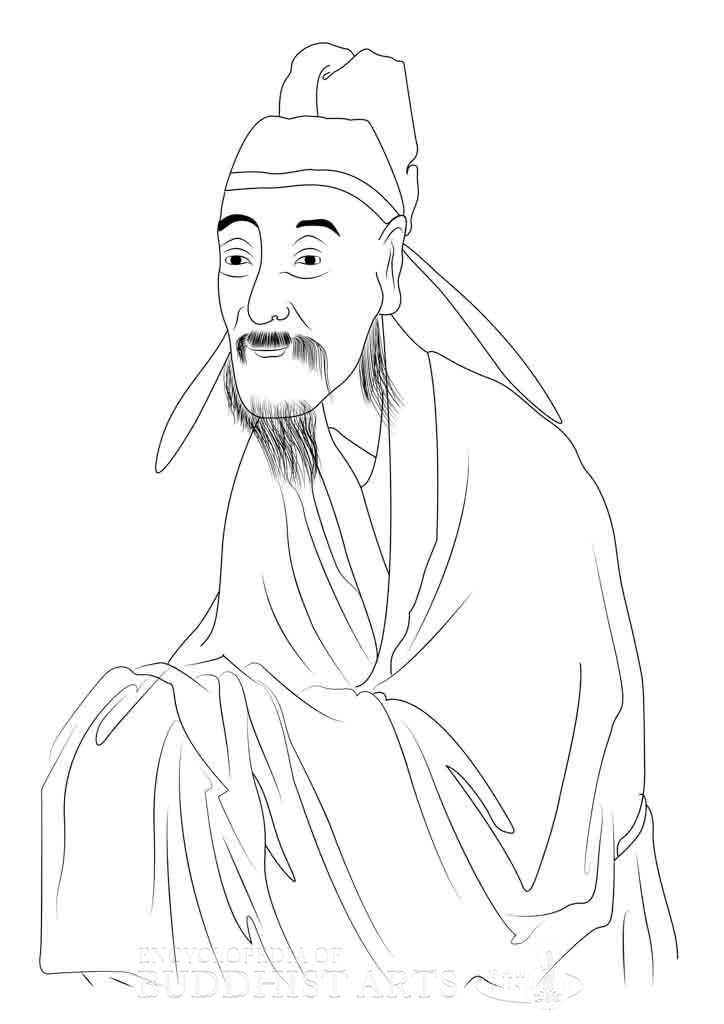
Wang Wei
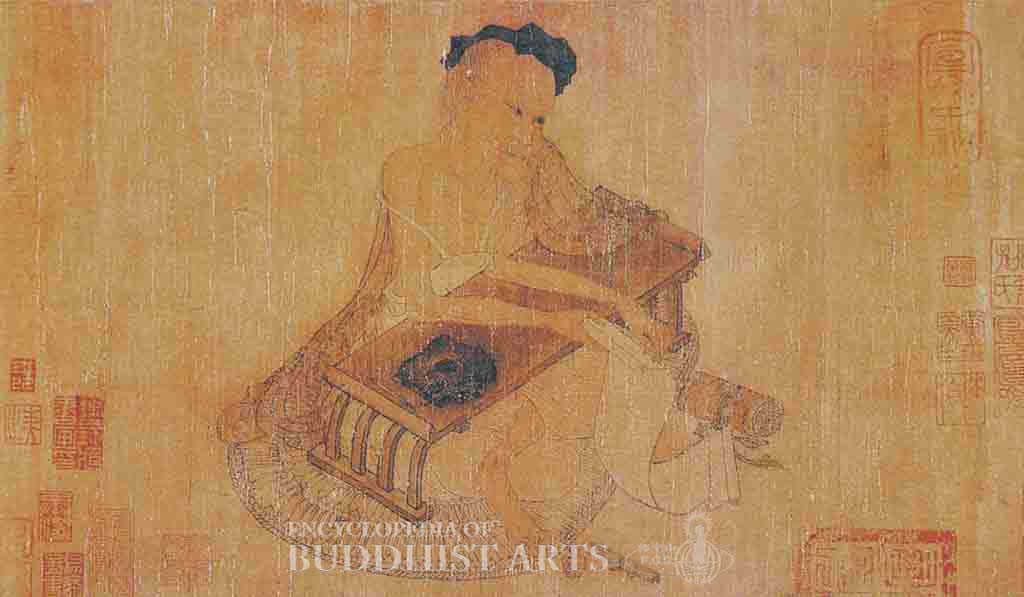
Fusheng Teaching the Book of Documents attributed to Wang Wei; Tang dynasty
Color on silk
Wang Wei
CHINA, Shanxi, Jinzhong; Tang dynasty
Wang Wei, also known as Mo Jie, was a poet and calligrapher from Qixian, Jinzhong. He was intelligent and talented in poetry since he was young, and later became an Imperial Scholar after passing the imperial examination. Multi-talented, Wang was an expert in poetry, music, and cursive script calligraphy.
He became a Buddhist under the influence of his mother and later took refuge under Chan Master Shenhui. In his later years, he retired from work as an official and converted his house in Xi’an into a temple which he named Qingyuan Temple. Wang spent his time as a Buddhist practitioner, meditated, and studied Chan teachings intensively. As a result, he often incorporated Chan doctrine into his artwork. His mural, Scenery of Wangchuan, on the temple wall is known for its vigorous and unique brushwork. Poems by Wang are natural and refreshing, often containing Chan teachings; because of this, he was often referred to as the Poetry Buddha. He was renowned alongside famous poets such as Li Bai and Du Fu, and the well-known artist and writer, Su Shi, praised his works as being profound. Wang produced several written works including Collections of Wang Youcheng and Landscape of Wangchuan.
Initiating the use of the “pomo” (breaking ink) technique in landscape painting, Wang was praised by Dong Qichang as the founder of landscape painting. Also famous for his paintings of figures and Buddhas, he created the wall murals at Daci’en and Qianfu temples in Shaanxi. A total of 126 of Wang’s works are commended and recorded in Xuanhe Catalog of Paintings. Among them are Buddhist paintings such as Vimalakirti, Noble Monk, Monk Crossing the River, Subhuti, Sixteen Arhats, and more. Other works include Winter at the Yangtze River, kept at the Honolulu Academy of Arts in Hawaii, USA; and Landscape, kept at the National Palace Museum in Taipei, Taiwan. Fusheng Teaching the Dharma, now located at the Osaka Municipal Museum of Art in Japan, is purported to be painted by him.
For more details, go to the Encyclopedia of Buddhist Arts: People, page 282.
Cite this article:
author = Hsingyun and Youheng and Youlu and Pokorski, Stefanie and Yichao and Mankuang and Miaohsi,
booktitle = {Encyclopedia of Buddhist Arts: People },
pages = 282,
title = {{Wang Wei}},
volume = 19,
year = {2016}}