
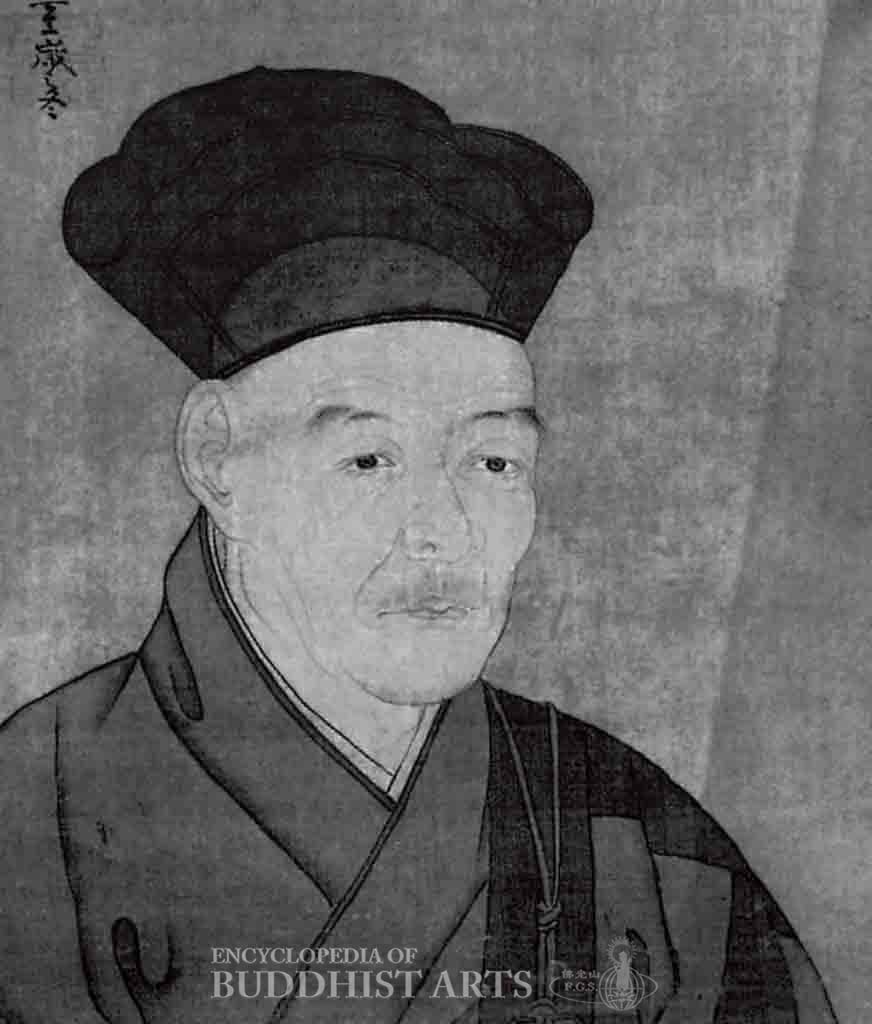
Sesshu Toyo
Sesshu Toyo
JAPAN, Okayama, Soja; Muromachi period
Born into the Oda family, a prominent samurai family, Sesshu Toyo was a painter and monk of the Rinzai school of Zen Buddhism. He was sent to Hofukuji Temple at a young age to train as a monk, and later went on to live at Shokokuji Temple in Kyoto where he studied Zen under Shunrin Suto. Sesshu also studied painting under Tensho Shubun, the most highly regarded Japanese painter during the Muromachi period. Due to war in Kyoto, he relocated to Yamaguchi where he established a workshop called Unkokuan and remained active till 1464.
In 1467, at the age of 47, Sesshu set forth to China. For three years, he learned Chinese landscape painting under artists including Li Zai and absorbed the painting styles of the Song (960–1279) and Yuan (1271–1368) dynasties. He also traveled to famous mountains and rivers to paint from nature. Aside from painting, he engaged in Chan practice at Jinshan Temple in Suzhou, as well as at Tiantong Temple in Zhejiang, where he was honored the supervisor.
Sesshu painted mostly landscapes, religious figures, flowers, and birds. He was especially proficient with the haboku (broken-ink) technique, an effect of applying ink in crossed lines. Rocks were depicted with thick vertical lines, adding depth and space to the composition of the painting. His landscape painting technique was outstanding enough to establish a school of its own. The school, generally known as the Unkoku school, fronted a new painting style of the Muromachi period, and Sesshu was recognized as a pioneer of Japanese landscape painting. His style played an important role as an influence to later developments of the Unkoku, Kano, and Hasegawa schools.
Extant paintings by Sesshu include Long Scroll of Landscapes, which is 16 m long and was created when he was 67 years old; it is considered one of his most outstanding works and is currently kept at the Mori Museum in Yamaguchi. The two scrolls of Landscapes of Autumn and Winter each measures 46.4 cm high and 29.4 cm wide, and together with his other painting, Landscape Painted in Splashed-Ink, are kept at the Tokyo National Museum. In addition, View of Amanohashidate is presently collected at the Kyoto National Museum as a National Treasure of Japan. Other works listed as Important Cultural Properties include Master Huike Cutting Off His Arm, collected at Sainenji Temple in Aichi, and Vaisravana at Shokokuji Temple in Kyoto.
For more details, go to the Encyclopedia of Buddhist Arts: People, page 229.
Cite this article:
author = Hsingyun and Youheng and Youlu and Pokorski, Stefanie and Yichao and Mankuang and Miaohsi,
booktitle = {Encyclopedia of Buddhist Arts: People },
pages = 229,
title = {{Sesshu Toyo}},
volume = 19,
year = {2016}}