
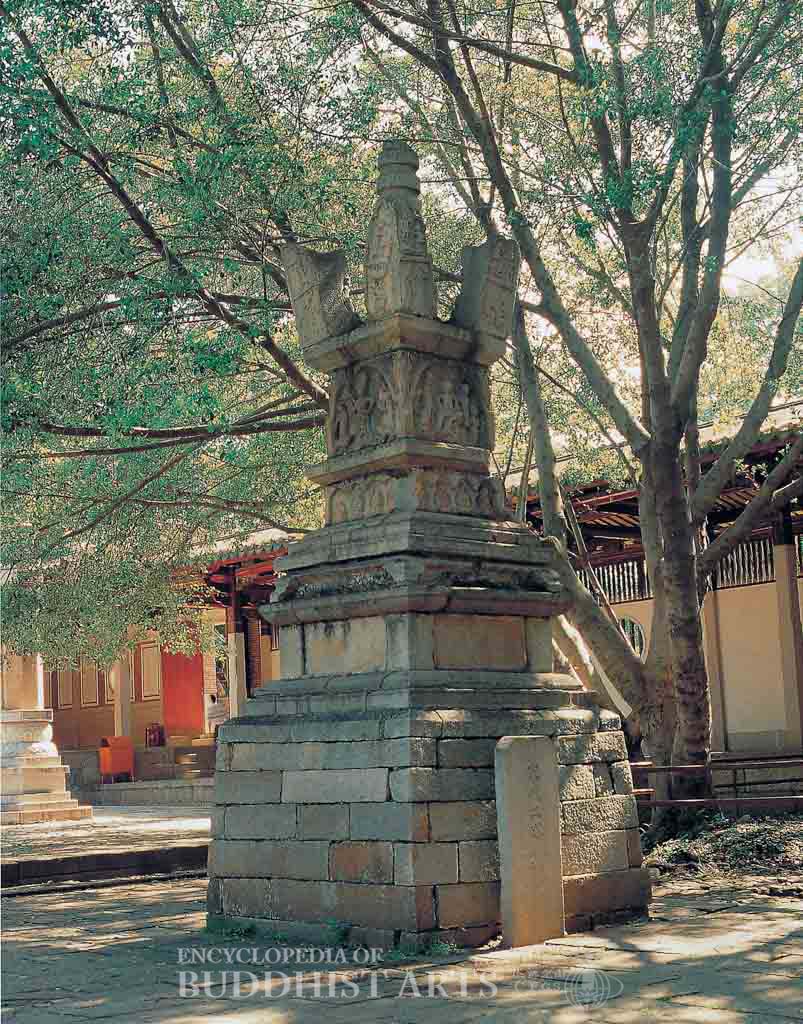
Kaiyuan Temple: Casket Seal Dharani Sutra Pagoda
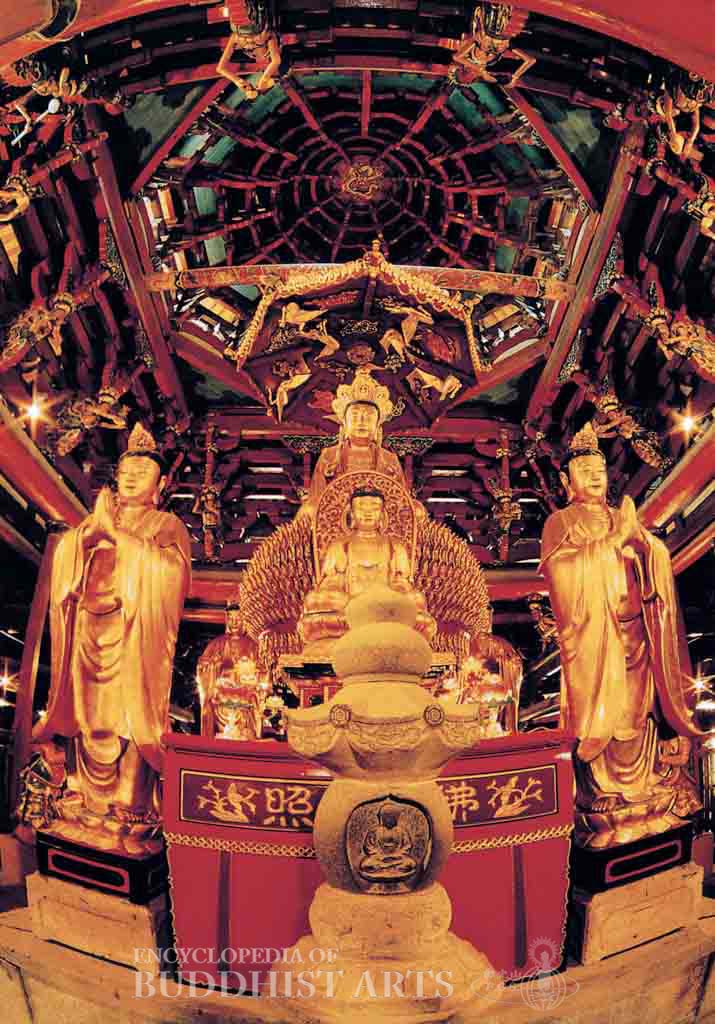
Kaiyuan Temple: Dew Ordination Platform (interior)
Kaiyuan Temple
CHINA, Fujian, Quanzhou
The temple was built in 686 during the Tang dynasty and in 738 it was given its present name by Emperor Xuanzong (reigned 712–756). From the Five Dynasties period (907–960) to the Song dynasty (960–1279), it had more than 100 branch temples. By 1285 during the Yuan dynasty, the temple had unified more than 120 nearby branch temples and was given the name Dakaiyuan Wanshou Chan Monastery. It has gone through periods of prosperity and decline throughout its history. Most of the architecture was reconstructed during the rule of Emperor Chongzhen (reigned 1628–1644) of the Ming dynasty. Kaiyuan Temple was listed as a National Cultural Heritage Site in 1982.
The temple covers 7.8 ha. The central axis runs from south to north, along which there are the Heavenly King Hall, Prayer Pavilion, Great Hero Hall, Dew Ordination Platform, and the sutra repository. Two multi-story tower-style stone pagodas are located on either side in front of the Great Hero Hall. Inside the Prayer Pavilion, there are 15 artifacts dating from the Tang (618–907) to Ming (1368–1644) dynasties, including sutra pillars, Prabhutaratna Pagodas and a Casket Seal Dharani Sutra Pagoda. Numerous inscriptions can be found on these items.
The Dew Ordination Platform gained its name from the constant light rain in the area during the Tang dynasty. It was one of the Three Major Ordination Halls. The current building was rebuilt in 1666 during the Qing dynasty. The top section houses a seated statue of Vairocana Buddha from the Ming dynasty. Other statues are of the Eight Great Dharma Protectors, Bodhisattvas, Hanshan, and Shide. On the platform, there stands a 2 m high relic stupa containing seven relics of the Buddha. The caisson ceiling consists of an intricate web-like structure.
The sutra repository was originally the Dharma Hall. It now houses nearly 4,000 fascicles of different editions of the sutras. There are the remnants of the Buddhist Canon intricately written in gold and silver ink, which was donated by Emperor Taizu (reigned 909–925) of the Min Kingdom. There is also a Yuan dynasty (1271–1368) Lotus Sutra written in the blood of monks.
For more details, go to the Encyclopedia of Buddhist Arts: Architecture G-L, page 577.
Cite this article:
author = Hsingyun and Youheng and Johnson, Peter and Mankuang and Lancaster, Lewis,
booktitle = {Encyclopedia of Buddhist Arts: Architecture G-L},
pages = 577,
title = {{Kaiyuan Temple}},
volume = 2,
year = {2016}}