
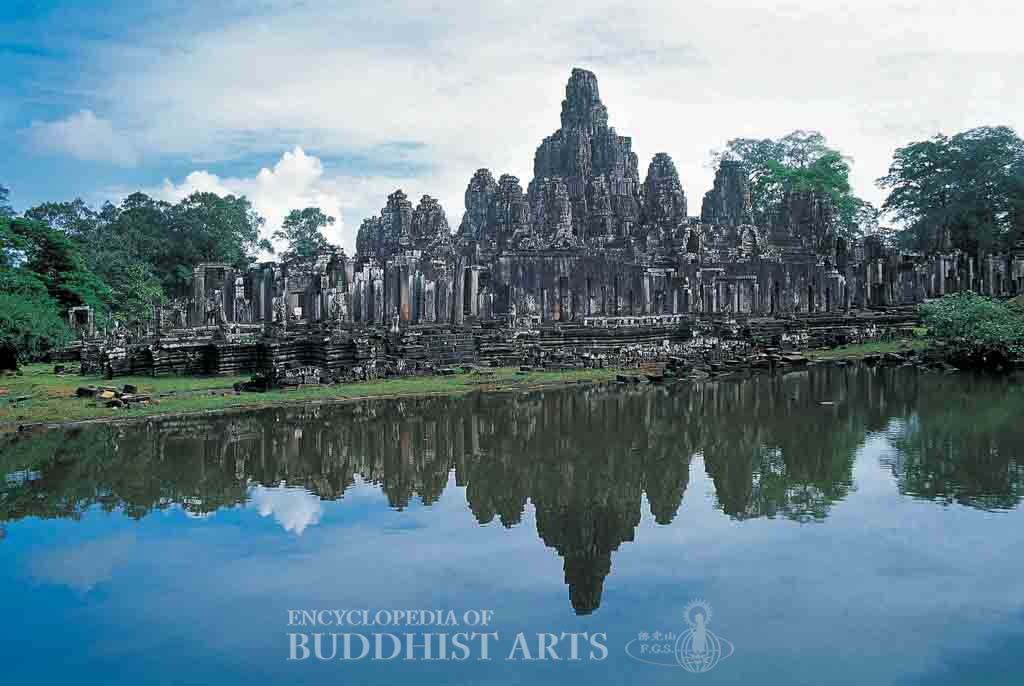
Bayon Temple
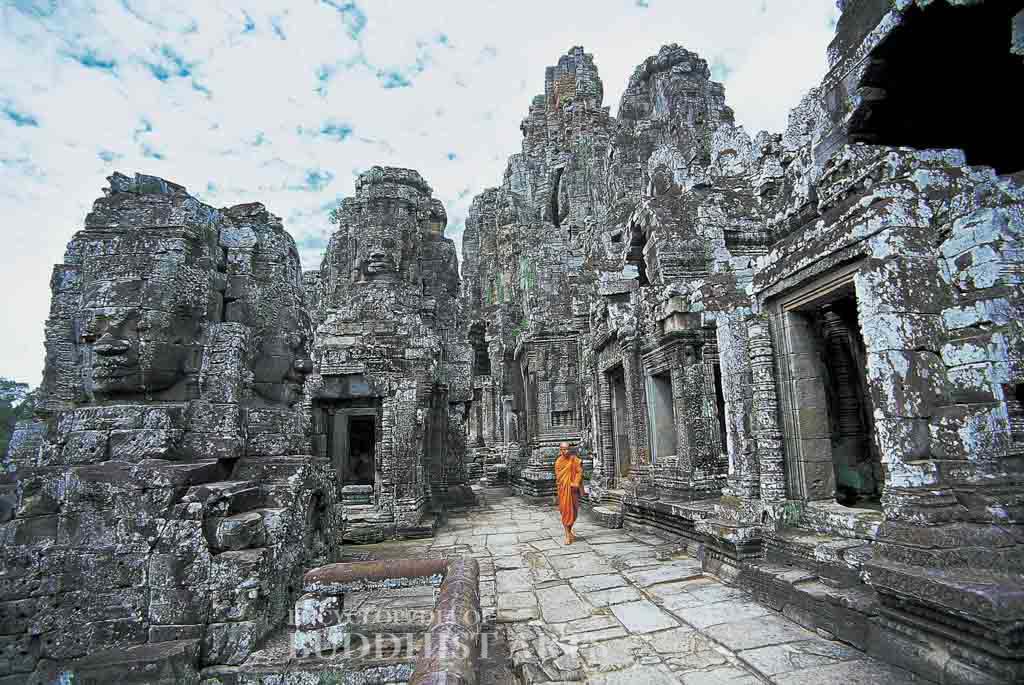
Bayon Temple
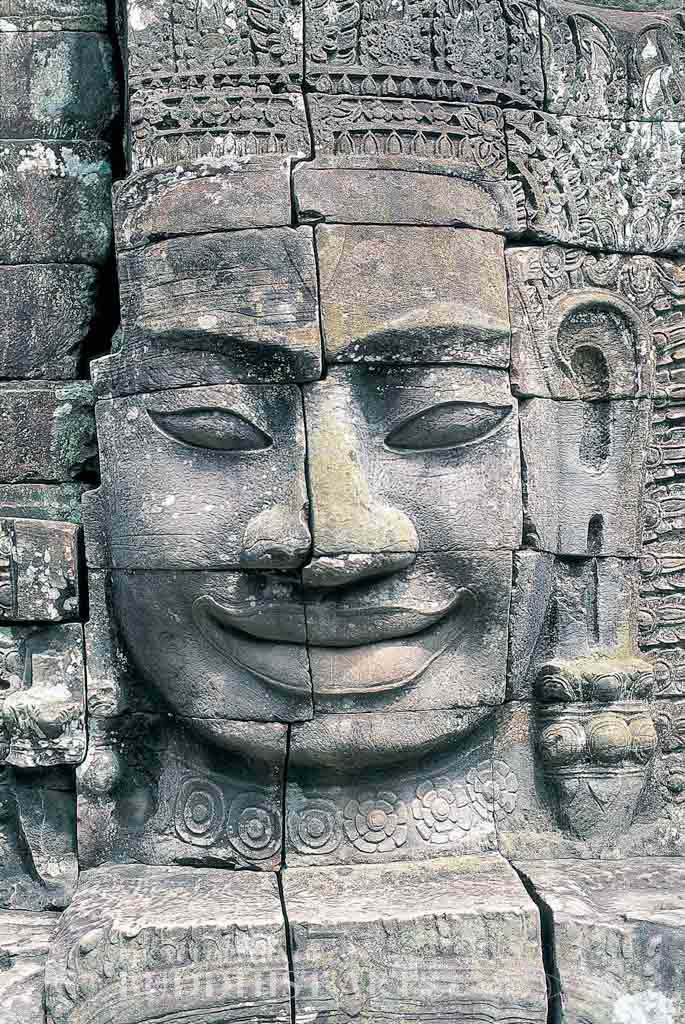
Bayon Temple: Head of Avalokitesvara Bodhisattva
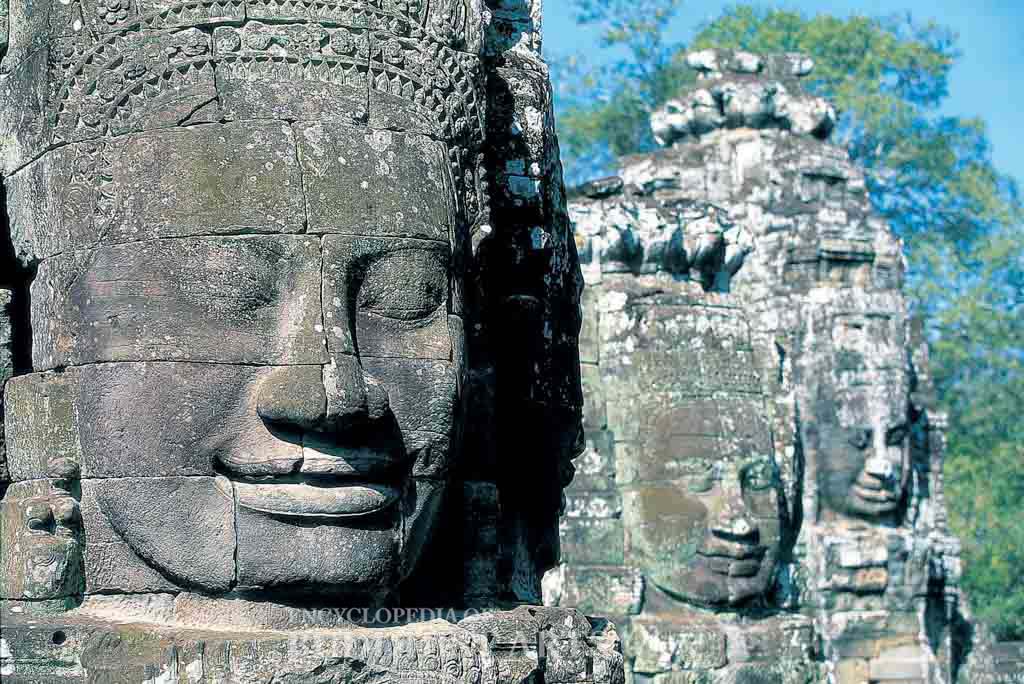
Bayon Temple: Heads of Avalokitesvara Bodhisattva
Bayon Temple
CAMBODIA, Siem Reap, Angkor Thom
The temple is located at the center of the city of Angkor Thom and is one of the most important Khmer buildings in that city. It was constructed by King Jayavarman VII (reigned circa 1181–1220) as a Mahayana Buddhist temple between the late 12th and early 13th centuries, in commemoration of the Khmer victory over the Champa. King Jayavarman VII was a devoted follower of Mahayana Buddhism and had a deep reverence for Avalokitesvara Bodhisattva. During his reign, he built numerous temples in his kingdom and replaced Hinduism with Mahayana Buddhism as the dominant faith. It was a period which saw the flourishing of Mahayana Buddhism at Angkor. The temple was altered following the death of King Jayavarman VII, adding elements from the Hindu and Theravada Buddhist traditions. As part of the Angkor site, it was listed as a UNESCO World Heritage Site in 1992.
The temple is aligned on the east-west axis and is oriented toward the east. It has a rectangular layout with the outer walls measuring 140 m by 160 m. The outer walls are lined with galleries. There is a gateway at each of the cardinal points, and a library in both the northeast and southeast corners. The walls of the inner enclosure measure 70 m by 80 m and are also lined with galleries. There are 54 stone Khmer-style stupas, and the central stupa rises to 45 m. The whole structure is in the form of a terraced pyramid built according to Buddhist cosmology, being a representation of Mount Sumeru.
There is a high relief of the head of Avalokitesvara Bodhisattva on the sides of each stupa with a total of 216 heads. Each head wears a jeweled crown and has earrings. The facial expressions change according to the light conditions but always display an aura of serenity and compassion.
The whole temple is lined with interconnecting corridors featuring numerous bas-reliefs depicting historical events, military themes, scenes of everyday Khmer life, as well as scenes from Hindu mythology.
For more details, go to the Encyclopedia of Buddhist Arts: Architecture A-F, page 64.
Cite this article:
author = Hsingyun and Youheng and Johnson, Peter and Mankuang and Lancaster, Lewis,
booktitle = {Encyclopedia of Buddhist Arts: Architecture A-F},
pages = 64,
title = {{Bayon Temple}},
volume = 1,
year = {2016}}