
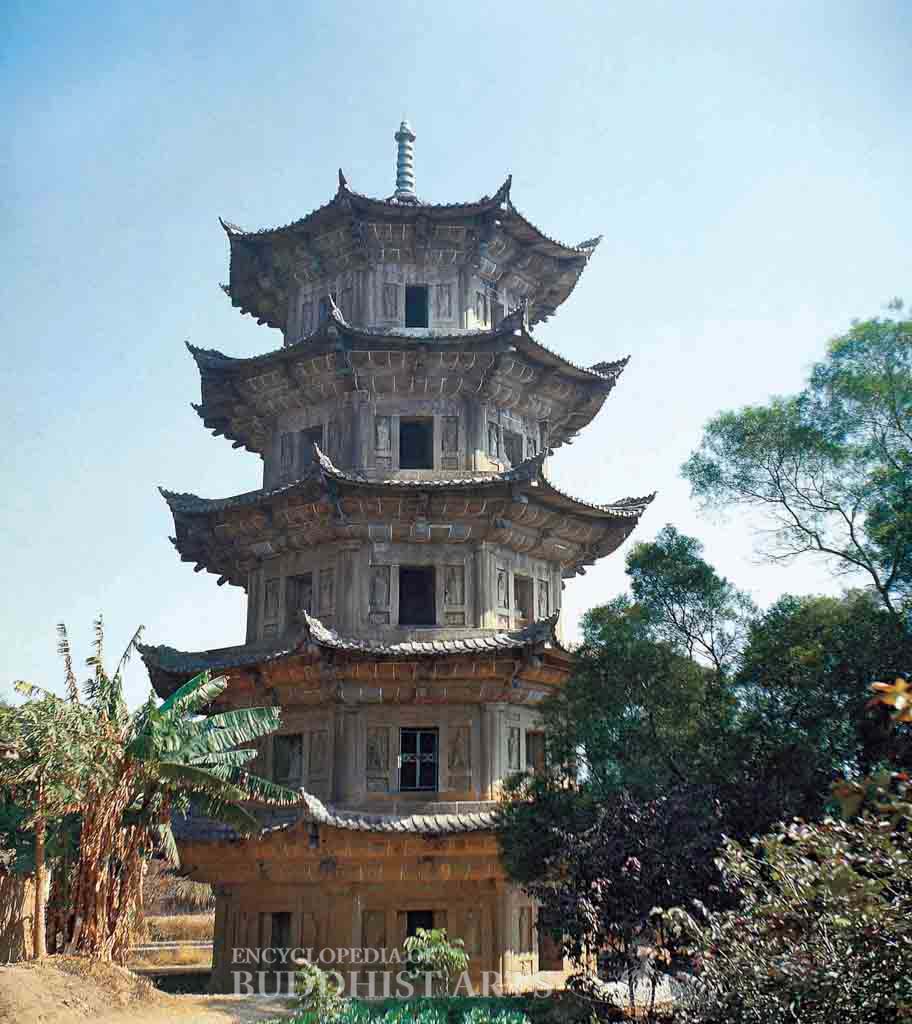
Guanghua Temple Shijiawen Pagoda
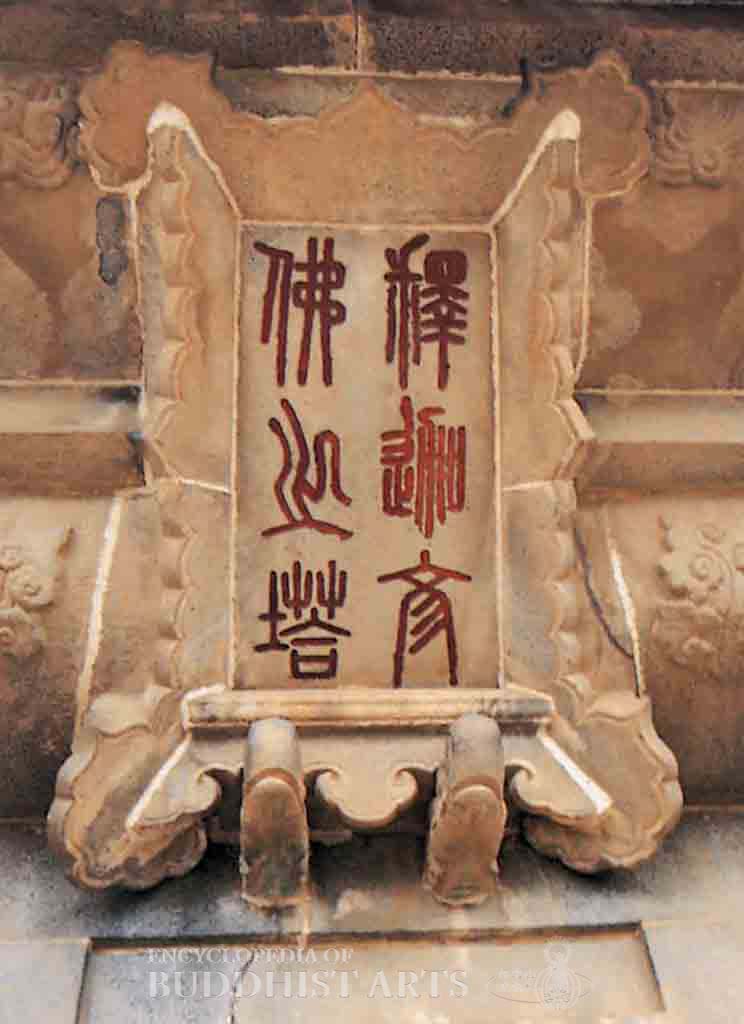
Guanghua Temple Shijiawen Pagoda (detail)
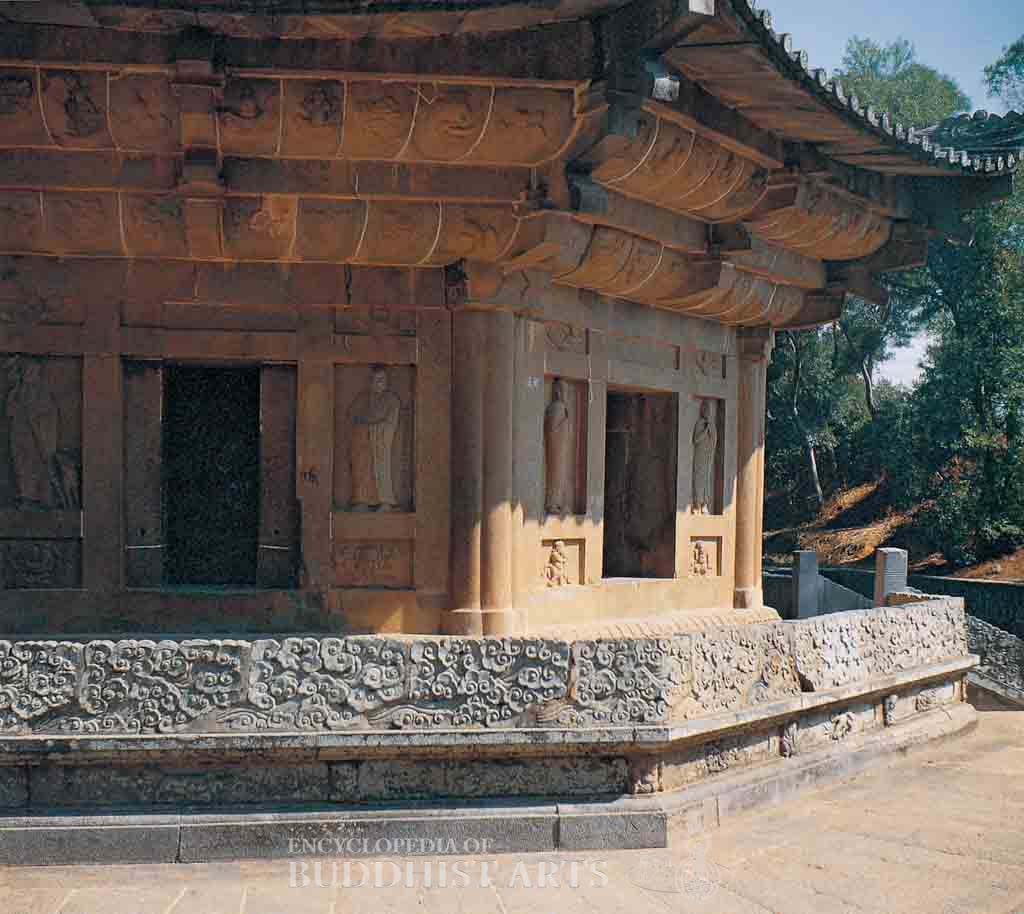
Guanghua Temple Shijiawen Pagoda (detail)
Guanghua Temple Shijiawen Pagoda
CHINA, Fujian, Putian
The Shijiawen Pagoda is located within the Guanghua Temple. According to inscriptions, the pagoda was built before 1165 of the Southern Song dynasty. It has been repaired a number of times throughout its history. It was listed as a National Cultural Heritage Site in 1988.
The five-story, octagonal, stone pagoda is 36 m high. It is built in imitation of a timber structure. The lower layer of the Sumeru base is unadorned, while the waist is decorated with carvings of lions and peonies. The upper layer is unusually thin with a low balustrade sitting directly above it. The panels of the balustrade are covered with carvings of undulating clouds. Doorways are located on the east and west sides of the first story, while the other six sides have Buddha niches. On either side of the doorways and niches there are carvings depicting Bodhisattvas, Arhats, Mahakasyapa, and Ananda. Stories two to five have doorways located on the sides facing the four cardinal directions, while the remaining sides have Buddha niches. These doorways and niches are flanked by carvings of Bodhisattvas or warriors. The eaves extend outwards in an exaggerated fashion with upturned corners and consist of two tiers of stone corbeling. The corbels are rounded and carved with images of phoenixes, apsaras, and kalavinkas.
For more details, go to the Encyclopedia of Buddhist Arts: Architecture G-L, page 386.
Cite this article:
author = Hsingyun and Youheng and Johnson, Peter and Mankuang and Lancaster, Lewis,
booktitle = {Encyclopedia of Buddhist Arts: Architecture G-L},
pages = 386,
title = {{Guanghua Temple Shijiawen Pagoda}},
volume = 2,
year = {2016}}