
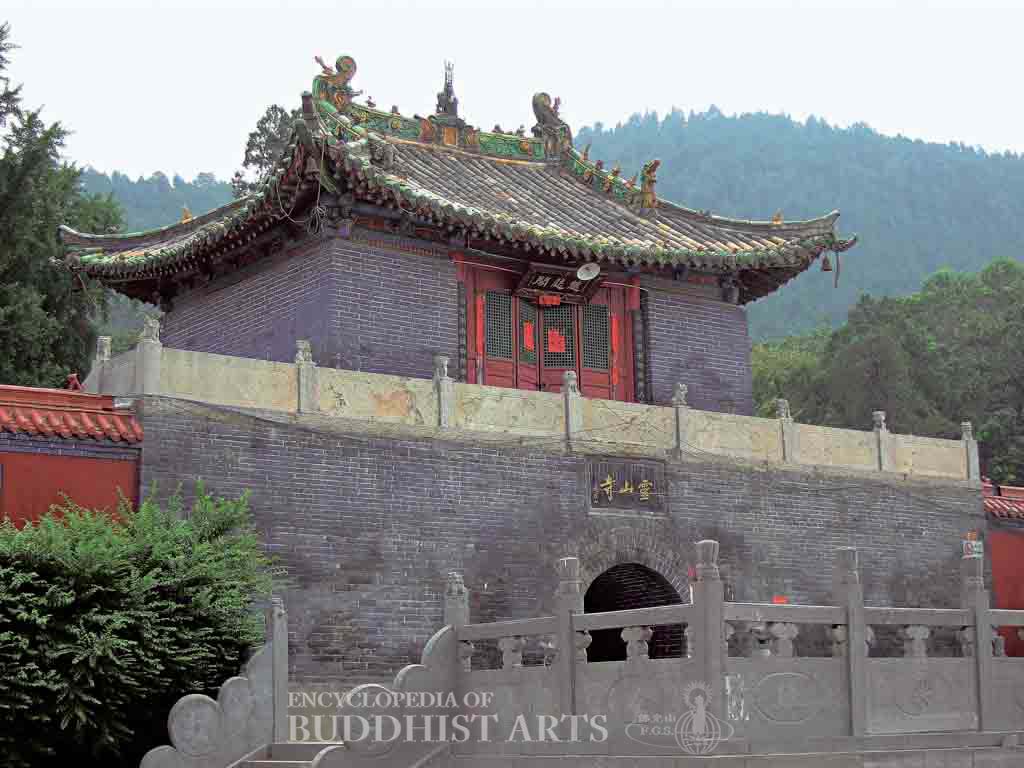
Lingshan Temple: Main Temple Gate
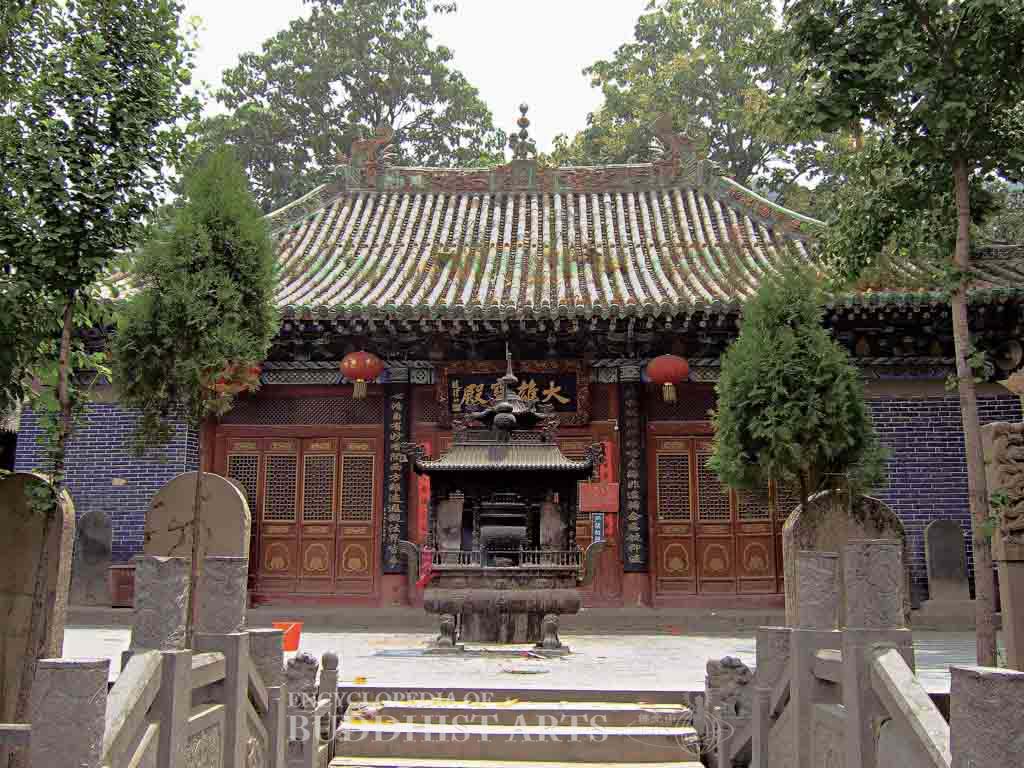
Lingshan Temple: Great Hero Hall
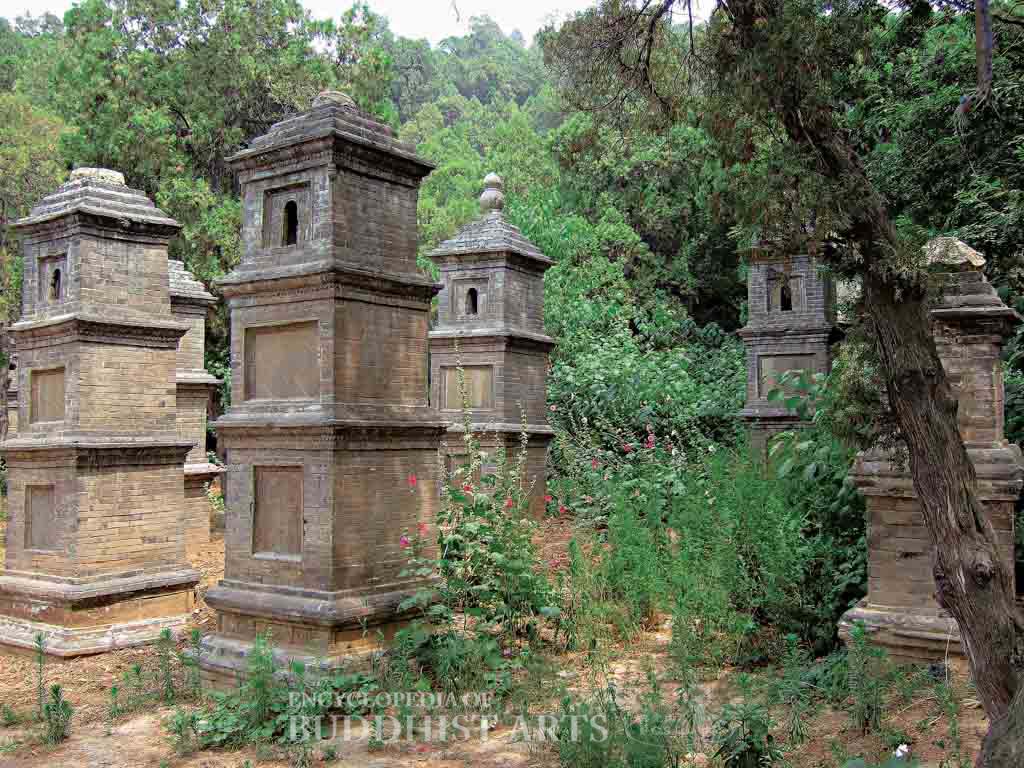
Lingshan Temple: Forest of Pagodas
Lingshan Temple
CHINA, Henan, Luoyang
The date of the temple’s construction is unknown but it was repaired in 1163 during the Jin dynasty. It is listed as a Provincial Cultural Heritage Site.
Facing north, the five main buildings located along the central axis are the main temple gate, Heavenly King Hall, Great Compassion Pavilion, Great Hero Hall, and the sutra repository. Between the Great Compassion Pavilion and the Great Hero Hall, there is a stone pagoda built during the Ming dynasty (1368–1644). The style of the main temple gate is unusual in that it is similar to a traditional city gate. The gate is in two sections: the lower section is a large brick platform with an arched doorway, while the upper section consists of a building with an ornate hip-and-gable roof. The Great Hero Hall was reconstructed during the Ming dynasty and has a single-eave hip roof. A statue of Sakyamuni Buddha is enshrined within, flanked by Amitabha Buddha and the Medicine Buddha. Statues of Ananda and Kasyapa stand in attendance. These are some of the best preserved Ming dynasty sculptures in Henan.
The temple contains numerous steles, especially on the stele wall behind the Great Hero Hall. There is a forest of pagodas on the northeast side of the temple. There are more than ten brick pagodas belonging to monks from the Ming and Qing (1644–1911) dynasties.
For more details, go to the Encyclopedia of Buddhist Arts: Architecture G-L, page 668.
Cite this article:
author = Hsingyun and Youheng and Johnson, Peter and Mankuang and Lancaster, Lewis,
booktitle = {Encyclopedia of Buddhist Arts: Architecture G-L},
pages = 668,
title = {{Lingshan Temple}},
volume = 2,
year = {2016}}