
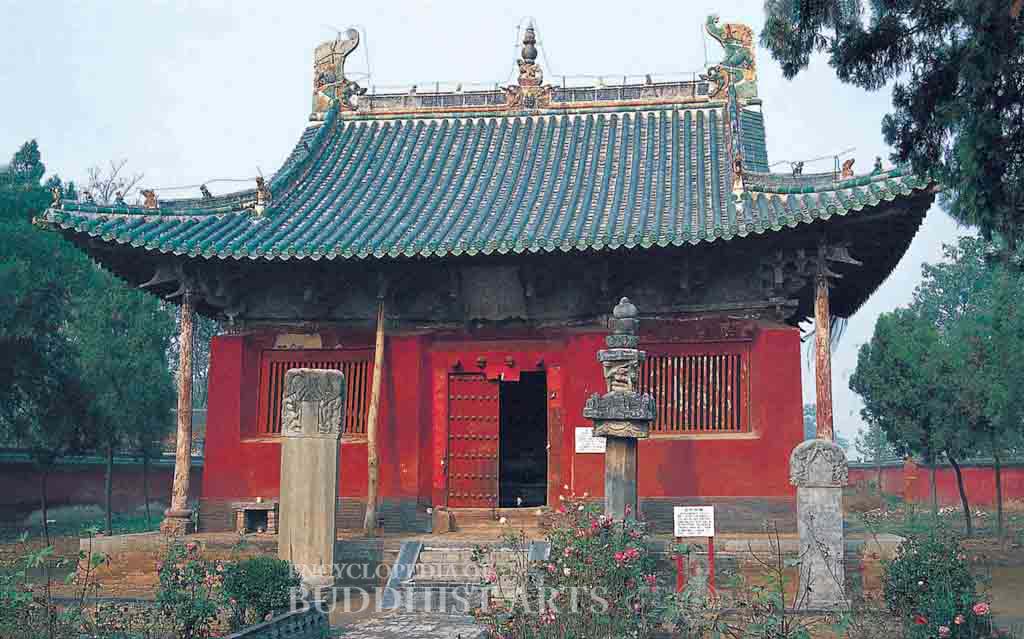
Cisheng Temple: Great Hero Hall
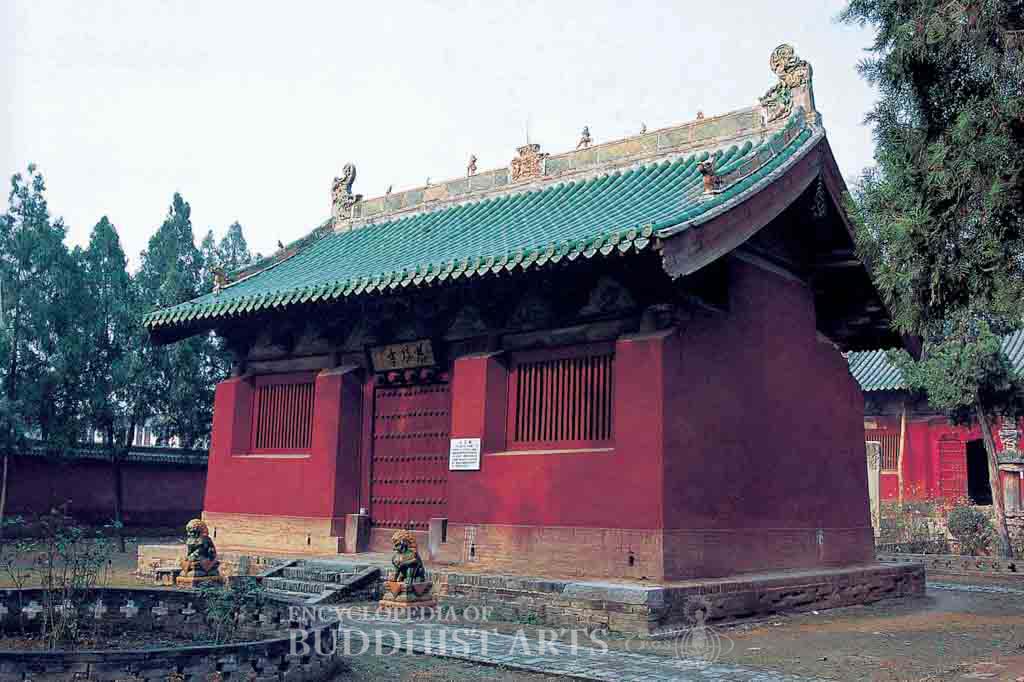
Cisheng Temple: Heavenly King Hall
Cisheng Temple
CHINA, Henan, Jiaozuo
According to a sutra pillar, the temple was already in existence during the Five Dynasties period (907–960). It was destroyed in wartime and another temple was built on the site in 1337 during the Yuan dynasty. It was listed as a National Cultural Heritage Site in 2001.
Facing south, the temple occupies 7,200 sq m and consists of east and west courtyards. There are steles scattered around the east courtyard, while the west courtyard contains the three main structures. From south to north they are the main temple gate, Heavenly King Hall, and Great Hero Hall, all of which are still in the original official architectural style of the Yuan dynasty (1271–1368).
The three-by-four bay Heavenly King Hall has a single-eave overhanging gable roof. The interior of the building once contained murals from the Yuan dynasty but they have mostly been destroyed. Only the four Heavenly Kings on the west wall are still in good condition. They are considered to be extremely valuable in the study of Yuan dynasty art.
The three-by-six bay Great Hero Hall has a single-eave hip-and-gable roof. Above the doorway there hangs an extremely rare bell-shape inscribed board made in 1268 during the Yuan dynasty. Inside the hall, the east and west walls were once covered in murals, but now only 3 sq m survive and they are considered to be rare art from the Yuan dynasty. They depict towers and floral patterns. The 5.4 m high sutra pillar in front of the Great Hero Hall was created in 937 during the Later Jin dynasty. It is made of blue limestone and carved with the Usnisavijaya Dharani Sutra.
For more details, go to the Encyclopedia of Buddhist Arts: Architecture A-F, page 175.
Cite this article:
author = Hsingyun and Youheng and Johnson, Peter and Mankuang and Lancaster, Lewis,
booktitle = {Encyclopedia of Buddhist Arts: Architecture A-F},
pages = 175,
title = {{Cisheng Temple}},
volume = 1,
year = {2016}}