
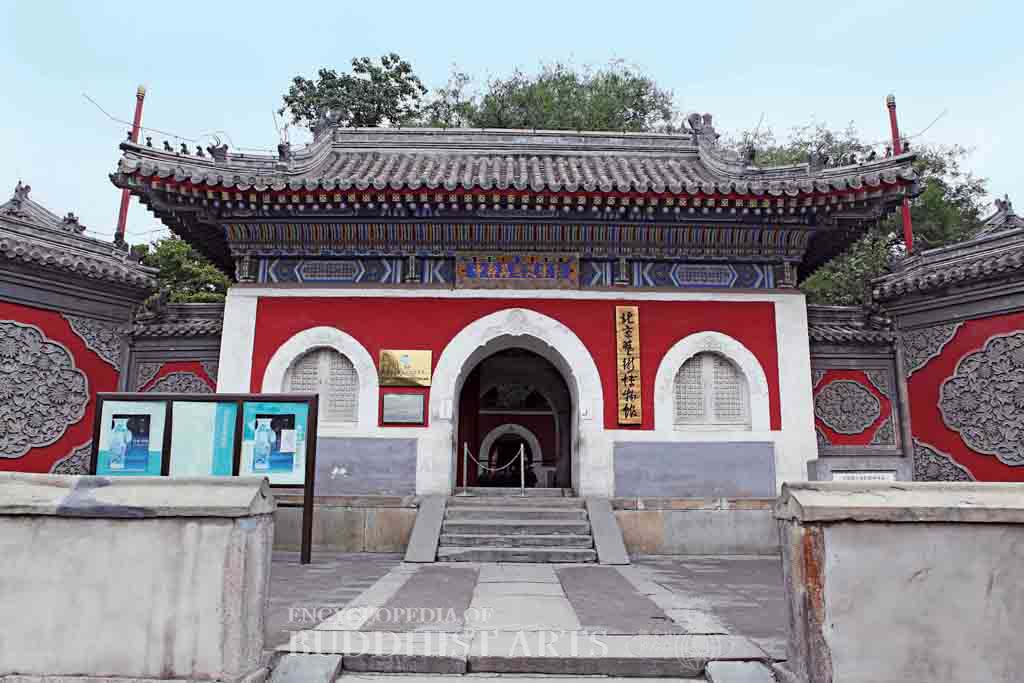
Wanshou Temple: Main Temple Gate
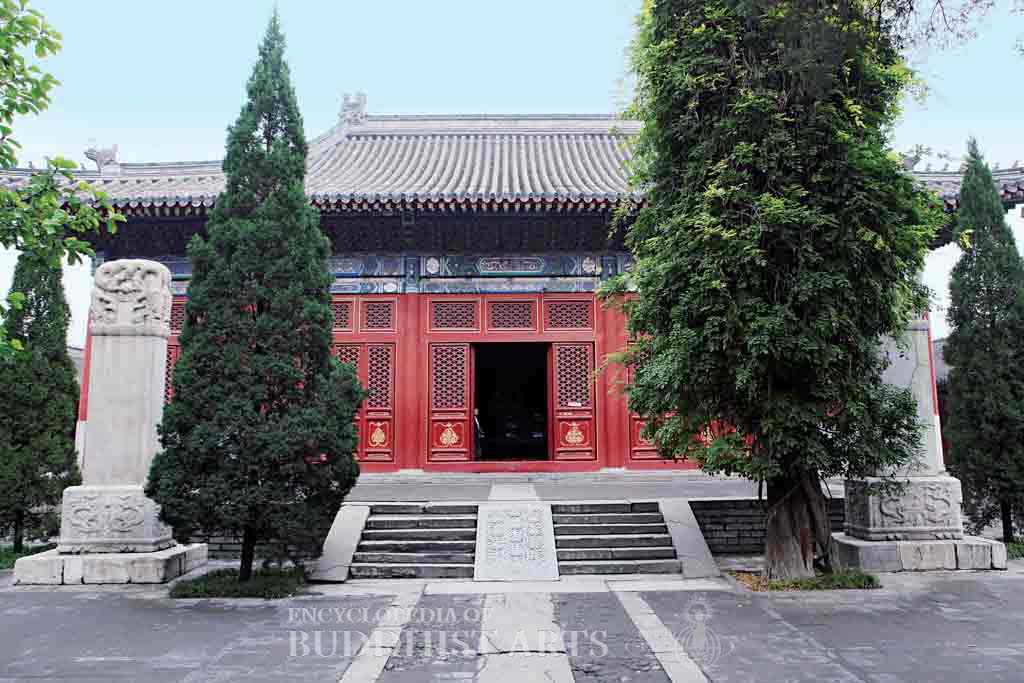
Wanshou Temple: Great Hero Hall
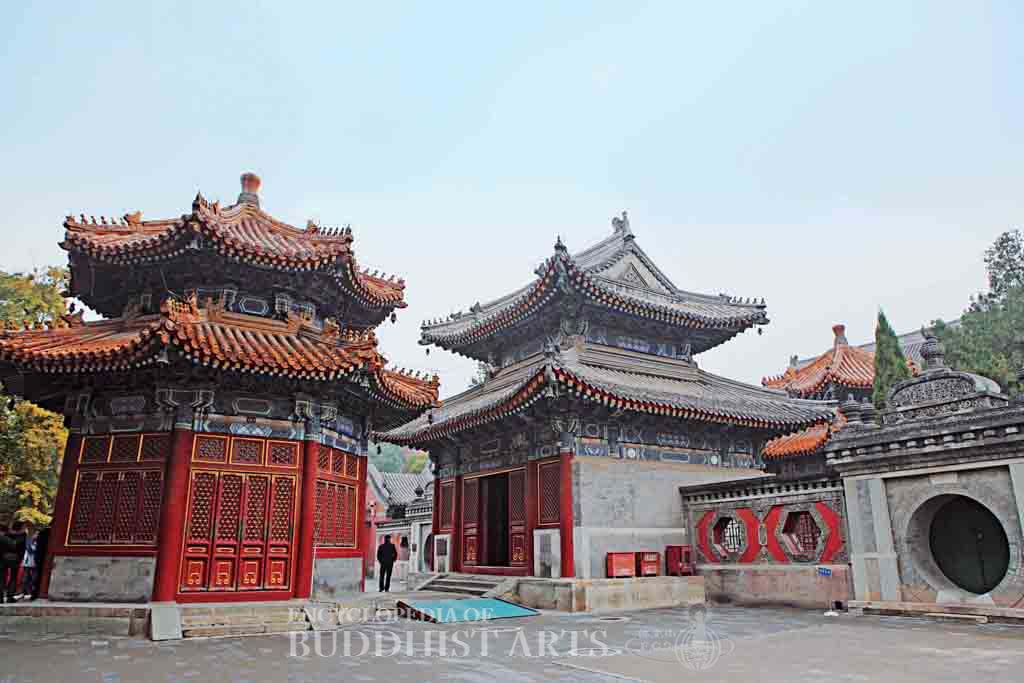
Wanshou Temple: Amitabha Hall and Imperial Stele Pavilion
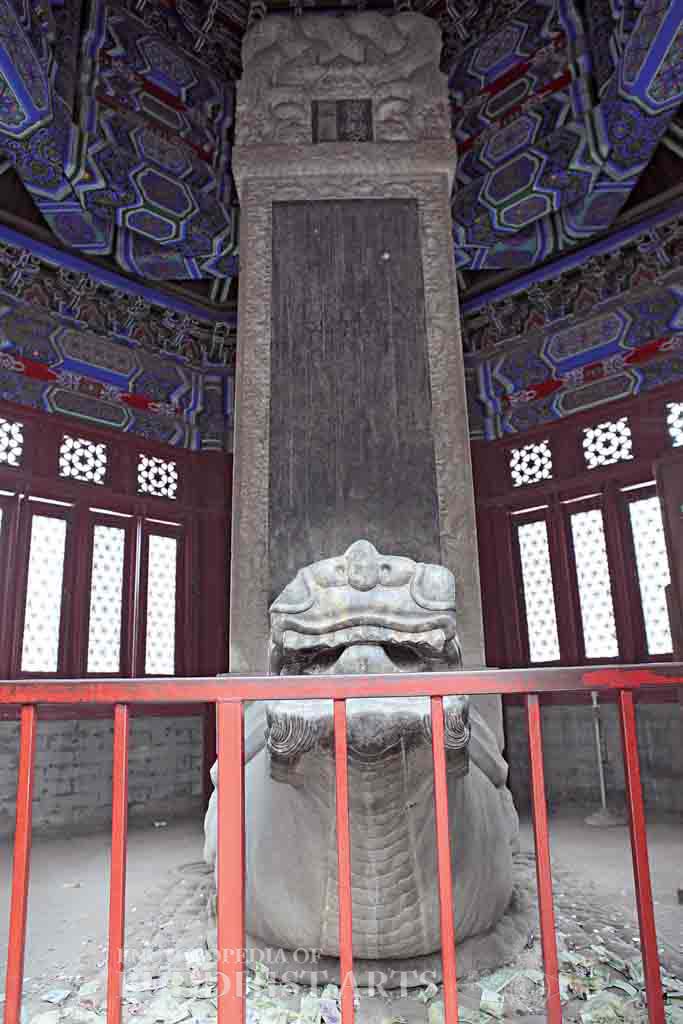
Wanshou Temple: Imperial Stele Pavilion (interior)
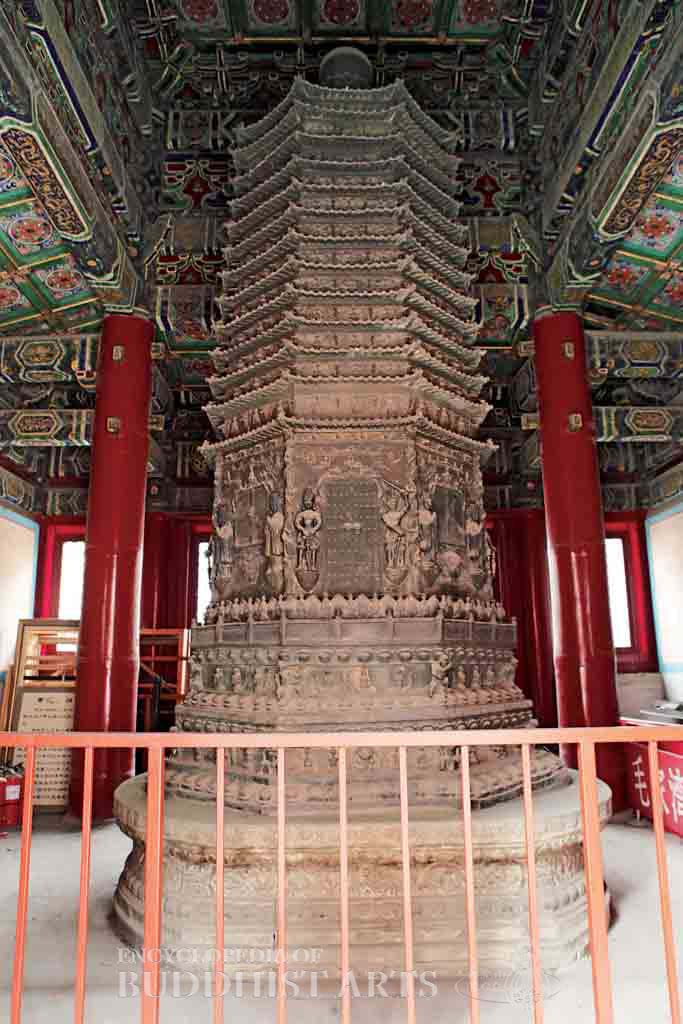
Wanshou Temple: Amitabha Hall - Multi-Tier Pagoda (interior)
Wanshou Temple
CHINA, Beijing
Wanshou means Longevity. It functions as a Buddhist temple and an imperial lodge for the emperors during the Ming (1368–1644) and Qing (1644–1911) dynasties, hence it is also called the Small Imperial Palace to the west of the capital. Construction began in 1577 during the Ming dynasty, and it was expanded in 1751 during the Qing dynasty. It was listed as a National Cultural Heritage Site in 2006.
The buildings are built along three paths: the central path is where the principal buildings are located; the east path leads to the abbot’s quarters; and the west path houses the imperial lodge. The principal buildings include the main temple gate, Heavenly King Hall, Great Hero Hall, Wanshou Pavilion, meditation hall, Avalokitesvara Hall, Imperial Stele Pavilion, Amitabha Hall, and the Hall of Ten Thousand Buddhas. Most of the main halls also have side halls. The main temple gate has a single-eave hip-and-gable roof. The walls to either side of the gate angle slightly outwards and are decorated with carved brick designs, adding to the grandeur of the entrance.
The three-bay wide Heavenly King Hall has a hip-and-gable roof covered with cylindrical tiles. The bell and drum towers are located on either side of the Heavenly King Hall. The five-bay wide Great Hero Hall has a hip roof, and the five-bay wide Wanshou Pavilion has a double-eave hip-and-gable roof. The Skanda Hall and Bodhidharma Hall are located on either side of the Wanshou Pavilion. The Avalokitesvara Hall is built on top of a man-made hill with the Manjusri Hall and Samantabhadra Hall as its side halls. The Imperial Stele Pavilion of Emperor Qianlong (reigned 1736–1795) has a double-eave, octagonal pyramidal roof covered in yellow glazed tiles. A stone stele donated by the emperor is kept inside. The Amitabha Hall has a double-eave hip-and-gable roof covered in cylindrical tiles. It houses a Prabhutaratna Pagoda which dates back to the rule of Emperor Tianqi (reigned 1621–1627) of the Ming dynasty. To each side of the hall, there are two Baroque-style doorways built in 1761 during the Qing dynasty. This inclusion of western-style architecture in an imperial temple is quite rare. Behind the hall stands the Imperial Stele Pavilion of Emperor Guangxu (reigned 1875–1908). Wanshou Temple has been converted to the Beijing Art Museum and is no longer used for Buddhist services.
For more details, go to the Encyclopedia of Buddhist Arts: Architecture T-Z, page 1179.
Cite this article:
author = Hsingyun and Youheng and Johnson, Peter and Mankuang and Lancaster, Lewis,
booktitle = {Encyclopedia of Buddhist Arts: Architecture T-Z},
pages = 1179,
title = {{Wanshou Temple}},
volume = 4,
year = {2016}}