
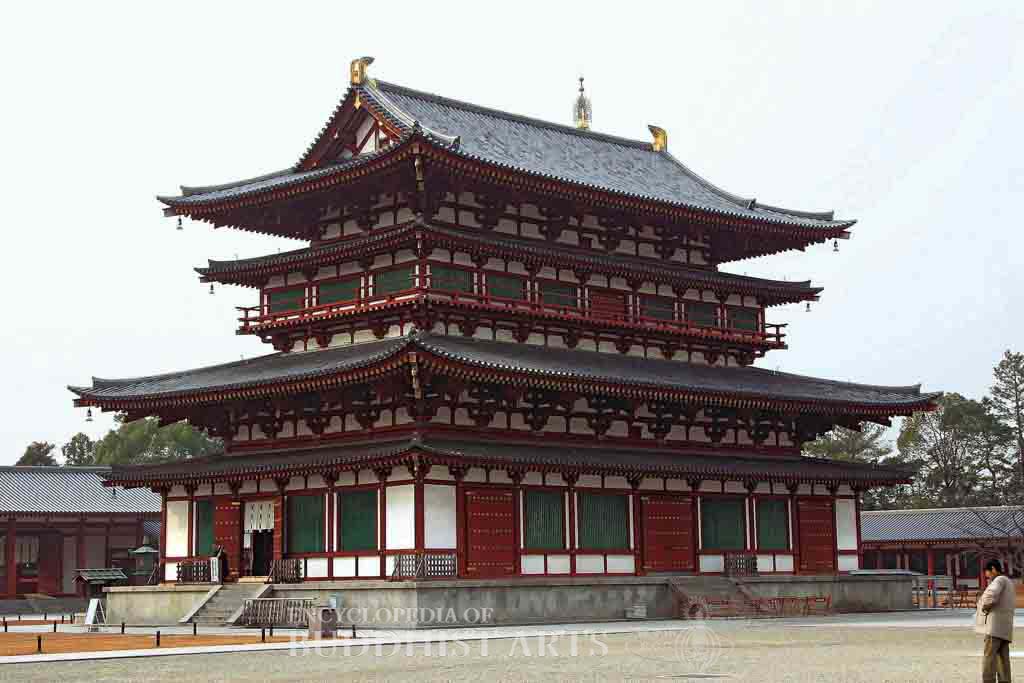
Yakushiji Temple: Golden Hall
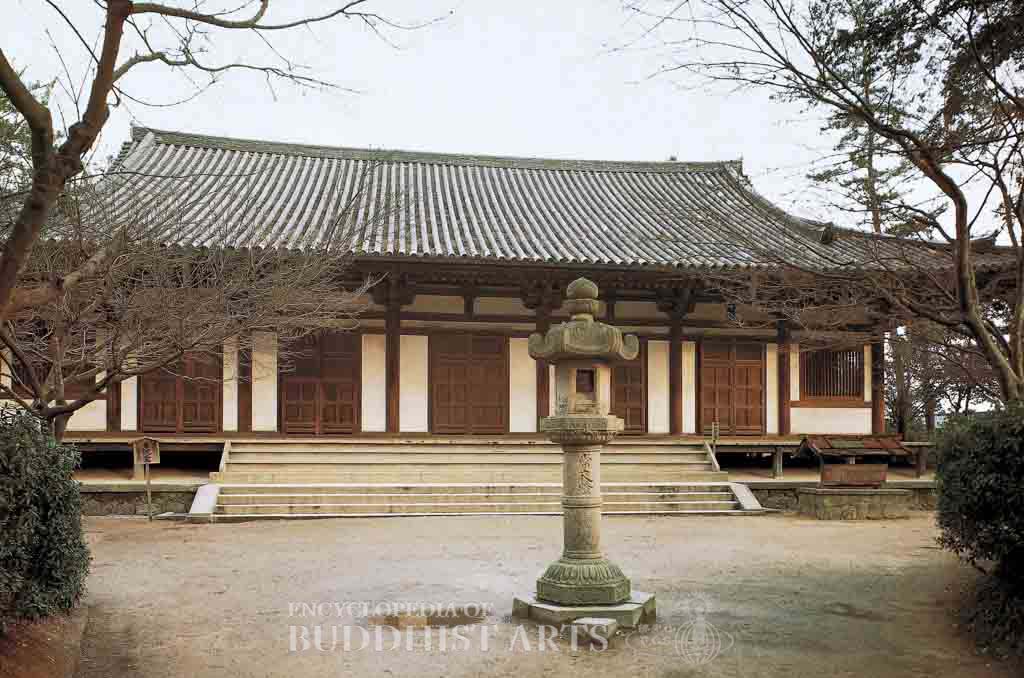
Yakushiji Temple: East Hall
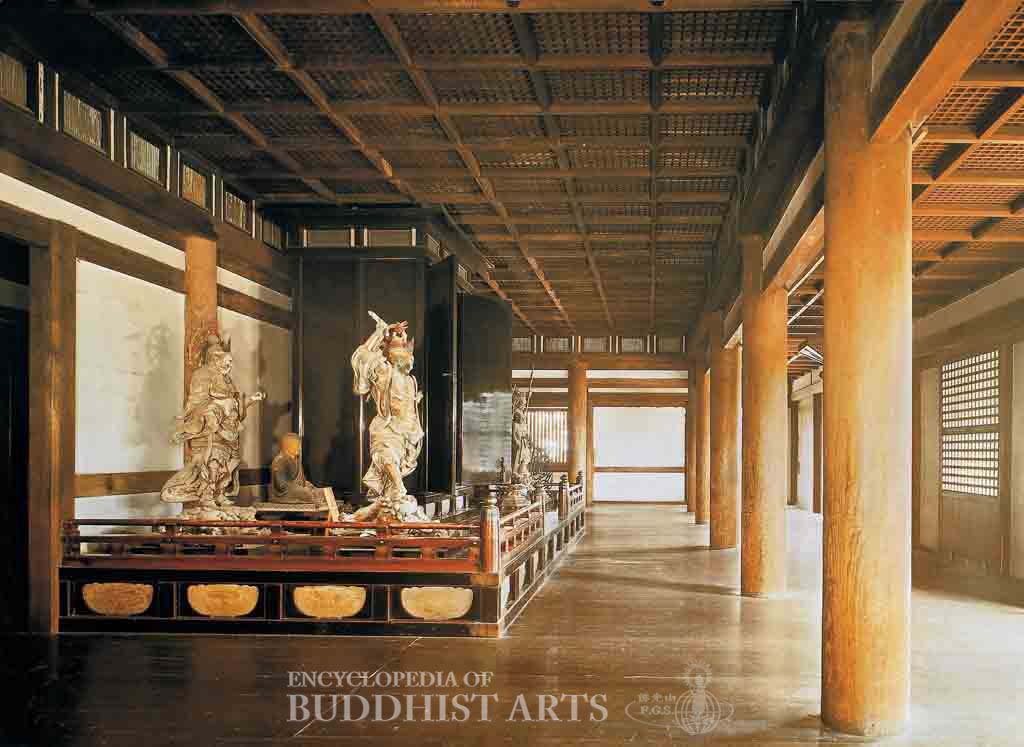
Yakushiji Temple: East Hall (interior)
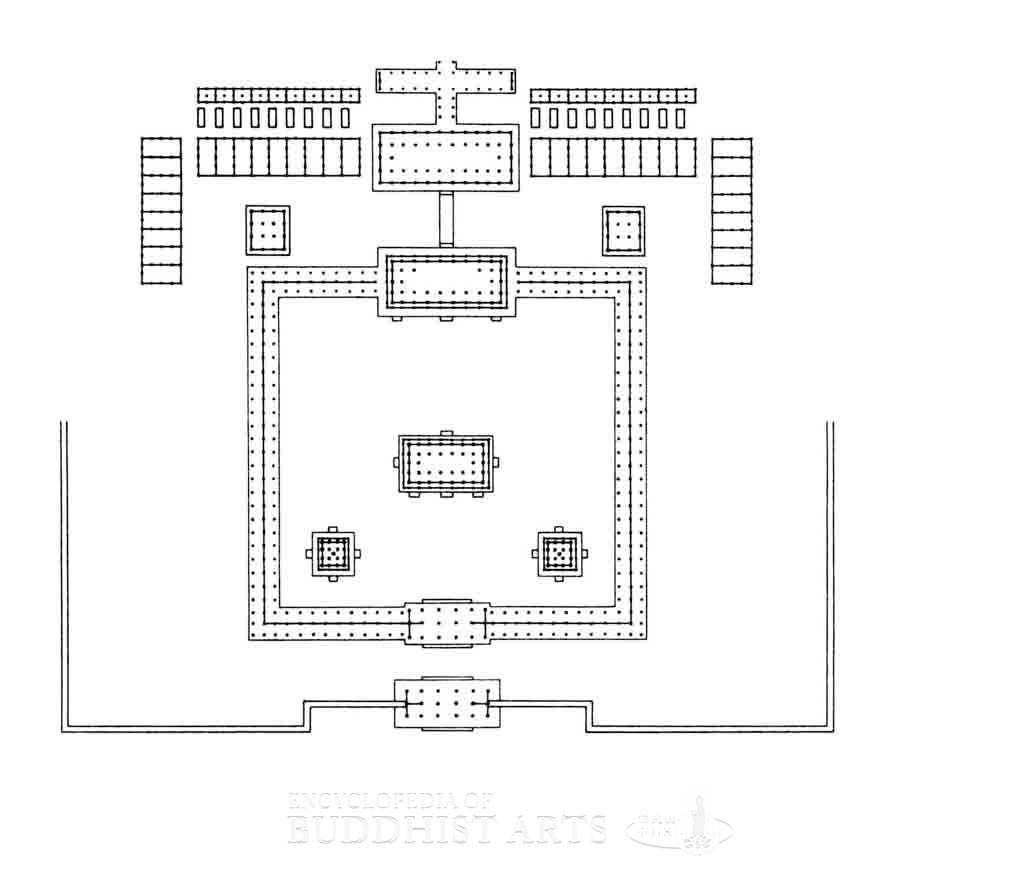
Yakushiji Temple (site layout)
Yakushiji Temple
JAPAN, Nara
Yakushiji means Medicine Buddha Temple, is the joint head temple of the Hosso school of Japanese Buddhism. In 681 during the Hakuho period, Emperor Tenmu (reigned 673–686) commissioned the construction of the temple to pray for the recovery of his sick wife. In 718 during the Nara period, the temple was moved to its present location and became one of the Seven Major Temples in Nara. After a series of wars, only the east pagoda survived. The temple was reconstructed during the rule of Emperor Showa (reigned 1926–1989). As part of the Historic Monuments of Ancient Nara, the temple was listed as a UNESCO World Heritage Site in 1998.
The principal buildings include the south gate, middle gate, east pagoda, west pagoda, Golden Hall, lecture hall, monastic quarters, Great Treasure Hall, and Master Xuanzang Complex. The east pagoda and east hall were listed as National Treasures in 1951 and 1961, respectively.
The temple layout is slightly different from that of traditional temples. The east pagoda, west pagoda, and Golden Hall are located in a courtyard surrounded by a cloister. The entrance to the courtyard is the five-by-two bay middle gate, which has a single-eave overhanging gable roof. The east pagoda, the only original structure, is the landmark of the temple. The west pagoda is similar in structure to the east pagoda. The Golden Hall, completed in 1976, has two stories, each with double eaves. There is a prominent 1.3 m high ornament at each end of the roof ridge. The Medicine Buddha Triad is enshrined within the hall. The seven-by-four bay east hall has a single-eave hip-and-gable roof covered with cylindrical tiles. Modeled on a Kamakura period (1185–1333) shrine, the hall houses statues of a standing Avalokitesvara Bodhisattva and the Four Heavenly Kings. The Master Xuanzang Complex, completed in 1991, consists of a hall in the center of a courtyard surrounded by a cloister and subsidiary building. The octagonal hall in the center has a double-eave octagonal pyramidal roof with a spire. It houses part of Master Xuanzang’s skull, as well as a seated statue of him. In one of the other buildings there is a painting by Ikuo Hirayama depicting scenes from Master Xuanzang’s Great Tang Records on the Western Regions.
The temple has a collection of a rich variety of works of art, including paintings, sculptures, and artifacts, many of which are National Treasures.
For more details, go to the Encyclopedia of Buddhist Arts: Architecture T-Z, page 1338.
Cite this article:
author = Hsingyun and Youheng and Johnson, Peter and Mankuang and Lancaster, Lewis,
booktitle = {Encyclopedia of Buddhist Arts: Architecture T-Z},
pages = 1338,
title = {{Yakushiji Temple}},
volume = 4,
year = {2016}}