
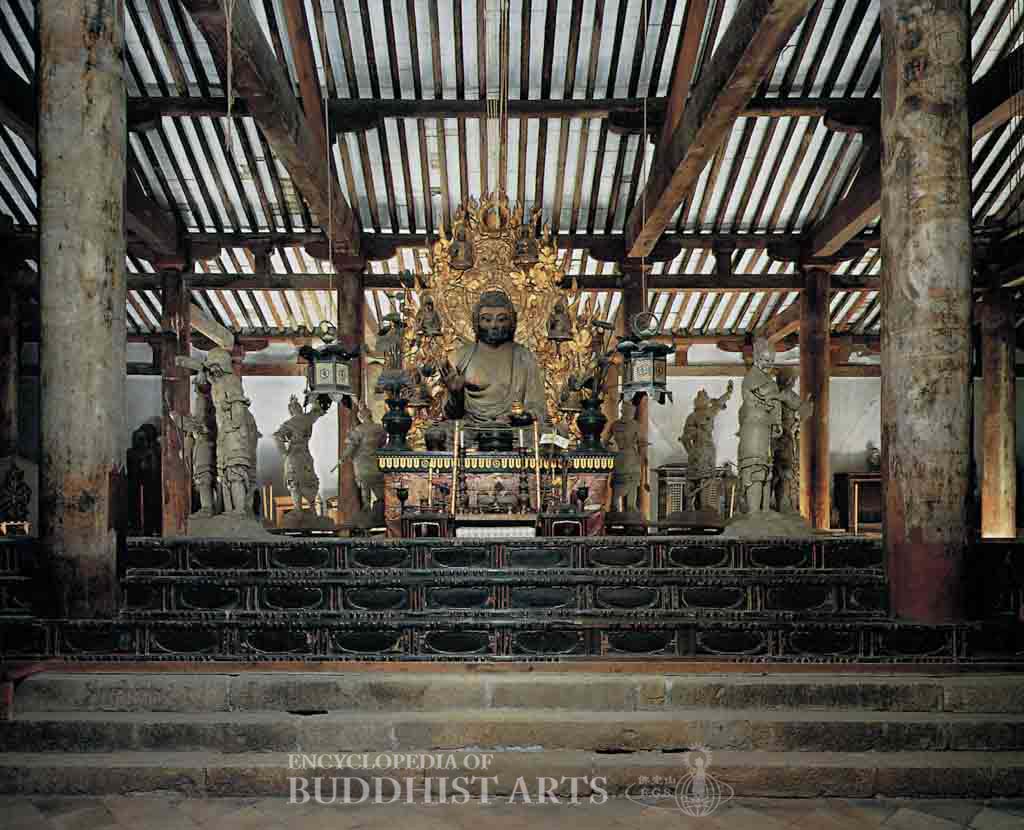
Shin Yakushiji Temple Main Hall: Twelve Yaksa Generals
Clay and wood
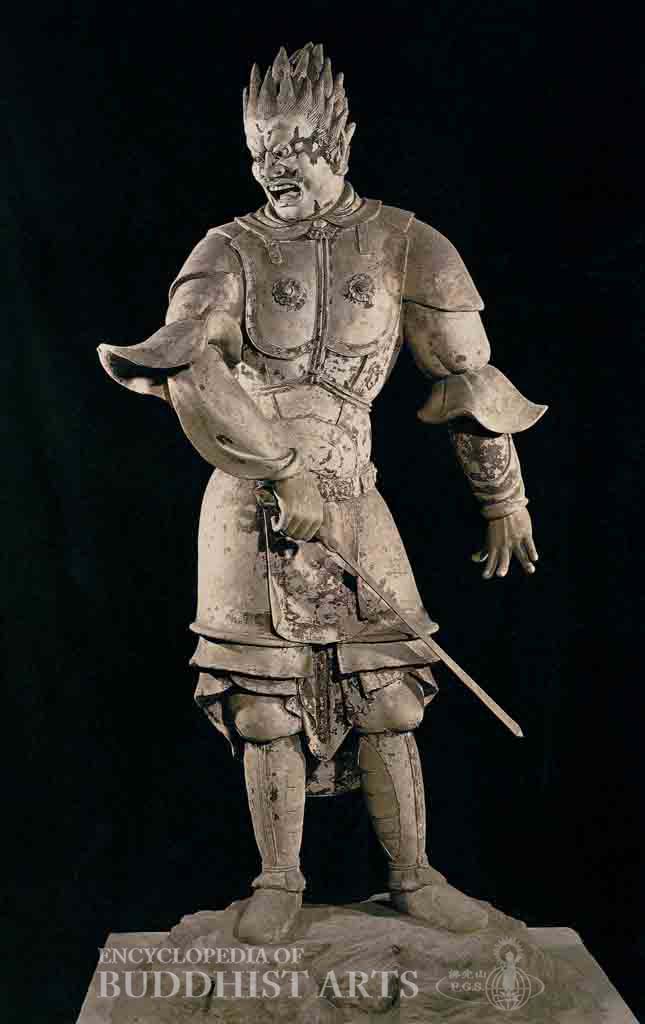
Shin Yakushiji Temple Main Hall: Twelve Yaksa Generals - Mihira
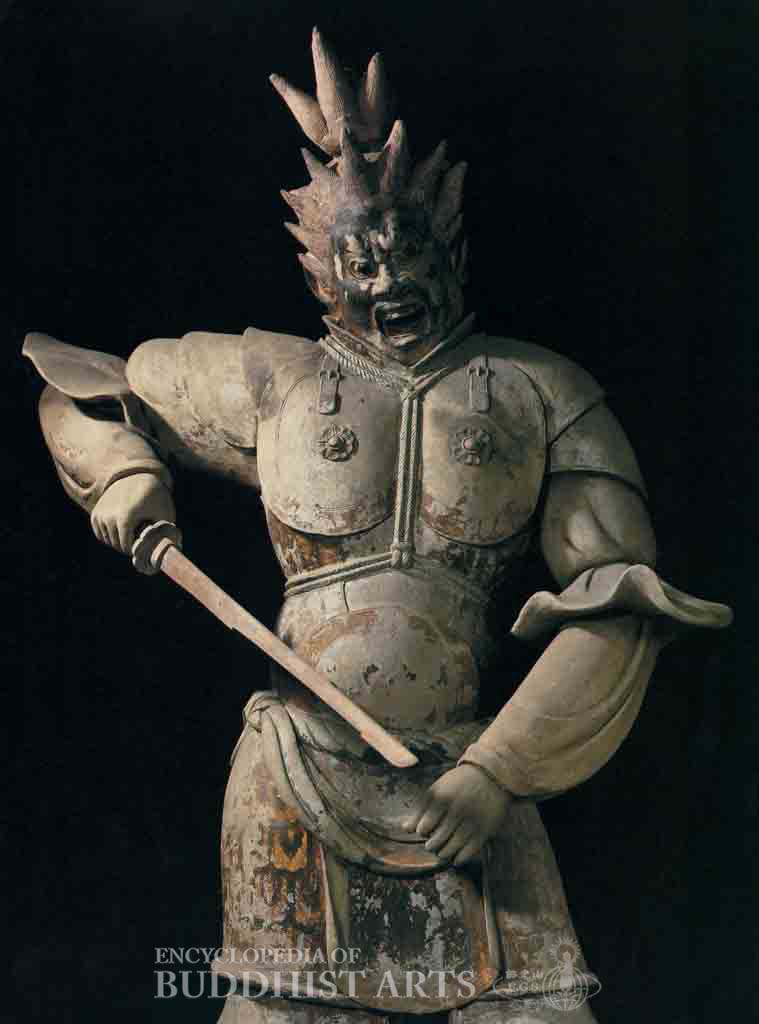
Shin Yakushiji Temple Main Hall: Twelve Yaksa Generals - Catura
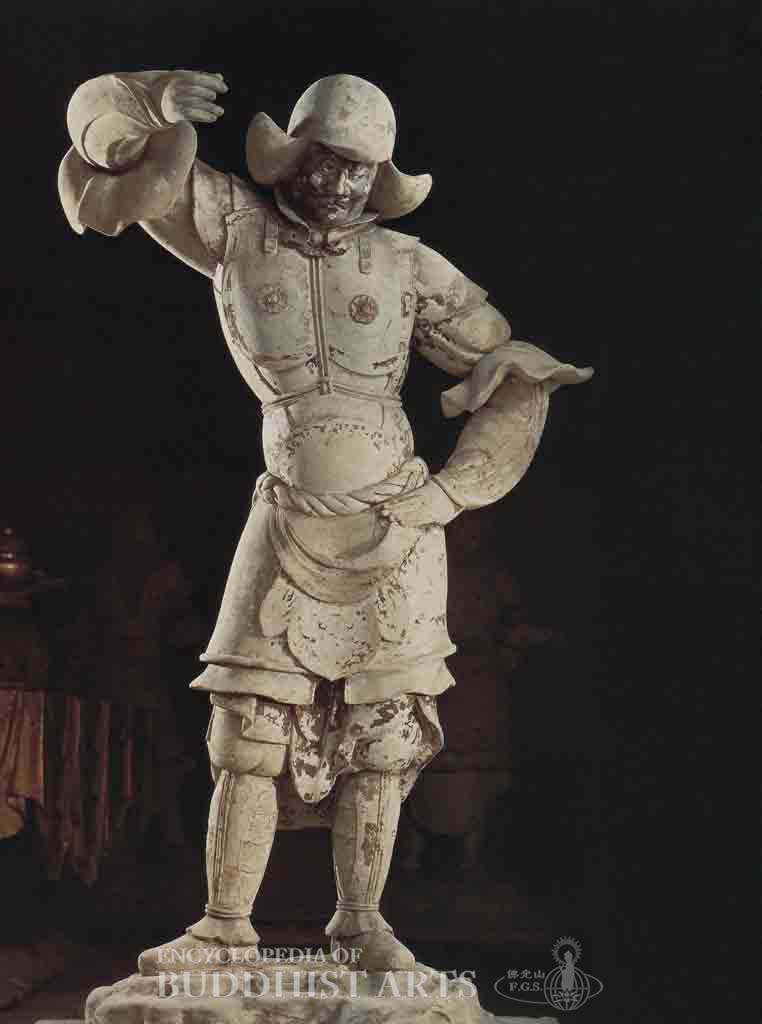
Shin Yakushiji Temple Main Hall: Twelve Yaksa Generals - Pajra
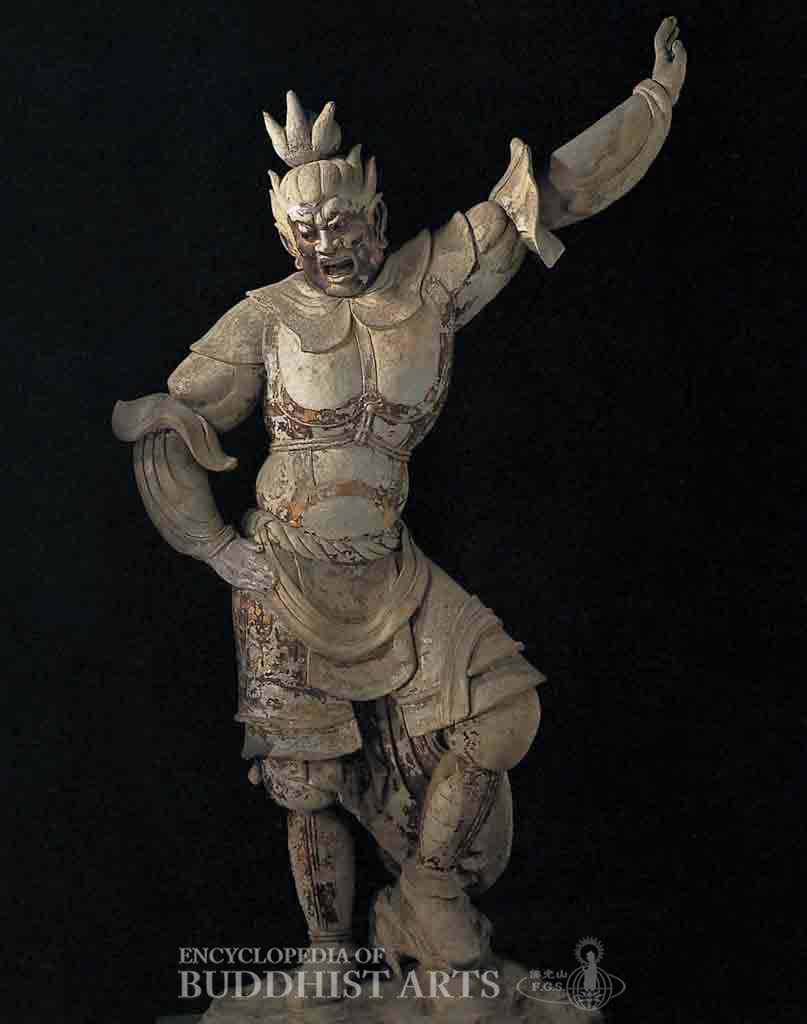
Shin Yakushiji Temple Main Hall: Twelve Yaksa Generals - Indra
Shin Yakushiji Temple Main Hall: Twelve Yaksa Generals
JAPAN, Nara; Nara period
The Twelve Yaksa Generals stand facing outwards surrounding the main figure of the Medicine Buddha. According to an inscription on Sakra’s pedestal, the sculptures were produced during 729 to 749. The statues, except the figure of Kumbhira, which was damaged in an earthquake in 1854 and repaired in 1931, are in their original state and are the oldest existing examples of the Generals. They were recognized as National Treasures in 1953.
The life-size statues are structured about a framework of wood struts and molded with three layers of clay. The eyes are inlaid with jade and the bodies were once gilded and painted, although little of the surface treatment remains. The figures have muscular chests and are dressed in armor. Their sleeve cuffs are secured like fins as they brandish their weapons or strike martial poses with their feet planted firmly on a rock pedestal. Mihira, one of those illustrated, holds a sword in the right hand and seems to roar in defiance. Catura has a similar expression and raises his sword for attack. The helmeted Pajra stands in an awkward stance with left hand at the waist and the right hand raised and formed into a fist. Indra is also shown with the right hand at the waist, the left arm stretching upward, and his right foot raised on a rock. The entire formation is vivid and majestic in its choreographed energy.
For more details, go to the Encyclopedia of Buddhist Arts: Sculpture N-Sr, page 1061.
Cite this article:
author = Hsingyun and Youheng and Lovelock, Yann and Chou, Yuan and Huntington, Susan and Edson, Gary and Neather, Robert,
booktitle = {Encyclopedia of Buddhist Arts: Sculpture N-Sr},
pages = 1061,
title = {{Shin Yakushiji Temple Main Hall: Twelve Yaksa Generals}},
volume = 12,
year = {2016}}