
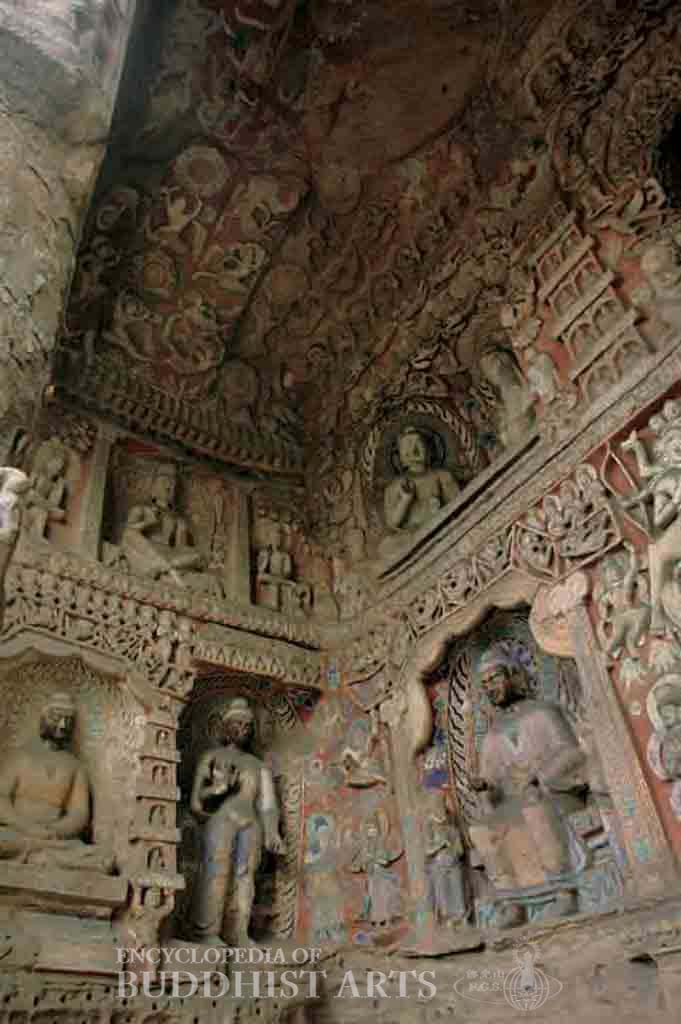
Yungang Grotto 10: Front Chamber - Back and West Walls
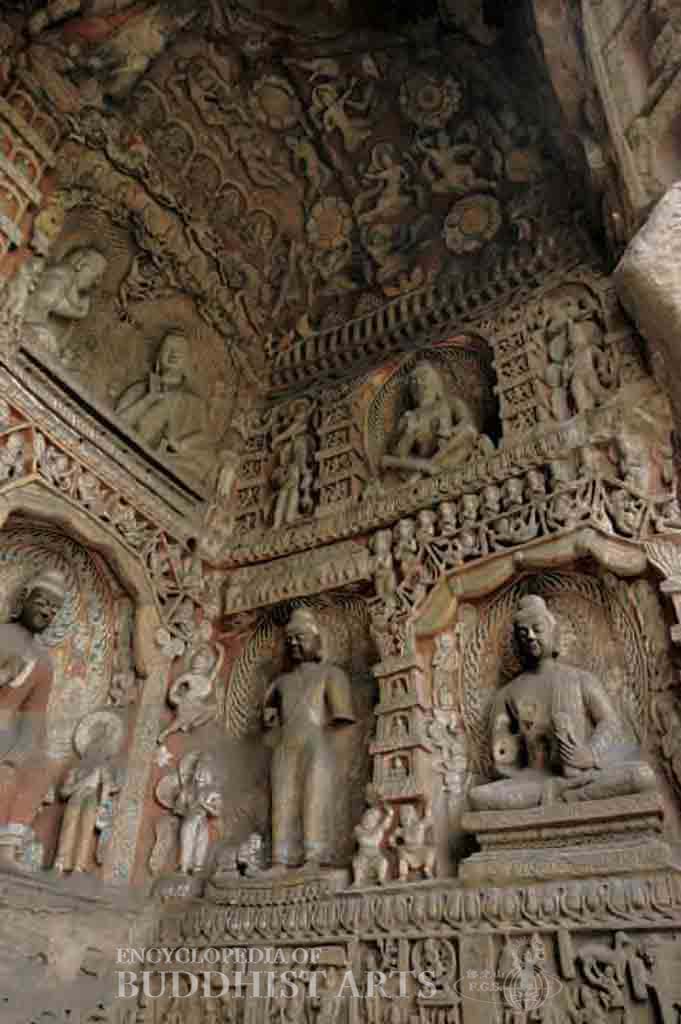
Yungang Grotto 10: Front Chamber - Back and East Walls
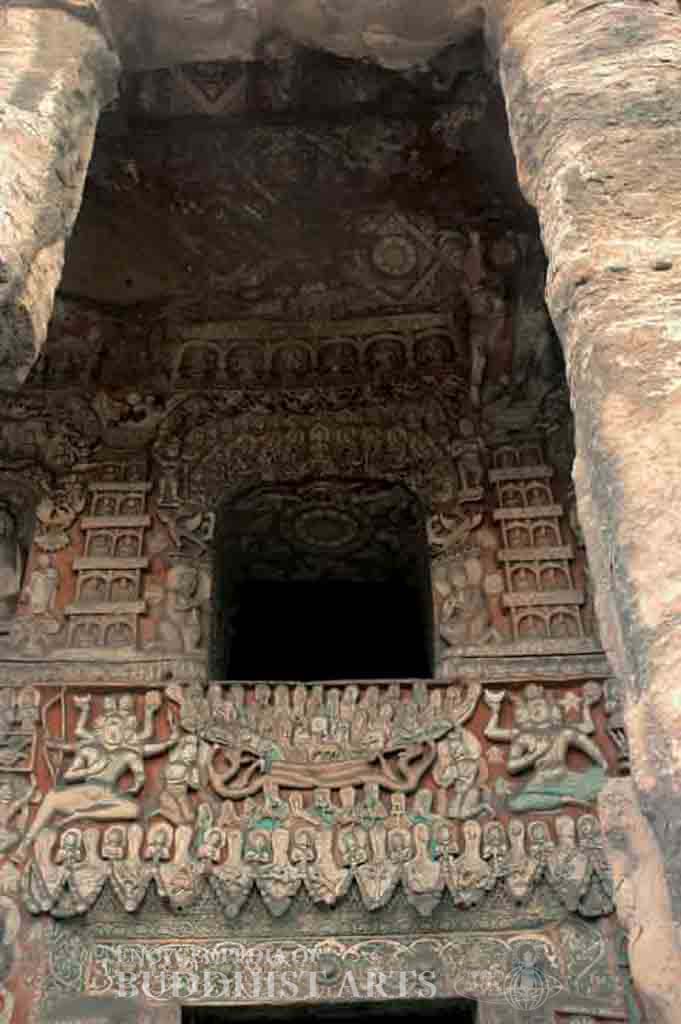
Yungang Grotto 10: Front Chamber - Window
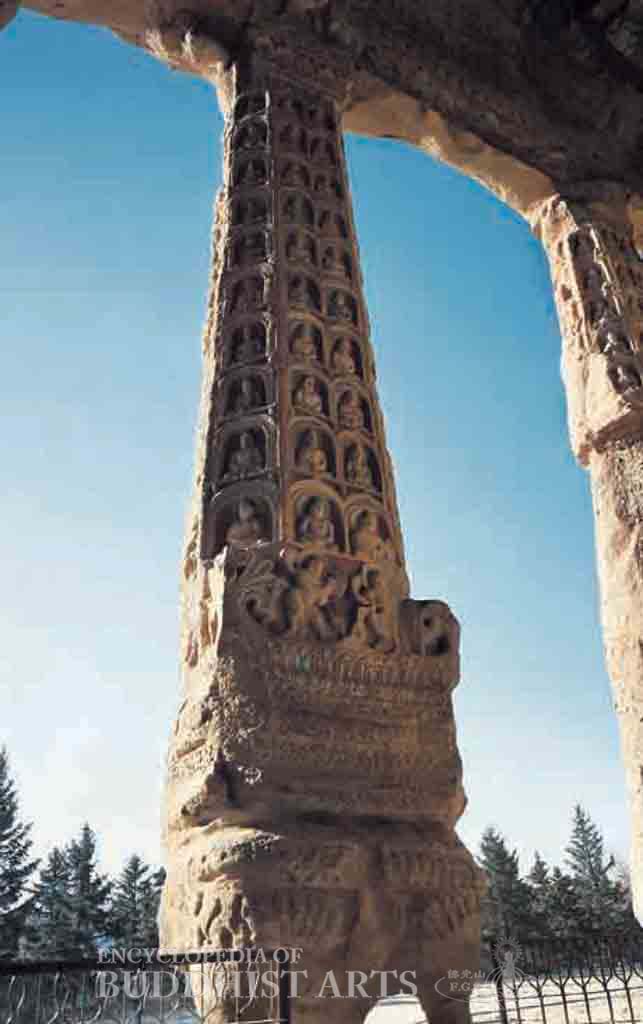
Yungang Grotto 10: Column
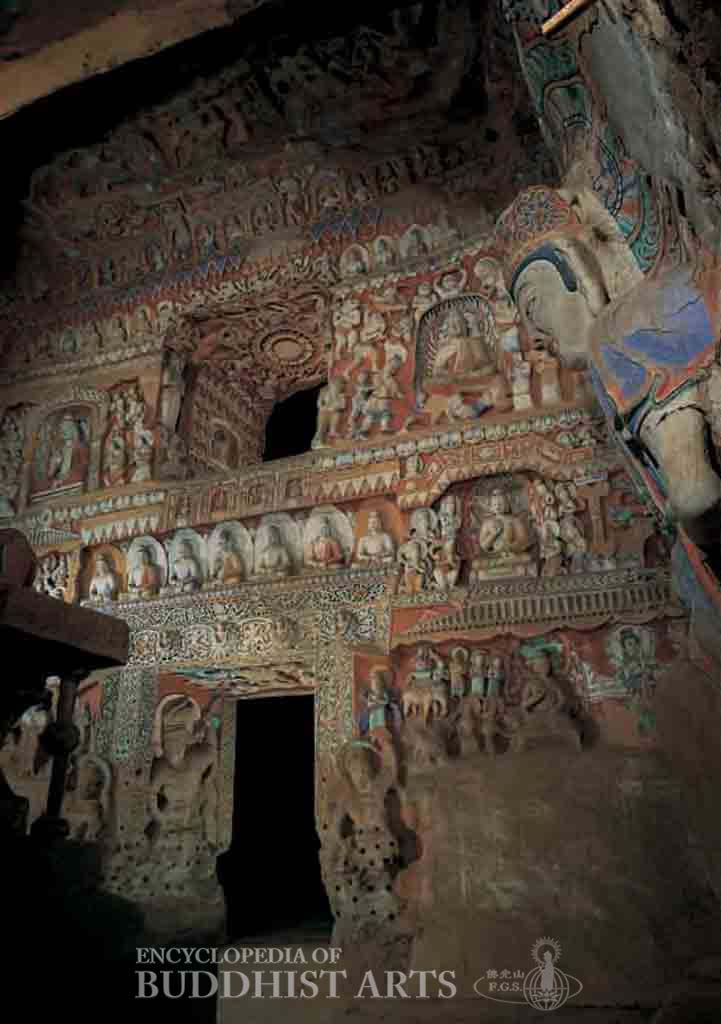
Yungang Grotto 10: Rear Chamber - South Wall
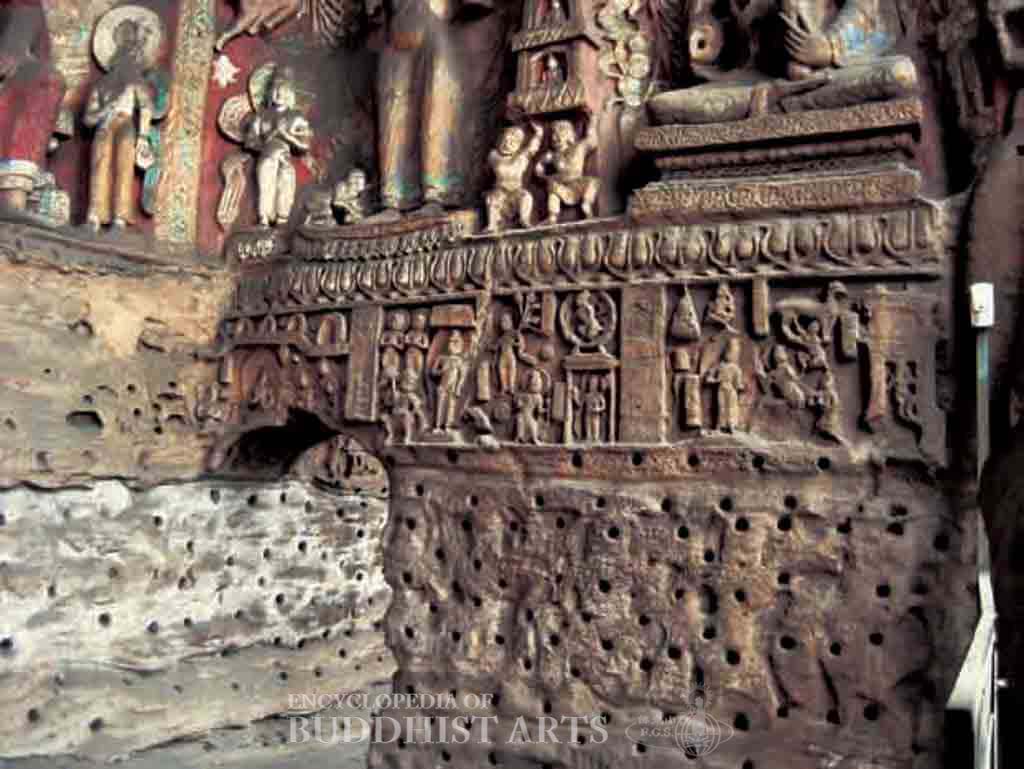
Yungang Grotto 10: Front Chamber - Jataka Tales and Karma Stories (east wall)
Yungang Grotto 10
CHINA, Shanxi, Datong
This grotto is located in the central area of the Yungang site. It was constructed between the years 465 and 494 during the Northern Wei dynasty, and shares a similar layout with its twin Grotto 9. Both grottoes are divided into the front chamber and rear chamber, and are connected by an arched doorway on the east wall of Grotto 10’s front chamber.
The main entrance of Grotto 10 is made up of a series of octagonal columns carved with the Thousand Buddhas and elephant-shaped bases. The columns have suffered severe weathering on the outer side, but are relatively well-preserved on the inner sides. The front chamber is 11.5 m wide, 10.65 m high, and 4.3 m deep. The ceiling, which had previously collapsed in the center and was subsequently repaired and repainted, has carvings of apsaras and lotuses. Although the lower sections of the three walls of the chamber have deteriorated, the middle and upper portions remain relatively well-preserved.
The middle section of the east wall contains two niches. The niche on the left is carved with a standing image of Dipamkara Buddha, while a small figure prostrates at his feet. The upper portion of the east and west wall has a house-like structure divided into three bays by pagoda-shaped columns. The central bay contains a seated Buddha, while the two side bays contain standing Bodhisattvas. The west wall of the front chamber has a similar layout, but with some minor differences. On the upper section, the flanking Bodhisattvas are in contemplation and sit in the relaxation posture rather than standing. In addition, the dividing columns on the upper wall are square and decorated with leaf patterns.
On both ends of the middle section of the back (north) wall are trapezoidal niches decorated with drapery. The upper section of the wall is carved with two arched niches on both sides, each containing two Buddhas. The doorway into the rear chamber is cut into the middle of the wall, with an arched window above it. The lintel of the doorway is intricately decorated with various patterns and images, including mountains, dragons, heavenly beings, and other creatures. On the inner walls of the doorway are reliefs of warriors. The window above the doorway is carved with Buddhas, Bodhisattvas, and other figures.
The rear chamber measures 10.8 m wide, 10.4 m high, and 7.2 m deep. The main statue in the center of the chamber is a re-sculpted statue of Maitreya Bodhisattva. He sits on a raised throne which is surrounded by a corridor that facilitates circumambulation and prostration. There are 5 m high Bodhisattvas in contemplation near the north ends of the east and west walls which have lost their original appearance due to subsequent repairs. Other carvings in the rear chamber include illustrations of King Mahaprabhasa Avadana, the Buddha’s Defeat of Mara, Grdhra Revealing the Wrongdoings of the Hunter, and Mother Renouncing After Her Wrongdoings. The lintel of the doorway on the front (south) wall has Seven Buddhas and children being reborn from lotuses.
For more details, go to the Encyclopedia of Buddhist Arts: Caves T-Z, page 1694.
Cite this article:
author = Hsingyun and Youheng and Johnson, Peter and Mankuang and Huntington, Susan and Edson, Gary and Neather, Robert,
booktitle = {Encyclopedia of Buddhist Arts: Caves T-Z},
pages = 1694,
title = {{Yungang Grotto 10}},
volume = 9,
year = {2016}}