
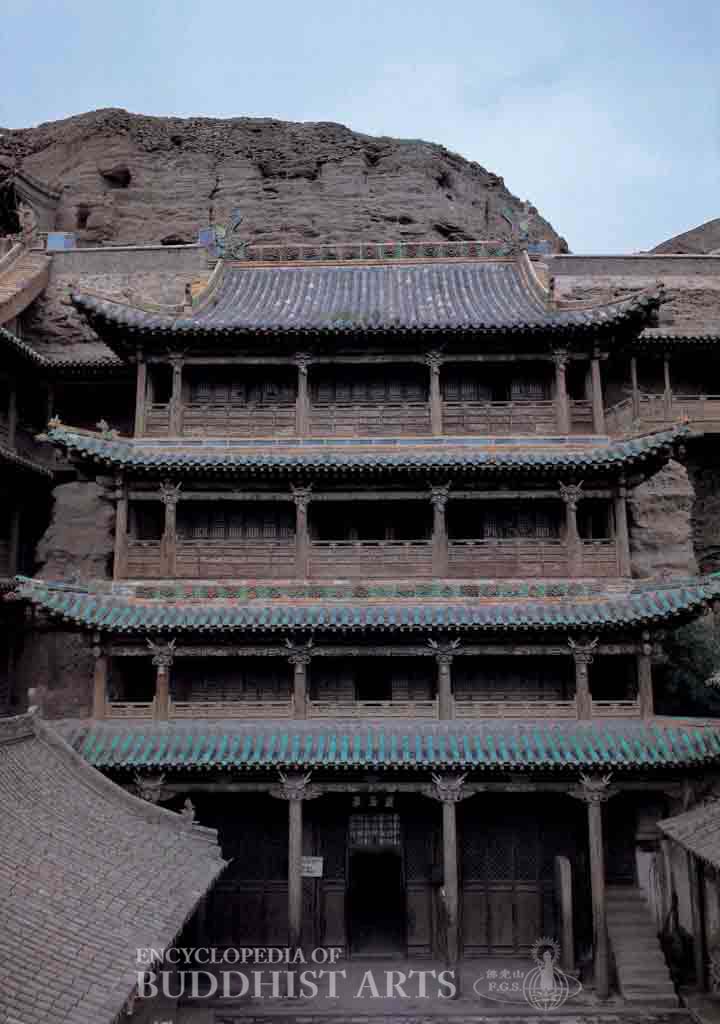
Yungang Grotto 5
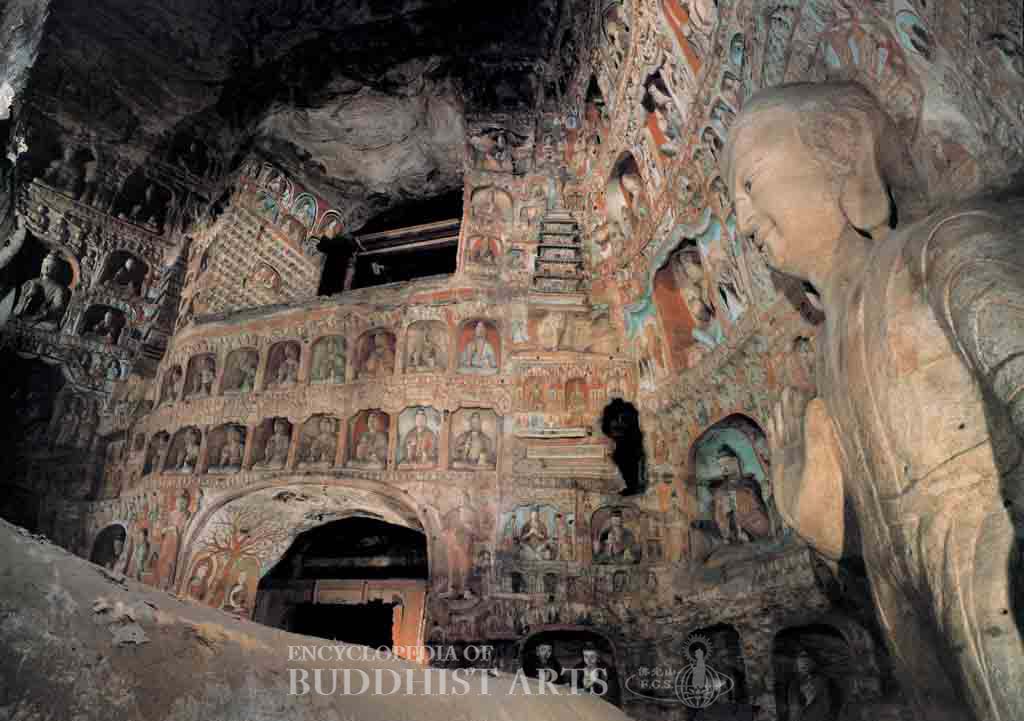
Yungang Grotto 5: Front and West Walls
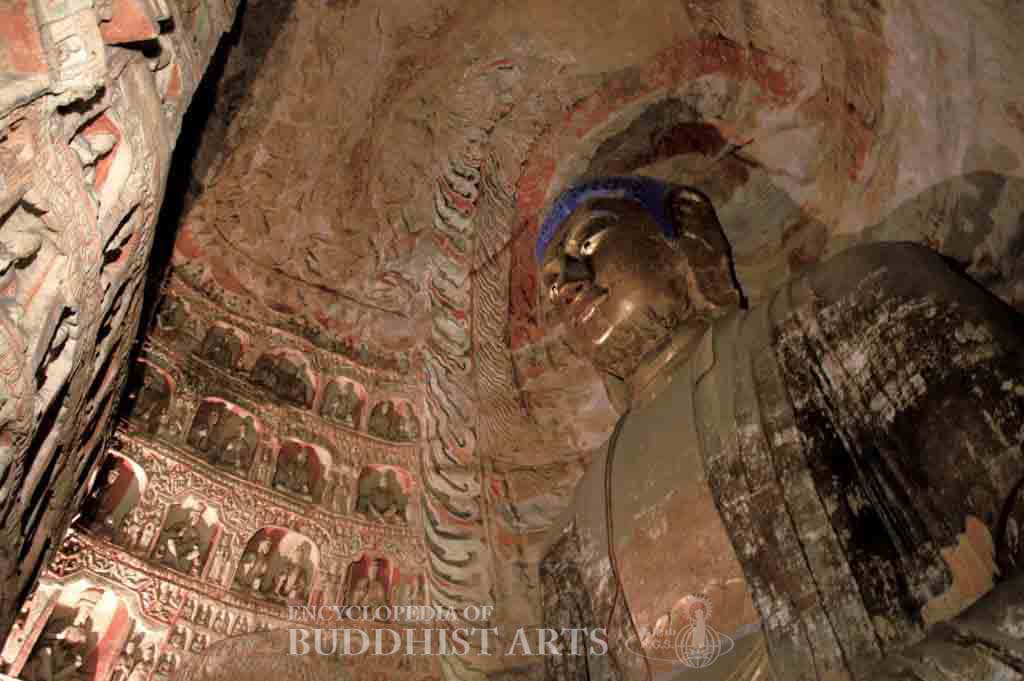
Yungang Grotto 5: Back and West Walls
Yungang Grotto 5
CHINA, Shanxi, Datong
Located in the central area, Grotto 5 was completed in the year 494 and is a twin to Grotto 6. It has an oval layout and a vaulted ceiling. The featured sculpture is a large seated Buddha on the back (north) wall, flanked by smaller standing Buddha statues on the east and west walls. Together, the three statues represent the Buddhas of the Past, Present, and Future. Measuring 17 m in height, the seated Buddha is the largest sculpture in the Yungang Grottoes. The original sculpture has been modified and gilded since its construction, and a corridor was also later added for circumambulation.
The east and west walls each feature a standing Buddha statue and numerous arch-shaped and trapezoidal niches. The organization of the niches on the walls is similar in layout to those of other grottoes sculpted during the second phase of Yungang construction. These niches are particularly characteristic of the styles employed during the rule of Emperor Xiaowen (reigned 471–499) of the Northern Wei dynasty. An arched entrance cut into the front (south) wall has a large window above it, the inner walls of which are filled with carved Buddha niches. On each side of the arched entrance is a standing Bodhisattva wearing a flowing stole and long lower garment. The corners of the front wall are carved into five-story pagodas.
The sculptures in the grotto reflect an overall Chinese style, particularly reflected in the clothing and features of the figures. The interior walls are filled with small niches constructed in a variety of styles and designs, demonstrating that the grotto was not completed according to an overall plan, but rather by various artisans over a longer period of time. This was likely due to the fact that Emperor Xiaowen moved the capital to a new location in the year 494.
For more details, go to the Encyclopedia of Buddhist Arts: Caves T-Z, page 1645.
Cite this article:
author = Hsingyun and Youheng and Johnson, Peter and Mankuang and Huntington, Susan and Edson, Gary and Neather, Robert,
booktitle = {Encyclopedia of Buddhist Arts: Caves T-Z},
pages = 1645,
title = {{Yungang Grotto 5}},
volume = 9,
year = {2016}}