
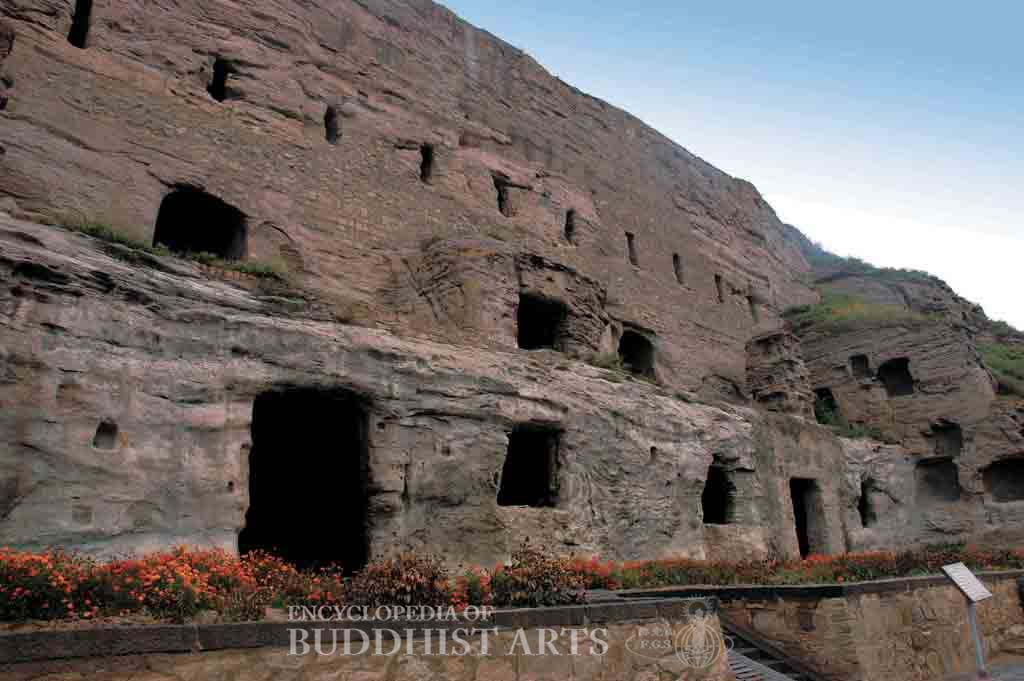
Yungang Grotto 3
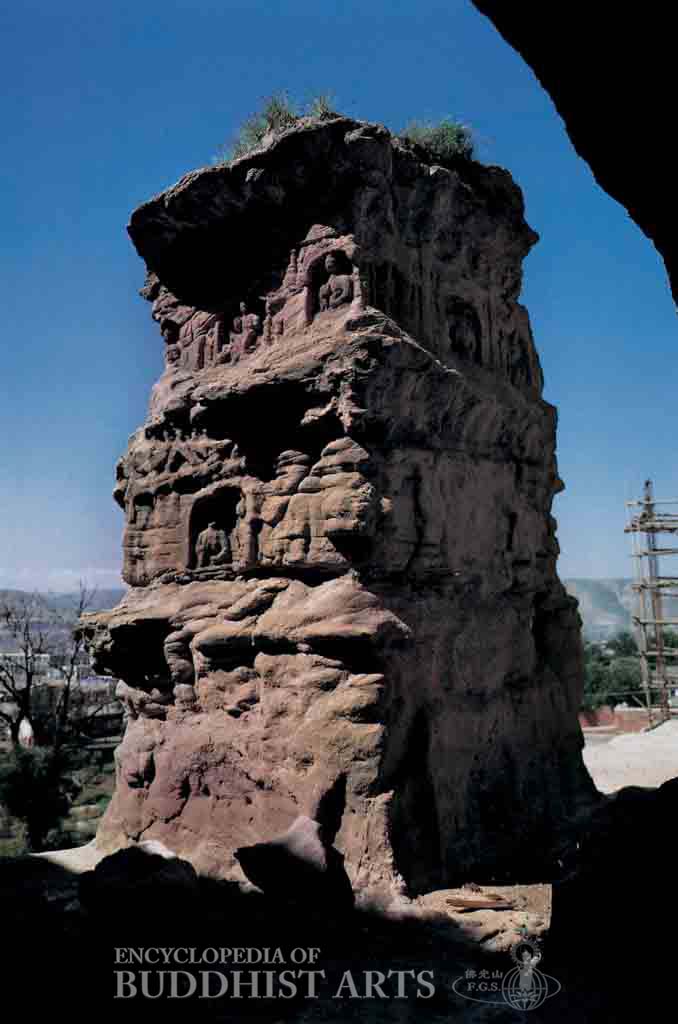
Yungang Grotto 3: Three-Tier Pagoda (front chamber, upper tier, east side)
Yungang Grotto 3
CHINA, Shanxi, Datong
Located in the east area, this grotto is the largest at Yungang and was known historically as Lingyan Temple. It faces south and consists of a two-level front chamber, auxiliary chambers, and a large rear chamber. Outside and above the grotto, twelve rectangular beam holes carved into the rock face above a flat ledge suggest that a wooden structure, possibly an upper-level chamber, may have once been constructed here. The exact date of its construction is unclear, but scholars estimate that it commenced before 494, but remained unfinished by the end of the Northern Wei dynasty in 534. Intermittent construction then took place in different stages during the Tang (618–907), Liao (907–1125) and Jin (1115–1234) dynasties.
The front chamber measures 50 m wide and is divided into upper and lower levels. The grotto entrance is located on the lower tier, flanked by unadorned windows carved into the cliff face. Outside and above the entrance is a square three-story pagoda with a height of 5.3 m and niches carved into each of its four sides. The details that adorned the pagoda have largely worn away, with only a small part of the imitation wood detailing still visible. Within the grotto, two roughly carved auxiliary chambers are located on either side of the large front section, which contains traces of a lattice ceiling, with carved Buddhas along the walls, and a cross-legged Maitreya flanked by two attending disciples.
The rear chamber measures 43 m in width, 15 m in depth, and 20 m in height. It was originally designed with a central pillar, but the north side was never excavated from the rock walls. The left side of the north wall contains the only sculptures in the rear chamber: a large Buddha flanked by two Bodhisattvas. The Buddha sits with legs pendent, measuring approximately 10 m in height. The attending Bodhisattvas are both approximately 6 m high. All three figures are relatively unadorned and have suffered weathering, particularly around the lower parts. These three carvings are relatively unique in the Yungang Grottoes as they were created during the Early Tang period (618–712) in a style different from most of the others found here.
For more details, go to the Encyclopedia of Buddhist Arts: Caves T-Z, page 1642.
Cite this article:
author = Hsingyun and Youheng and Johnson, Peter and Mankuang and Huntington, Susan and Edson, Gary and Neather, Robert,
booktitle = {Encyclopedia of Buddhist Arts: Caves T-Z},
pages = 1642,
title = {{Yungang Grotto 3}},
volume = 9,
year = {2016}}