
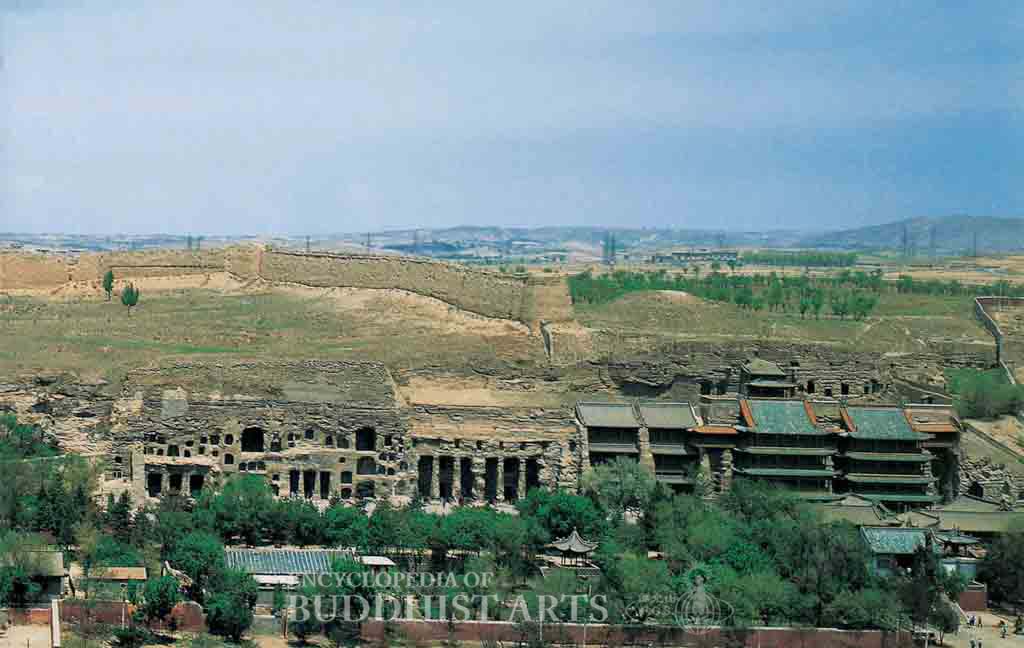
Yungang Grottoes: Twin Grottoes - Grottoes 5 to 13
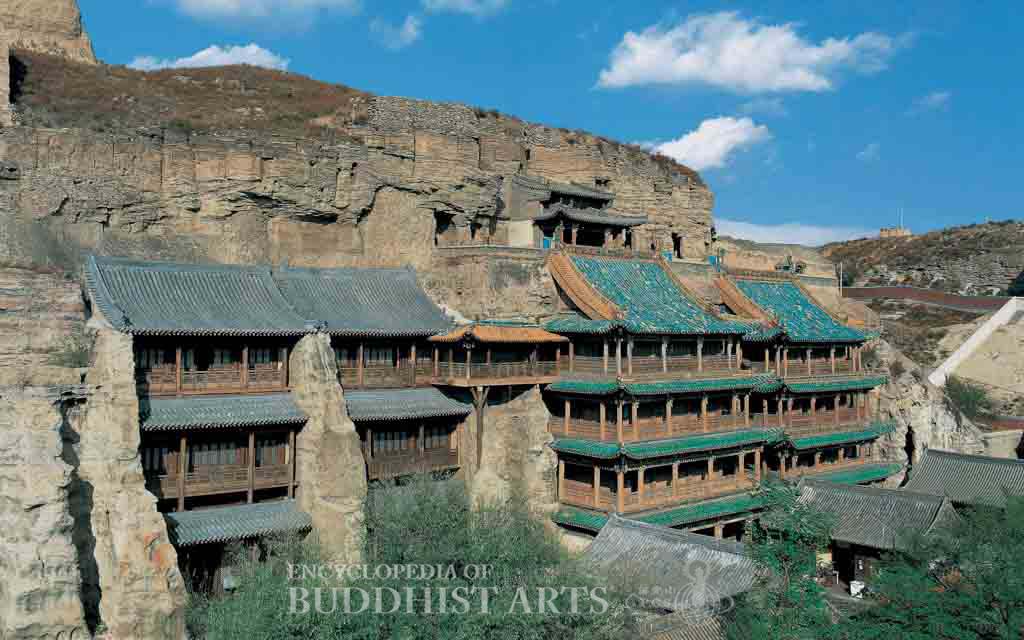
Yungang Grottoes: Twin Grottoes - Grottoes 5 to 8
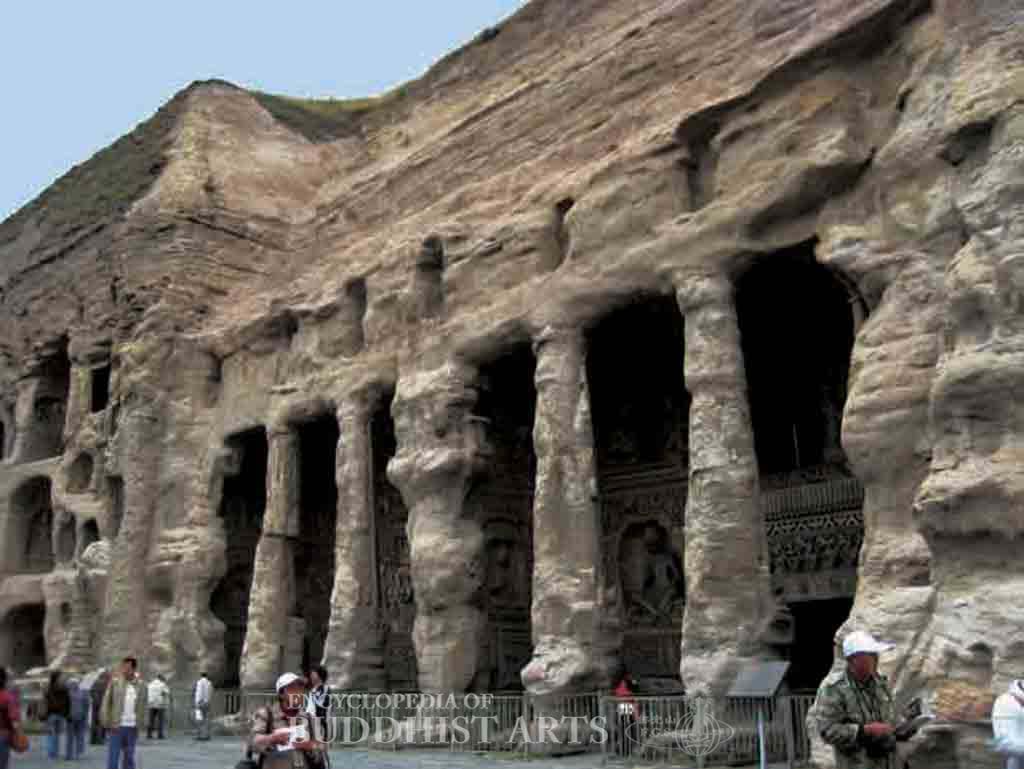
Yungang Grottoes: Twin Grottoes - Grottoes 9 and 10
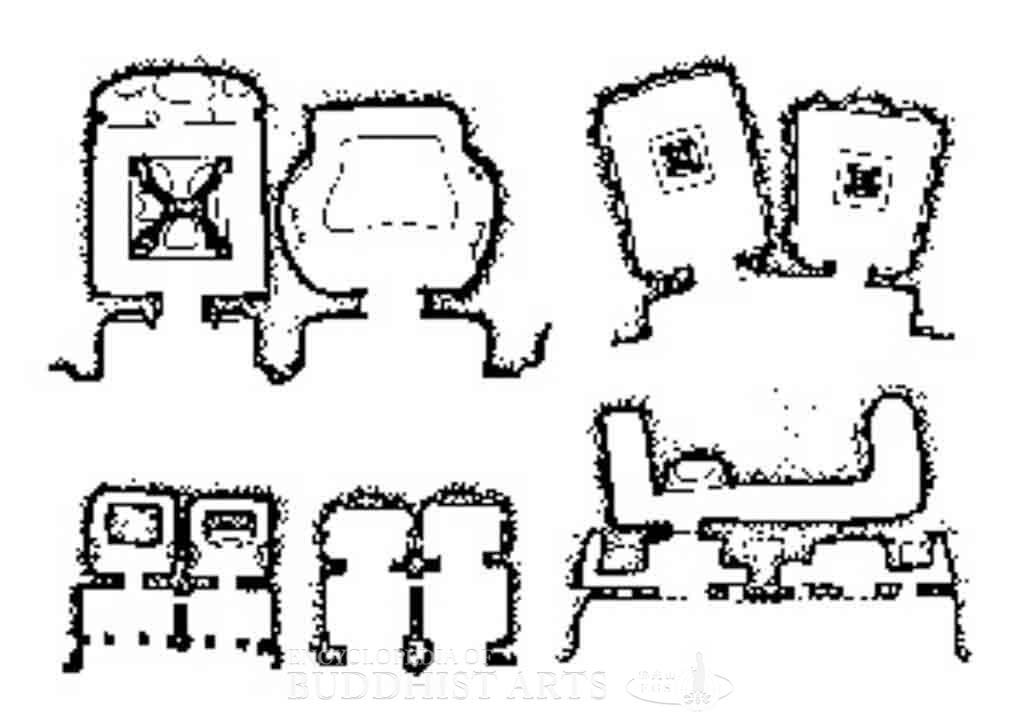
Yungang Grottoes: Twin Grottoes (plan)
Yungang Grottoes: Twin Grottoes
CHINA, Shanxi, Datong
Located in the central and east areas at Yungang, the twin grottoes are Grottoes 1 and 2, Grottoes 5 and 6, Grottoes 7 and 8, and Grottoes 9 and 10. Grottoes 11, 12 and 13 form a separate group of three. Grotto 3 is thought to have been intended as part of a planned set of twin grottoes, on which construction was never completed. All of the twin grottoes were created between the years 465 and 494, during the second phase of Yungang construction. The primary characteristic of the twin grottoes is the standardization of their external and internal layouts, their proximity, and the similarity of their content. Twin grottoes were a unique feature of Yungang at the time of their construction, and are believed to have subsequently influenced the creation of similar twin grottoes at the Gongxian Caves and Longmen Grottoes.
Generally, twin grottoes share a wall between their front chambers, carved to resemble a column, stele, or pagoda on the exterior side. The wall between Grottoes 5 and 6 is carved to resemble a tortoise-mounted pagoda; Grottoes 7 and 8 are connected with a 13 m high tortoise-mounted stele; and Grottoes 9 and 10 share an elephant-mounted column. The shared wall between Grottoes 1 and 2 no longer exists.
Grottoes 1 and 2 have a central pillar layout with symmetrical content. Grottoes 5 and 6 are constructed in slightly different styles: Grotto 5 is a great Buddha grotto featuring a large Buddha sculpture on the back wall, and Grotto 6 is a central pillar grotto that has a square layout. Although they differ in layout, the two grottoes complement each other in style and share the same scale and external features.
Grottoes 7, 8, 9, and 10 have oval-shaped front chambers, while those of Grottoes 7 and 8 are connected by an arched doorway and their rear chambers are equivalent in size. The exterior wall of the front chambers of Grottoes 9 and 10 consists of a row of large columns, with the central column forming a dividing wall, and an arched doorway which connects the two front chambers. Each of the two grottoes features a large statue and a circumambulation corridor.
For more details, go to the Encyclopedia of Buddhist Arts: Caves T-Z, page 1635.
Cite this article:
author = Hsingyun and Youheng and Johnson, Peter and Mankuang and Huntington, Susan and Edson, Gary and Neather, Robert,
booktitle = {Encyclopedia of Buddhist Arts: Caves T-Z},
pages = 1635,
title = {{Yungang Grottoes: Twin Grottoes}},
volume = 9,
year = {2016}}