
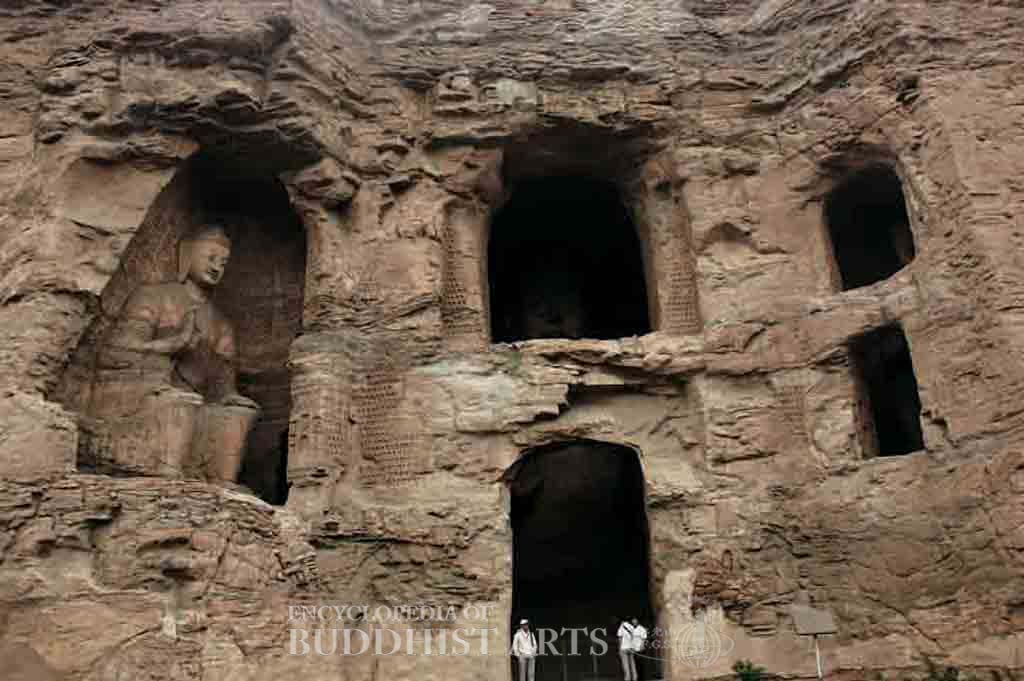
Yungang Grotto 19
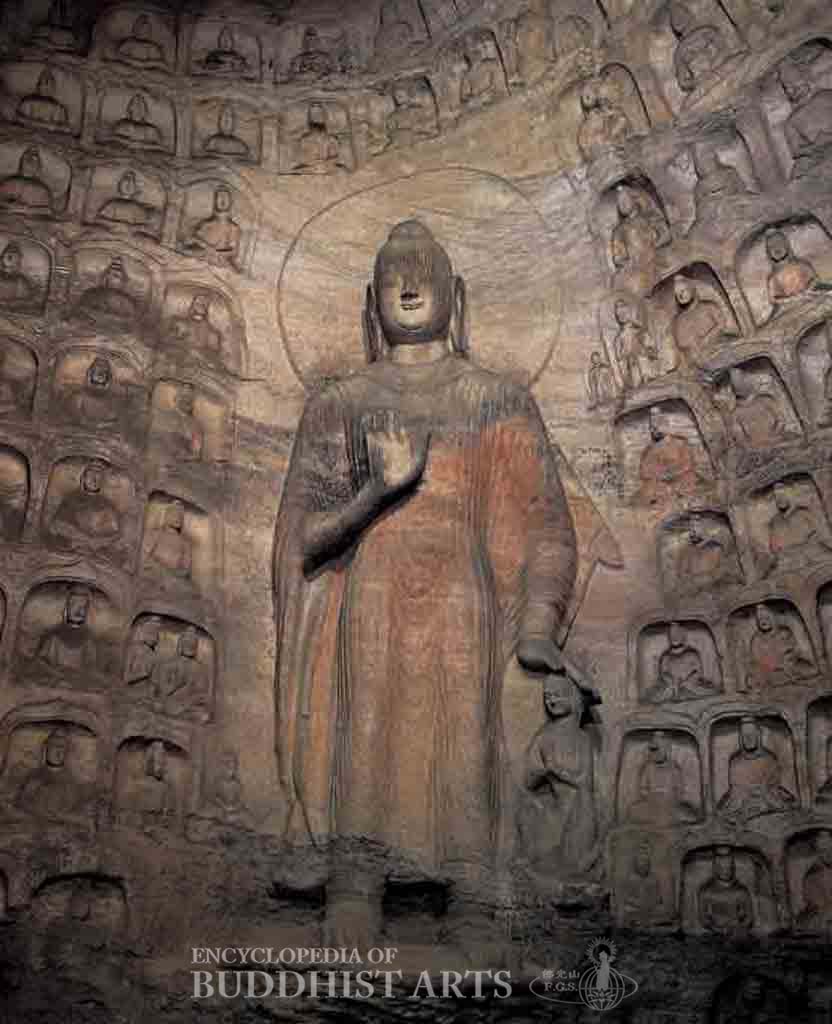
Yungang Grotto 19: Main Chamber - Standing Buddha (front wall, upper right side)
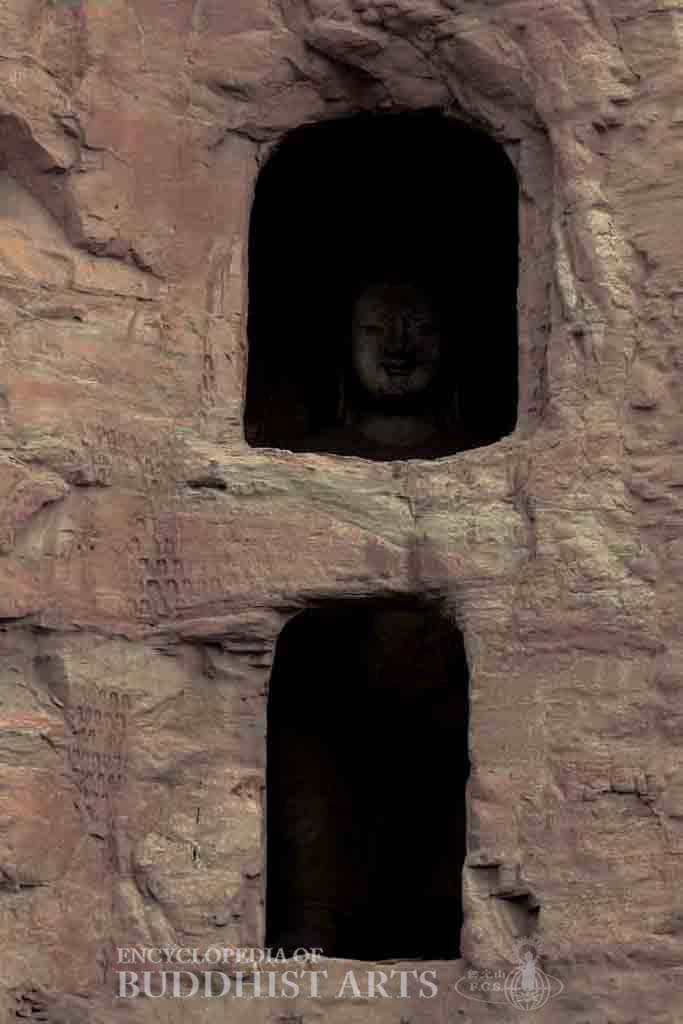
Yungang Grotto 19: East Chamber - Seated Buddha
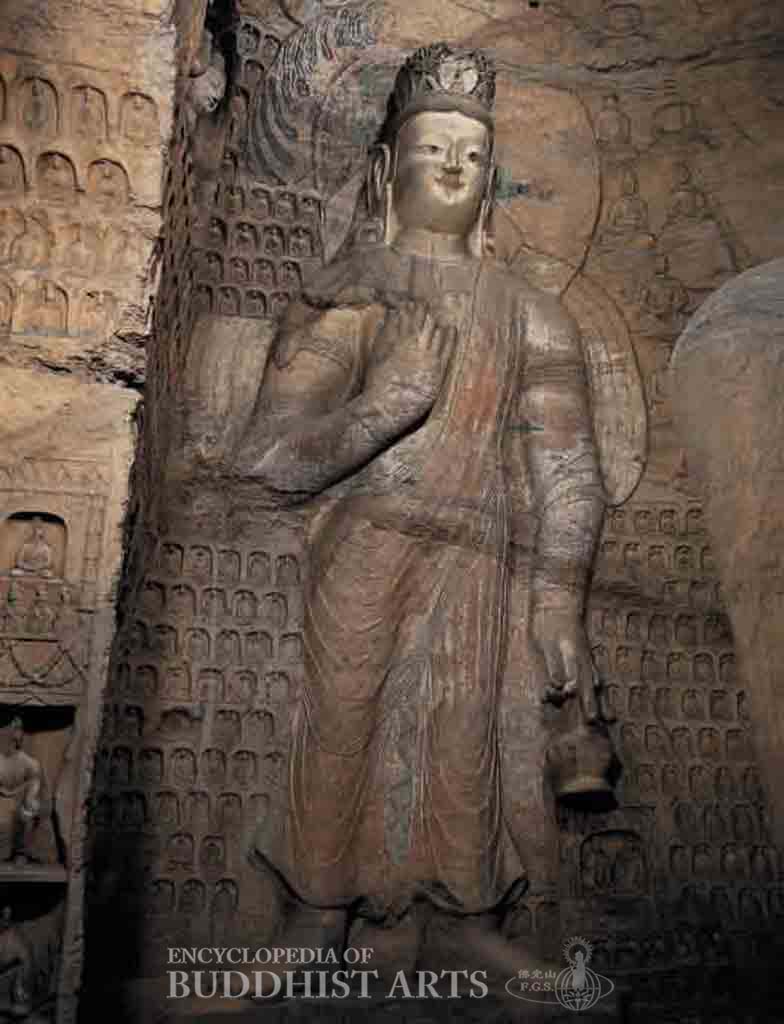
Yungang Grotto 19: East Chamber - Left Attendant Bodhisattva
Yungang Grotto 19
CHINA, Shanxi, Datong
Located in the west area, construction on this great Buddha grotto began between the years 460 and 465. It is the largest of the Five Grottoes of Tanyao. The main chamber has auxiliary chambers leading off to the side, each containing Buddha figures. The three Buddhas within the three chambers form the Buddhas of the Past, Present, and Future.
The main chamber has a U-shaped layout and an arched doorway with a window above it. A 16.8 m high sculpture of Sakyamuni Buddha on the back (north) wall occupies most of the main chamber, while the front (south) wall is filled with the Thousand Buddhas on both sides of the upper window. A standing Buddha figure is located on the upper right side of the front wall. The Buddha measures 3.61 m in height and is depicted with a round face, elongated earlobes, and a peaceful expression. Standing barefoot, the Buddha forms the abhaya (fearlessness) mudra with one hand while the other rests on the head of a kneeling disciple. This scene is believed to represent Sakyamuni Buddha being reunited with his son Rahula.
The auxiliary chambers each originally contained a Buddha and two attendant Bodhisattvas; however, the outer wall of the west chamber collapsed and only the Buddha and one Bodhisattva remain. The left attendant Bodhisattva in the east chamber is particularly well preserved. Standing barefoot, the figure wears an ornately decorated headdress, a shawl, and a flowing stole. One hand holds a whisk before the chest while the other hand holds a vase.
For more details, go to the Encyclopedia of Buddhist Arts: Caves T-Z, page 1732.
Cite this article:
author = Hsingyun and Youheng and Johnson, Peter and Mankuang and Huntington, Susan and Edson, Gary and Neather, Robert,
booktitle = {Encyclopedia of Buddhist Arts: Caves T-Z},
pages = 1732,
title = {{Yungang Grotto 19}},
volume = 9,
year = {2016}}