
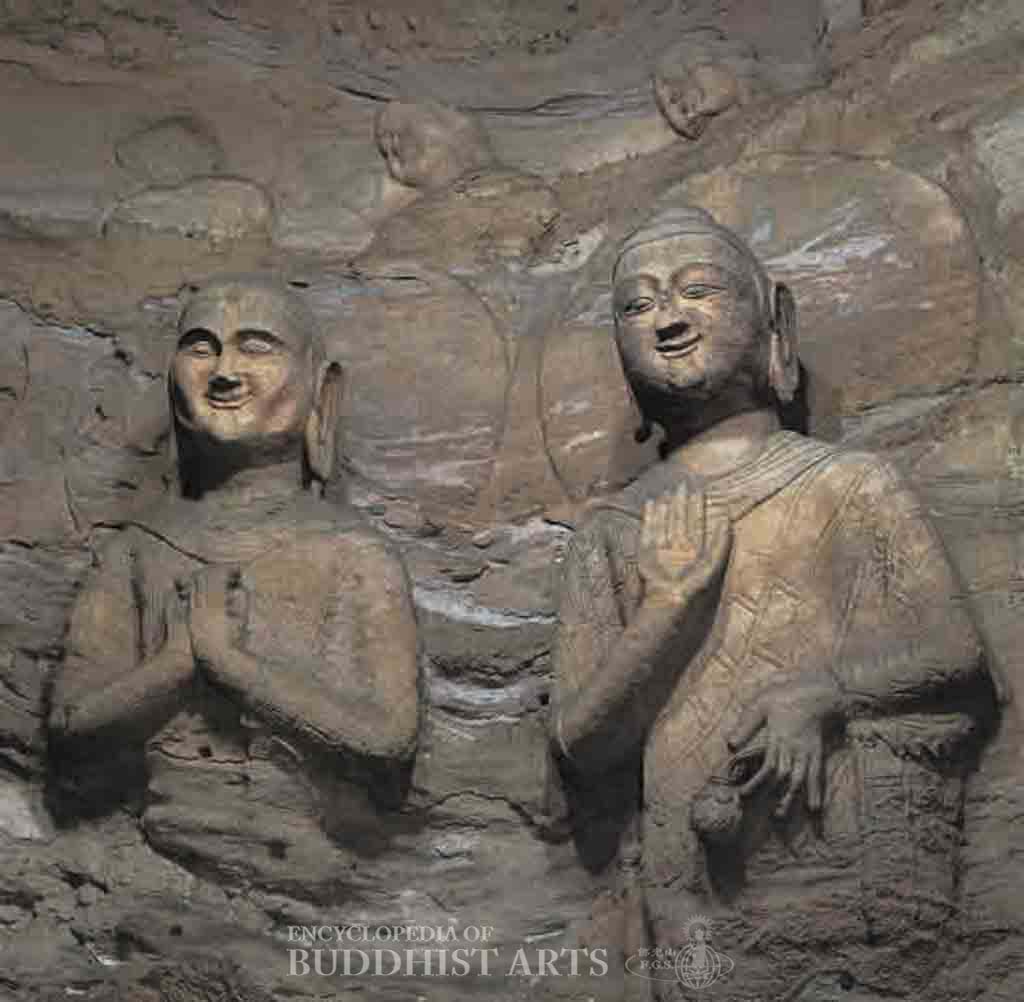
Yungang Grotto 18: Disciples (back wall, right side, above Bodhisattva)
Stone
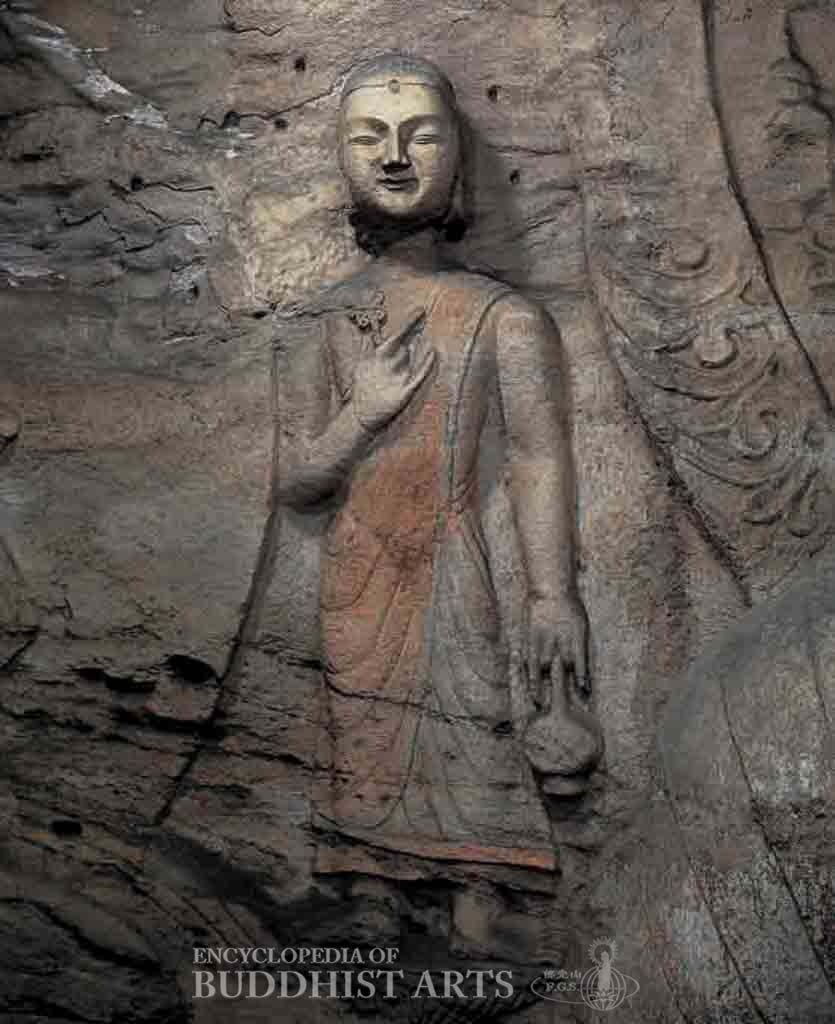
Yungang Grotto 18: Disciple (back wall, right side, right of Bodhisattva)
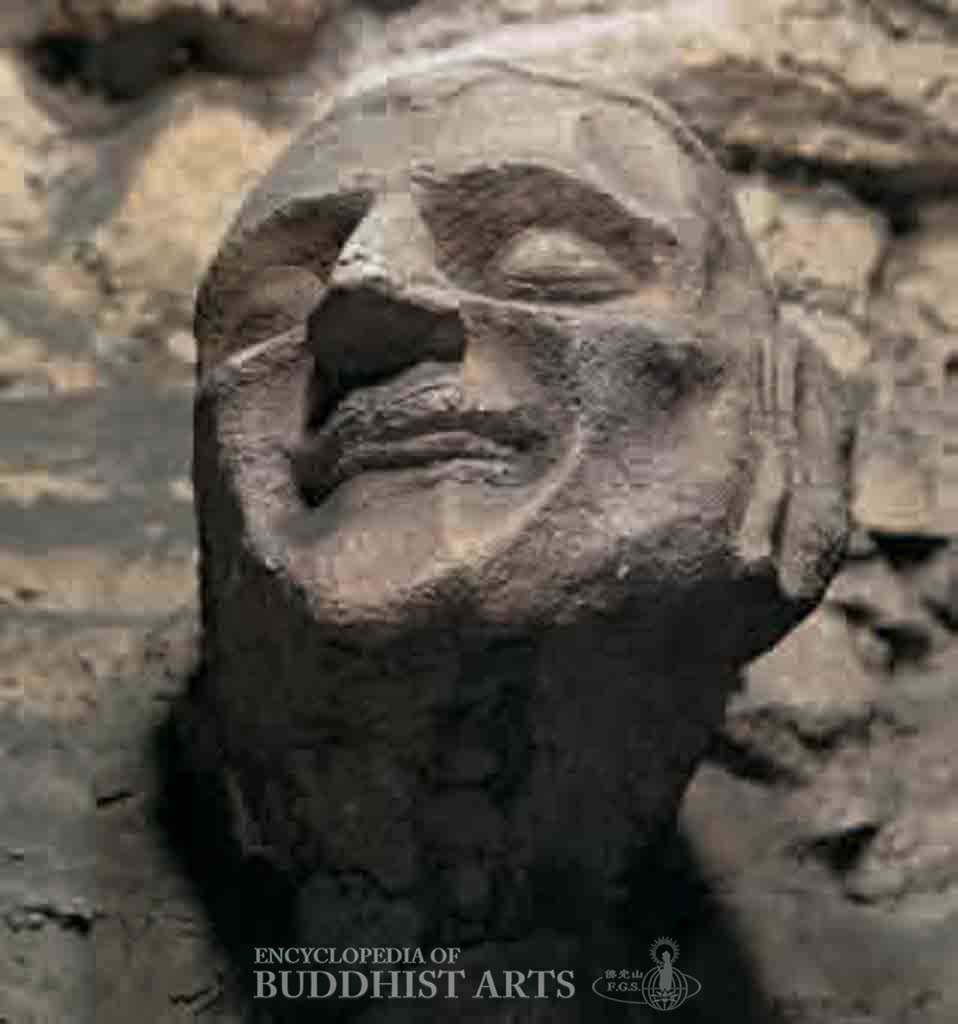
Yungang Grotto 18: Disciples - Head of a Disciple (back wall, right side, upper left of Bodhisattva)
Yungang Grotto 18: Disciples
CHINA, Shanxi, Datong; Northern Wei dynasty
Surrounding the head of the attendant Bodhisattva on the right side of the back (north) wall are carvings of five disciples. Five similar figures appear to have been carved around the Bodhisattva on the left side of the wall; however, they have suffered severe weathering and their features are no longer discernible.
To the upper left side of the Bodhisattva is the carved head of a disciple in the appearance of an old monk with well-defined facial features including deeply set eyes, closed lips, and a prominent nose. These features suggest that he is from Central Asia. Directly above and to the right of the Bodhisattva are two smiling disciples with rounded faces and elongated earlobes. The figure on the left forms a mudra at the chest with both hands, while the one on the right forms a mudra with one hand and holds an object in the other. The disciple to the right of the Bodhisattva’s head has the appearance of a young monk holding a flower in one hand and vase in the other. He wears a long, monastic robe over one shoulder, which still retains some of the original red coloring.
Most of the disciple figures were carved using a high-relief technique on the upper bodies, with the lower bodies employing increasingly more shallow reliefs until they blend with the wall around the legs. This technique gives the impression that the figures are leaning forward to emerge from the wall. This unique design, as well as the vivid features and high level of skill involved in these carvings, has made them a fine representation of sculptures created during the first phase of construction at the Yungang Grottoes.
For more details, go to the Encyclopedia of Buddhist Arts: Caves T-Z, page 1727.
Cite this article:
author = Hsingyun and Youheng and Johnson, Peter and Mankuang and Huntington, Susan and Edson, Gary and Neather, Robert,
booktitle = {Encyclopedia of Buddhist Arts: Caves T-Z},
pages = 1727,
title = {{Yungang Grotto 18: Disciples}},
volume = 9,
year = {2016}}