
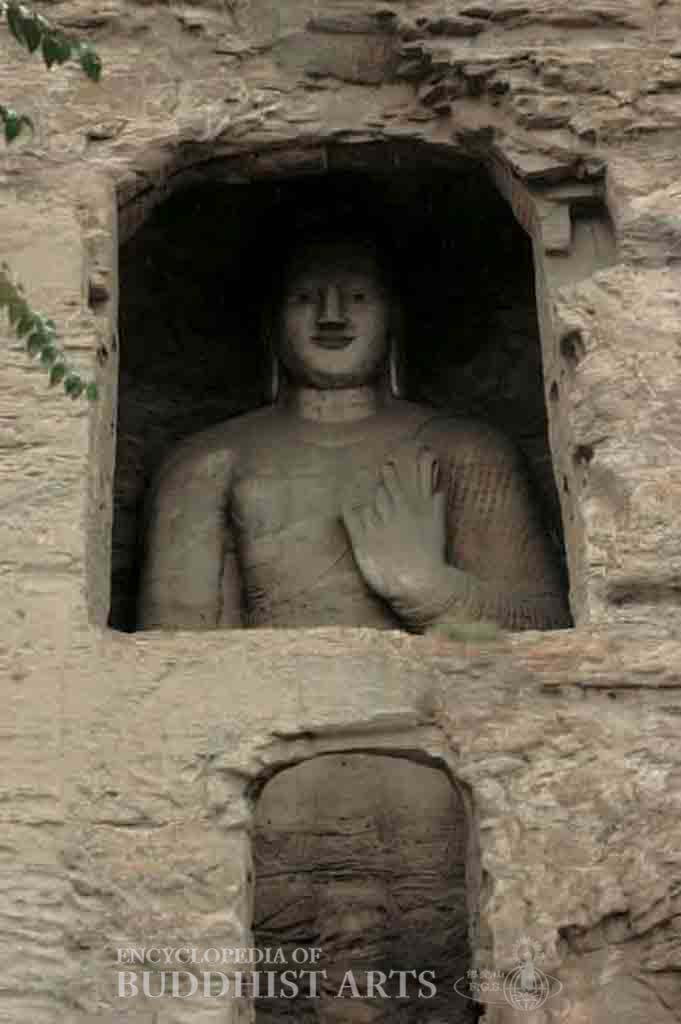
Yungang Grotto 18
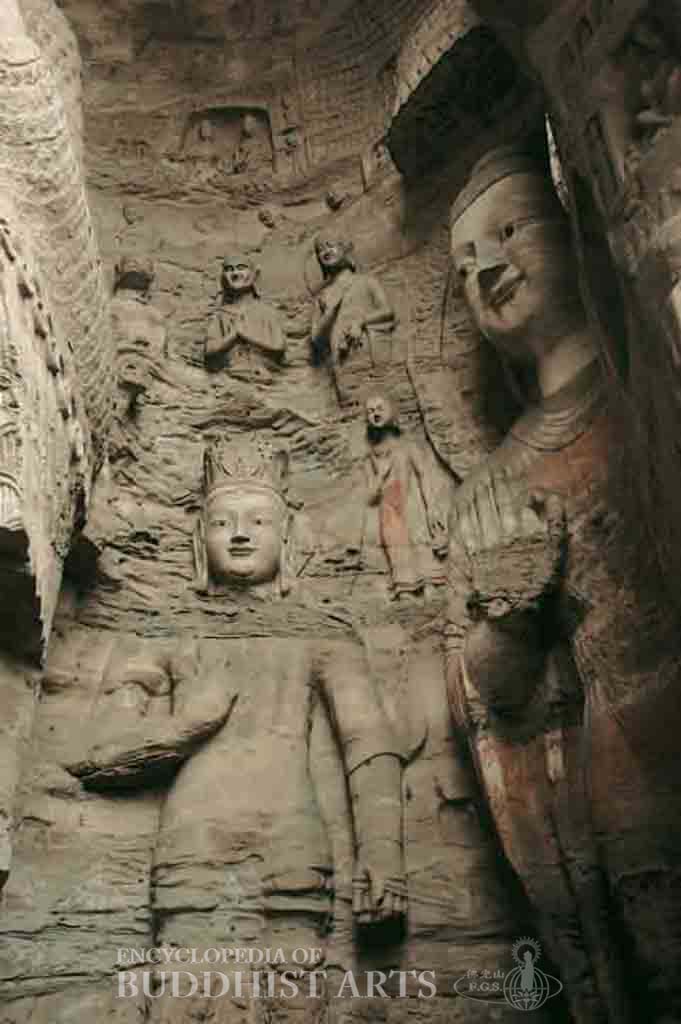
Yungang Grotto 18: North Wall (right side)
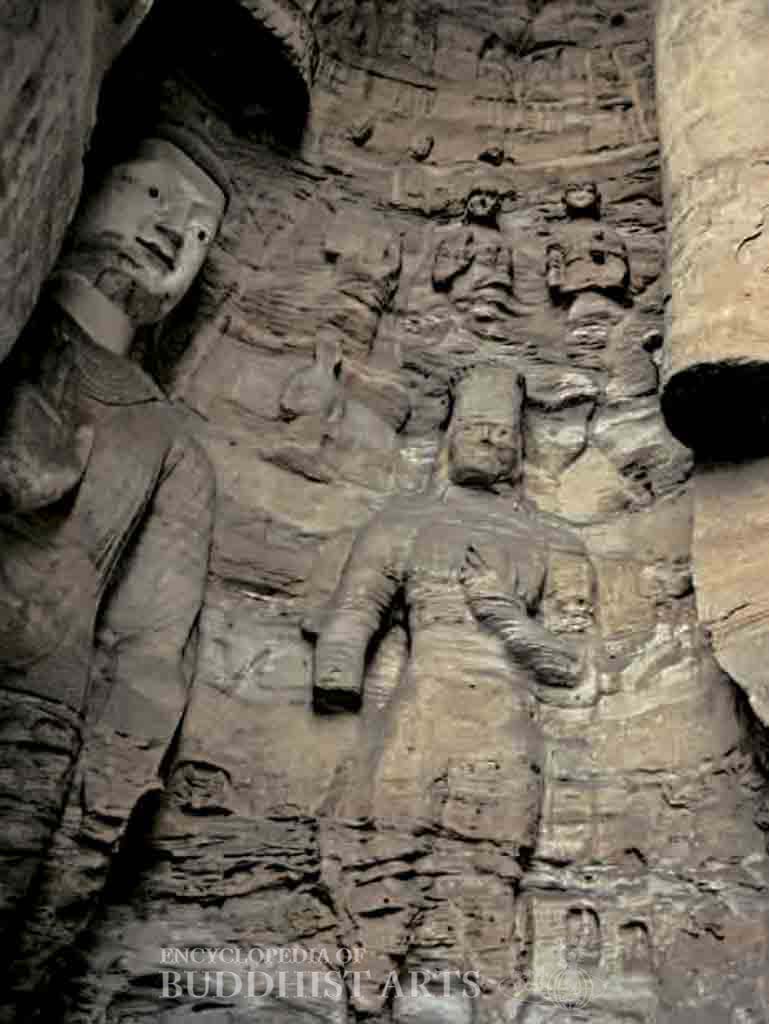
Yungang Grotto 18: North Wall (left side)
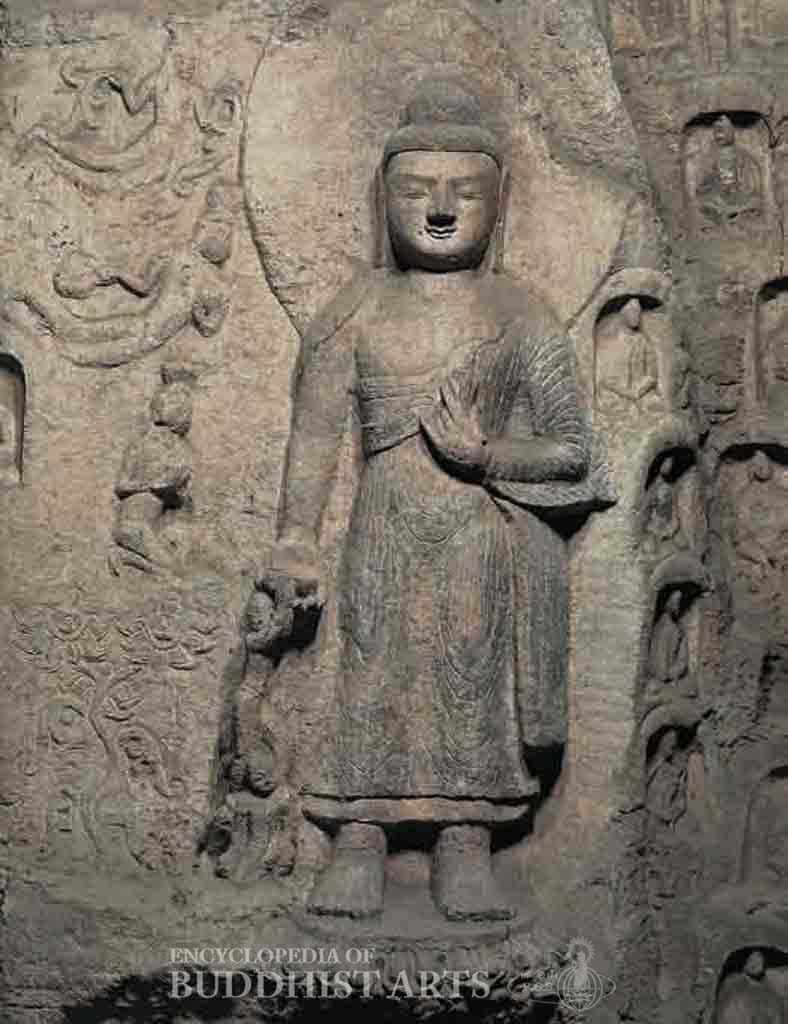
Yungang Grotto 18: King Asoka Making a Sand Offering
Yungang Grotto 18
CHINA, Shanxi, Datong
Constructed between the years 460 and 465, this great Buddha grotto is located in the west area, facing south. It has an arched doorway with a window above it, and features sculptures of three large Buddhas. The apsidal grotto has a vaulted ceiling and measures 18.7 m in width, at its widest point, and 7.7 m in depth.
The back (north) wall has a 15.5 m high standing Sakyamuni Buddha flanked by two Bodhisattvas and small carvings of disciples. The figures to the left of the Buddha have suffered severe weathering and damage, while those to the right are relatively well preserved. The carvings of the disciples are particularly notable, as they were produced using a variety of methods and are considered to be of high artistic value.
The east and west walls each feature carvings of standing Buddhas with a semicircular canopy suspended over their heads. These figures were originally surrounded by carvings of the Thousand Buddhas and various niche sculptures, but unfortunately the majority of these have suffered weathering and erosion.
Below and to the right of the window on the front (south) wall is a standing Buddha holding an alms bowl in one hand. Depicted beneath the alms bowl are three smaller figures standing on each other’s shoulders, in order to reach the bowl and make offerings. This image is believed to represent the story of King Asoka Making a Sand Offering. On the right side of the doorway are cartouche inscriptions attributed to a Northern Wei dynasty empress who was from the Rouran clan. The inscriptions provide valuable historical information for understanding the politics, religion, and people of that time.
For more details, go to the Encyclopedia of Buddhist Arts: Caves T-Z, page 1724.
Cite this article:
author = Hsingyun and Youheng and Johnson, Peter and Mankuang and Huntington, Susan and Edson, Gary and Neather, Robert,
booktitle = {Encyclopedia of Buddhist Arts: Caves T-Z},
pages = 1724,
title = {{Yungang Grotto 18}},
volume = 9,
year = {2016}}