
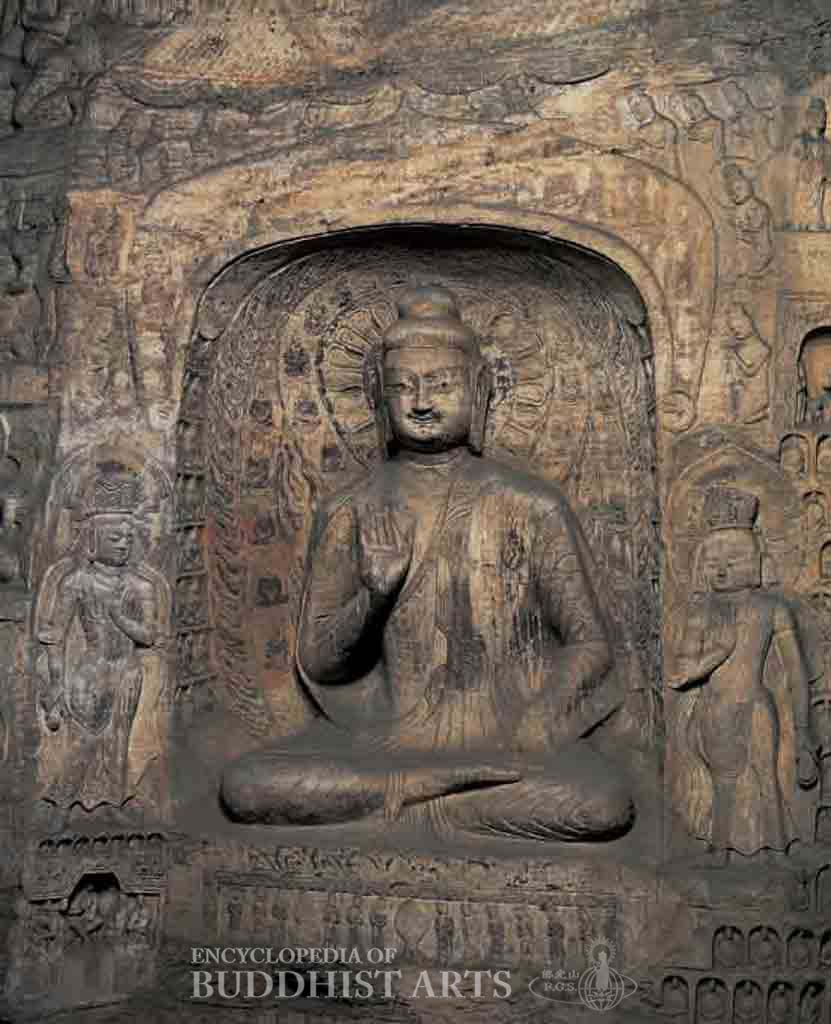
Yungang Grotto 17: Buddha Niche (front wall, left side, second tier)
Stone
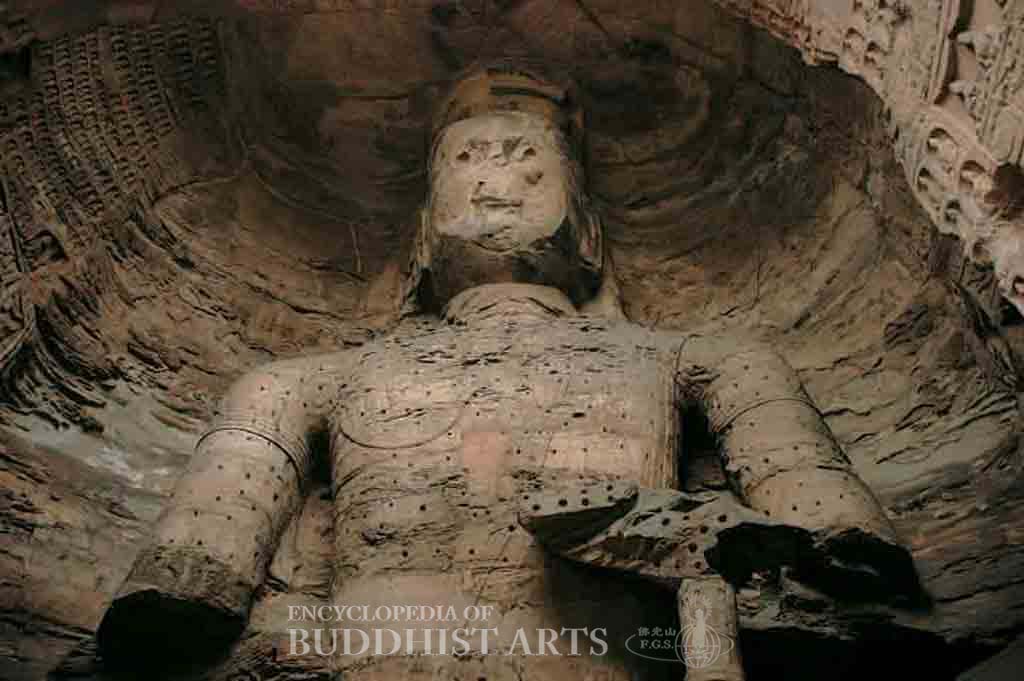
Yungang Grotto 17: Maitreya Bodhisattva (back wall)
Stone
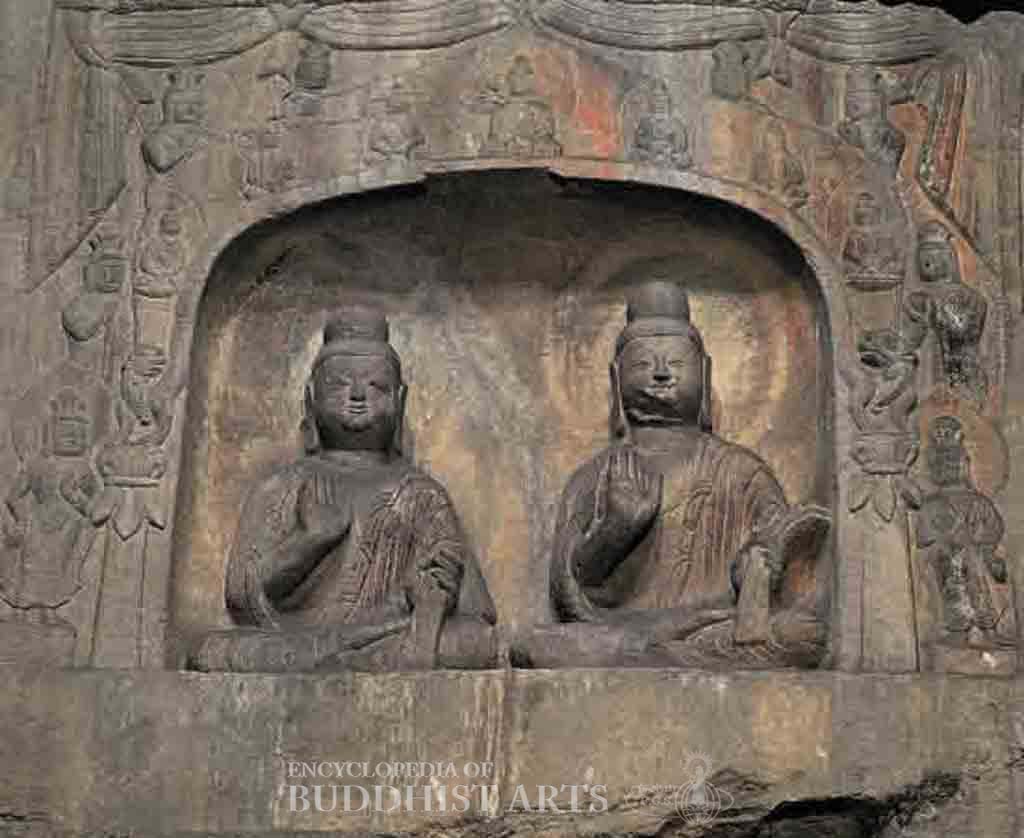
Yungang Grotto 17: Buddha Niche (east wall of window)
Yungang Grotto 17
CHINA, Shanxi, Datong
Located in the west area, this great Buddha grotto is one of the Five Grottoes of Tanyao constructed between the years 460 and 465. It consists of a single, south-facing chamber in an oval layout with a vaulted ceiling.
The main statue, a 15.6 m high carving of Maitreya Bodhisattva located on the back (north) wall, is severely damaged. Although Maitreya is traditionally represented as the Buddha of the future, scholars believe Tanyao’s version constructed here was intended to represent one of the five emperors of the Northern Wei dynasty (386–534). If so, this image of Maitreya would represent Emperor Jingmu, who passed away before he was enthroned and prior to the completion of the statue.
The arched doorway is located on the front (south) wall, with a window carved above it. Numerous Buddha niches are carved on both sides of the window and doorway. The niche on the east wall of the window was restored in the year 489, and contains carvings of two identical Buddha figures both forming the abhaya (fearlessness) mudra with one hand. The lintel is decorated with images of seven Buddhas, and on either side of the niche are carved columns with twin dragons coiling around them. Figures making offerings adorn both sides of the columns. The remainder of the front wall is filled with Buddha niches of different shapes, the most notable of which is located in the second tier on the left side of the wall. It measures approximately 2 m in height and contains a seated Buddha forming the abhaya (fearlessness) mudra with one hand. The Buddha wears a monastic robe incised with a checkered patterns, and clearly defined folds. The Buddha’s nimbus is decorated with lotus petals, and seated Buddha, while the mandorla contains seated Buddhas and flame pattern. The lintel of the niche has apsaras making offerings, with Bodhisattvas on each end. Below the niche, a wish-fulfilling jewel is flanked by rows of figures with joined palms on both sides.
The layouts of the east and west walls of the grotto are similar; the east wall is centered around a seated Buddha, while a standing Buddha is featured on the west wall. Both are carved within trapezoidal niches decorated with apsaras on the lintel. Reliefs of the Thousand Buddhas occupy the wall space above the niches.
For more details, go to the Encyclopedia of Buddhist Arts: Caves T-Z, page 1720.
Cite this article:
author = Hsingyun and Youheng and Johnson, Peter and Mankuang and Huntington, Susan and Edson, Gary and Neather, Robert,
booktitle = {Encyclopedia of Buddhist Arts: Caves T-Z},
pages = 1720,
title = {{Yungang Grotto 17}},
volume = 9,
year = {2016}}