
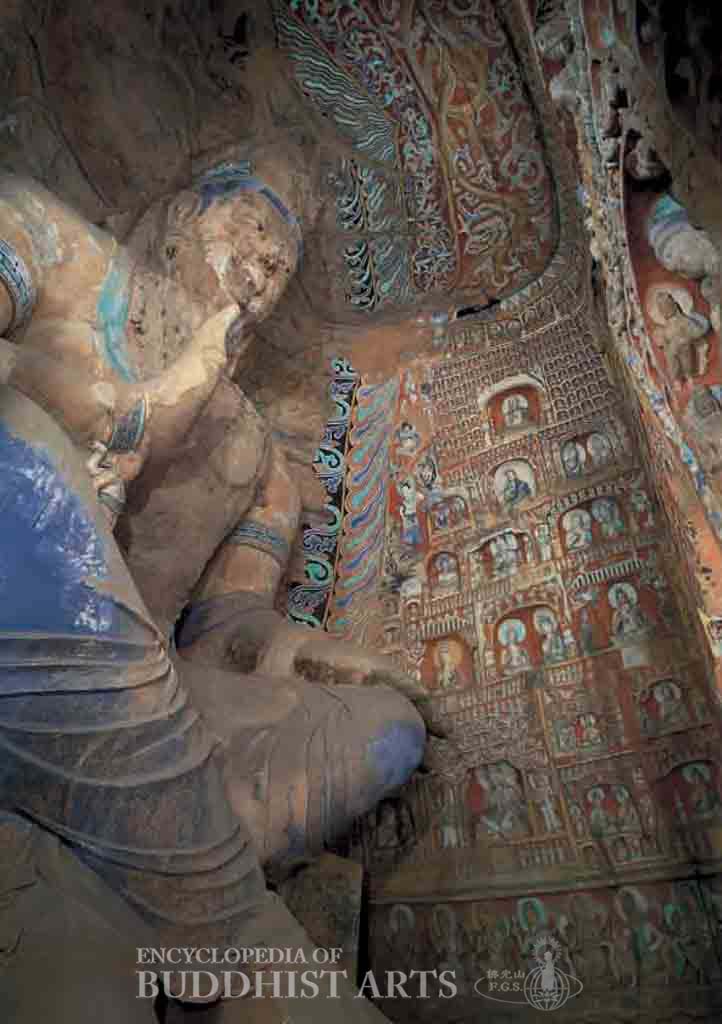
Yungang Grotto 13: Maitreya Bodhisattva (back wall)
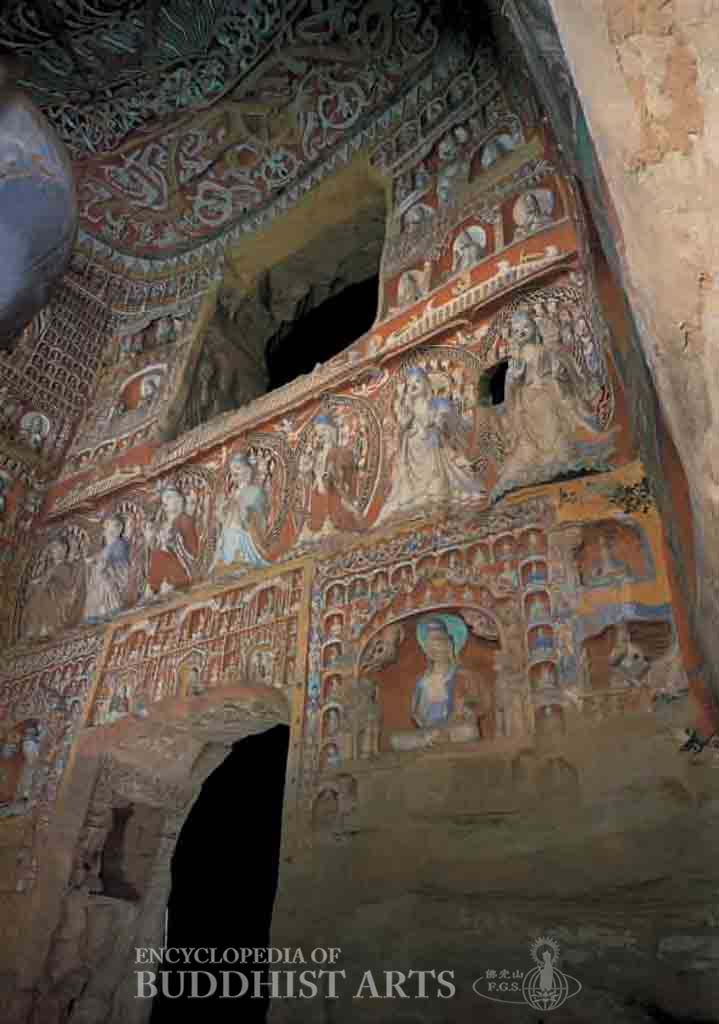
Yungang Grotto 13: South Wall
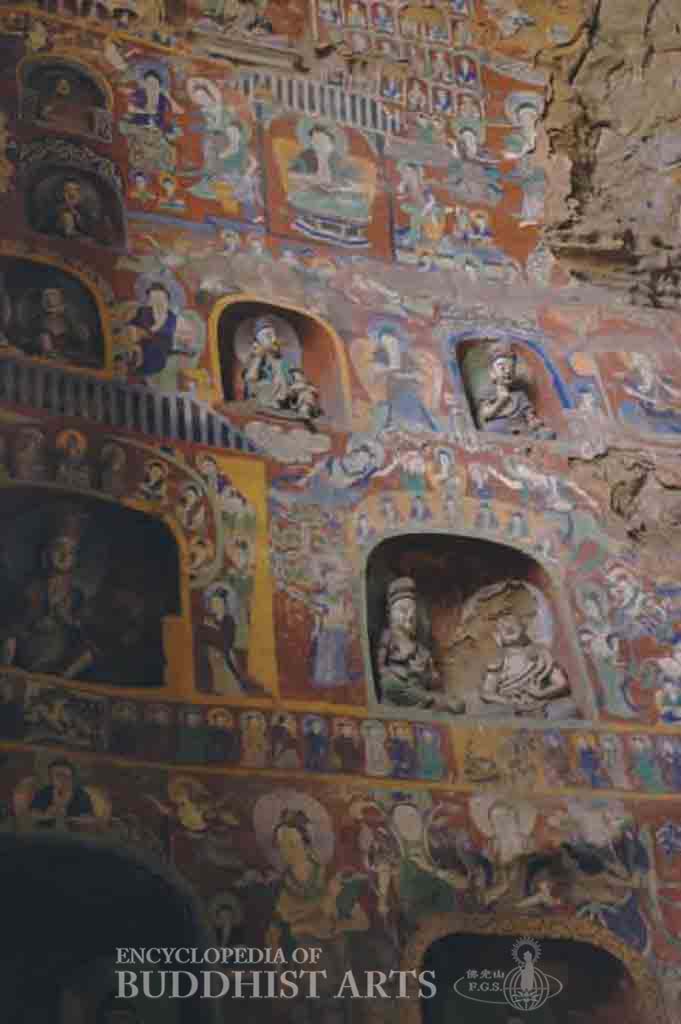
Yungang Grotto 13: Buddha Niches (west wall)
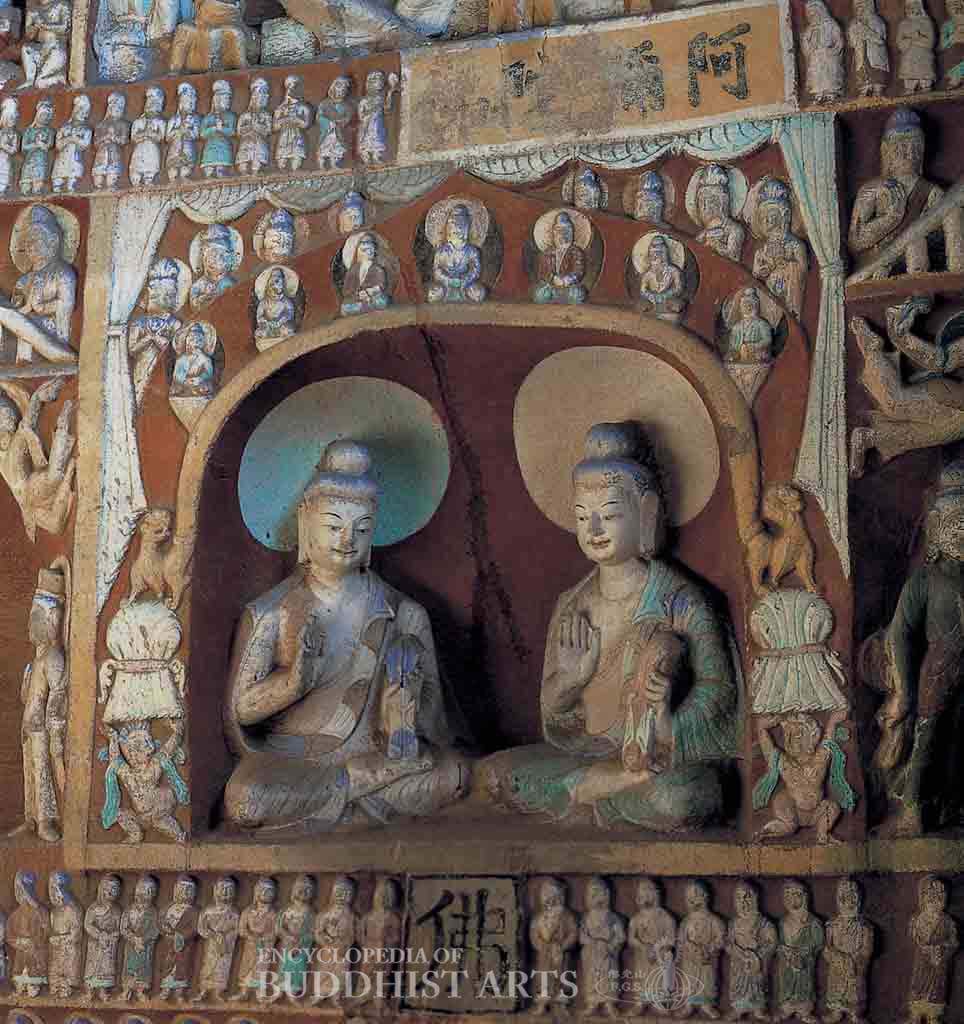
Yungang Grotto 13: Sakyamuni and Prabhutaratna Buddhas (east wall, fourth tier)
Yungang Grotto 13
CHINA, Shanxi, Datong
Located in the central area, this grotto has a square layout and is believed to have been constructed by Emperor Xianwen (reigned 465–471) of the Northern Wei dynasty (386–534) for his father Emperor Wencheng (reigned 452–465). The featured carving is located on the back (north) wall and depicts a cross-ankled Maitreya Bodhisattva that is 13.5 m high.
The front (south) wall contains the doorway and a window carved above it. On each side of the window are three tiers of niches in various sizes, most of which contain a seated Buddha. Beneath the window is a horizontal niche extending the length of the wall, which features sculptures of seven standing Buddhas. Buddha niches of various sizes are also located on both sides, above, and around the doorway. The carvings on the lower portion of the wall have suffered severe weathering and are no longer discernible.
The east and west walls of the grotto feature numerous tiers of Buddha niches with varying sizes and themes. An arched niche in the fourth tier of the east wall contains sculptures of Sakyamuni and Prabhutaratna Buddhas seated together, under a lintel decorated with seven small Buddha images. Characters translating to “Amitabha Buddha” are written in ink above this niche. Other figures fill the spaces between the niches including Buddhas, Bodhisattvas, and apsaras.
For more details, go to the Encyclopedia of Buddhist Arts: Caves T-Z, page 1710.
Cite this article:
author = Hsingyun and Youheng and Johnson, Peter and Mankuang and Huntington, Susan and Edson, Gary and Neather, Robert,
booktitle = {Encyclopedia of Buddhist Arts: Caves T-Z},
pages = 1710,
title = {{Yungang Grotto 13}},
volume = 9,
year = {2016}}