
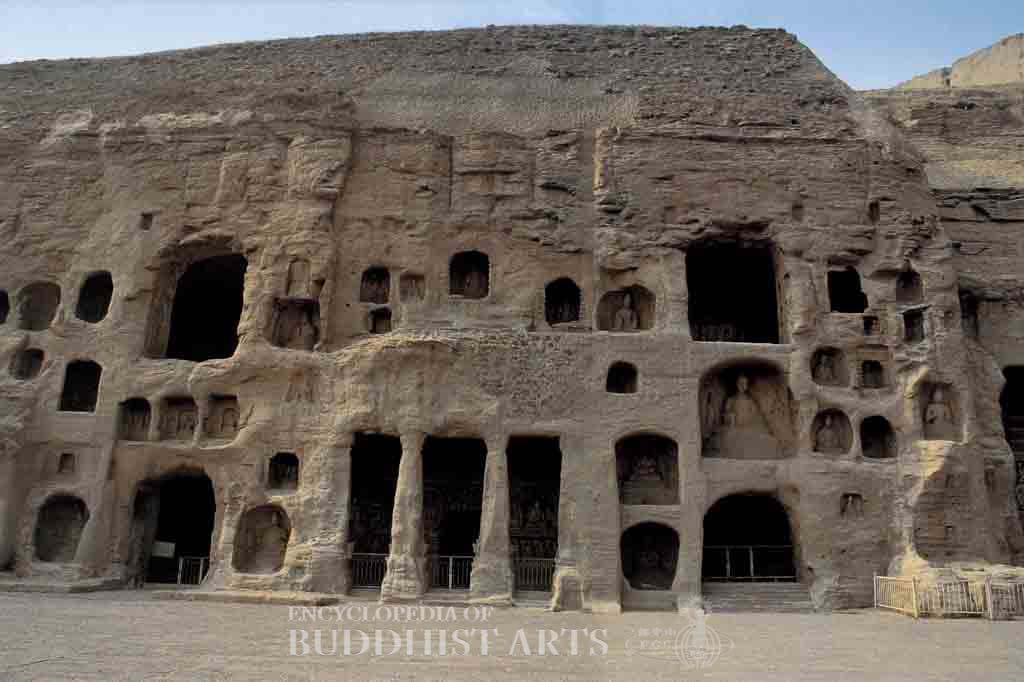
Yungang Grottoes 11 to 13
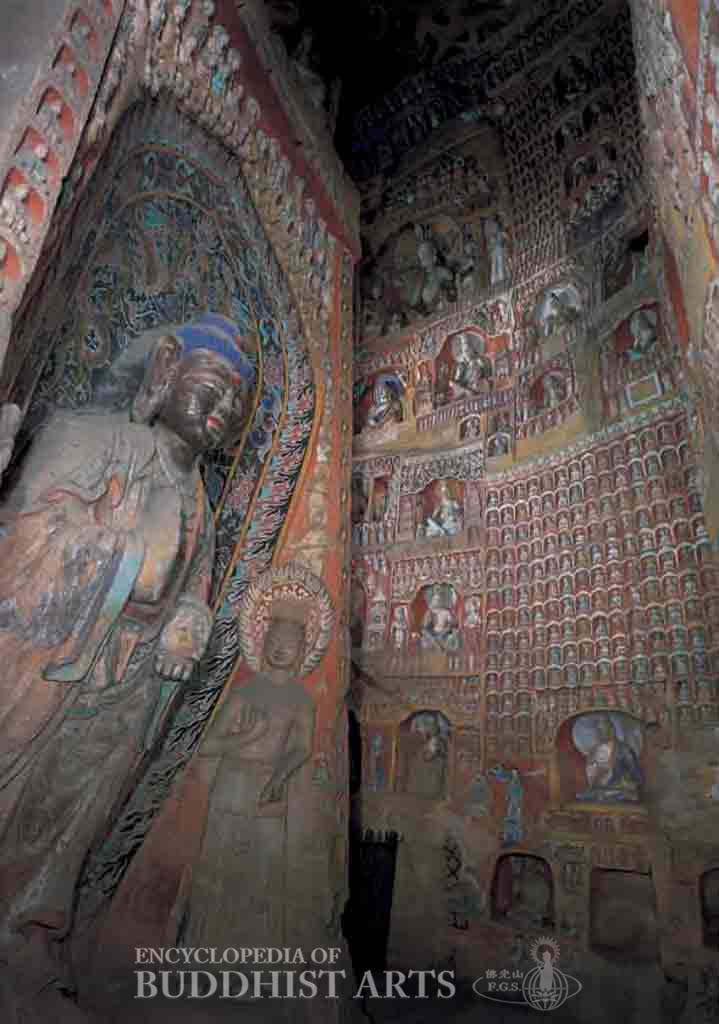
Yungang Grotto 11: East Wall and Central Pillar (south side)
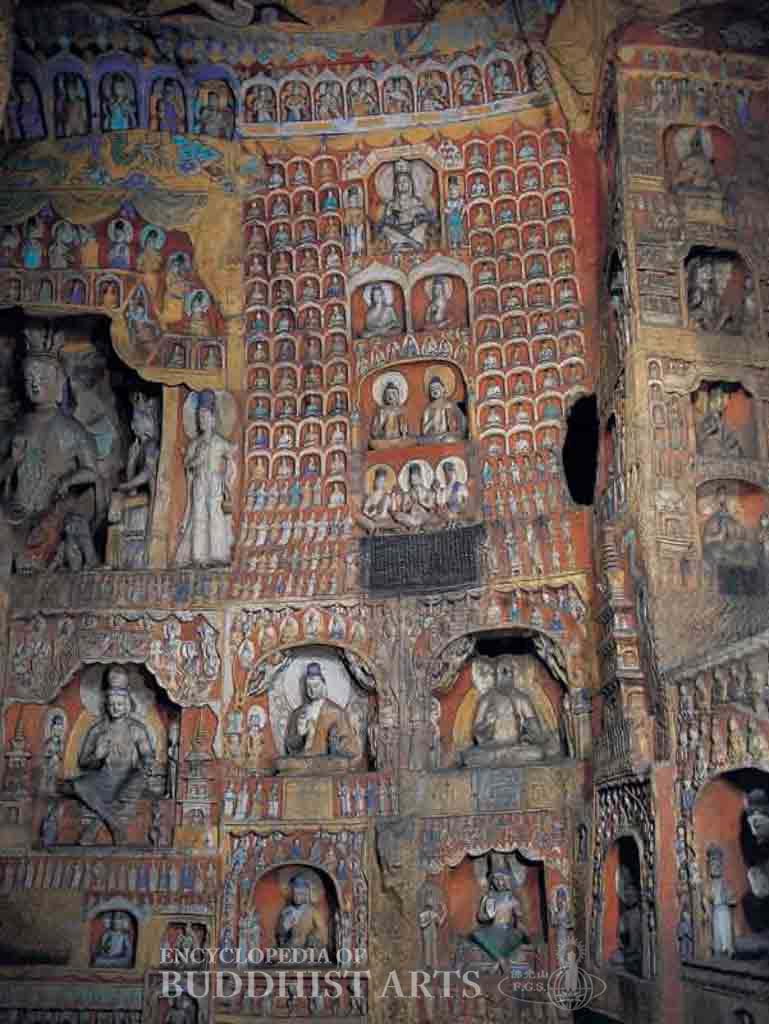
Yungang Grotto 11: East Wall (upper tier)
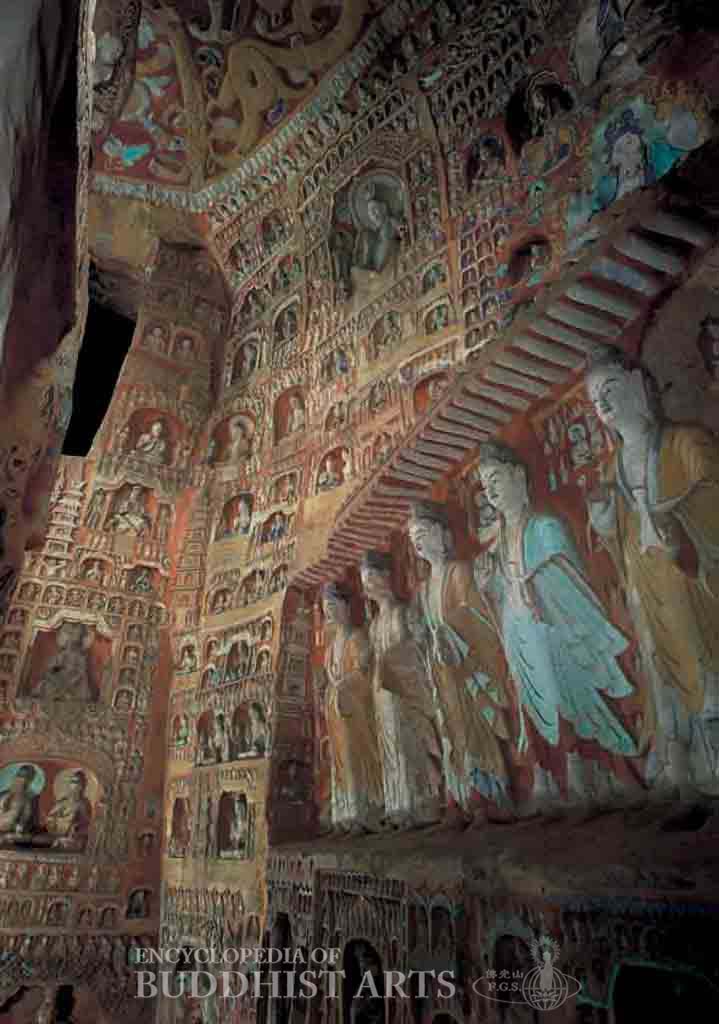
Yungang Grotto 11: Front and West Walls
Yungang Grotto 11
CHINA, Shanxi, Datong
Located in the central area, this grotto is one of a group constructed during the rule of Emperor Xiaowen (reigned 471–499) of the Northern Wei dynasty. Others in the group include Grottoes 12 and 13. Grottoes 11 and 13 are central pillar grottoes and are symmetrical, while Grotto 12 has a rectangular layout. Grotto 11 is particularly notable for containing both the oldest and most numerous inscriptions at the Yungang site.
The central pillar within Grotto 11 is made up of two tiers, with niches carved into each of the four sides. On the south side of the pillar, the upper tier features a cross-legged Bodhisattva, while the remaining three sides are carved with Buddhas seated with legs pendent. On the lower tier, all four sides are carved with standing Buddhas. Of these, the Buddha on the south side is particularly notable, at 5 m high. The Buddha has a round, gentle face and wears a loose robe, which accords with the style made popular after the Taihe period (477–499) reform. Flanking the Buddha are attendant Bodhisattvas wearing stoles across the shoulders and a lower garment tied with a sash at the waist. These figures have a slightly different appearance than the other sculptures in the grotto, suggesting that they may have been re-carved during the Liao dynasty (907–1125).
The east wall of the grotto is densely covered with Buddha niches in different shapes and sizes, including arched, trapezoidal, pagoda-shaped, and house-like niches. They appear to have been constructed without an overarching pattern or plan. The figures within and around the niches include standing and seated Buddhas, a cross-legged Maitreya, Buddhas seated in pairs, the Thousand Buddhas, Bodhisattvas in contemplation, apsaras, and donor figures. On the right side of the upper wall is the oldest known inscription at the Yungang Grottoes, and was written by 54 devotees who vowed to construct 95 Buddha figures in 483.
A number of small Buddha niches are scattered on the west wall in a seemingly disorganized layout similar to that of the east wall. In the center of the wall is a large house-like niche carved to imitate wooden architecture. Within the niche are carvings of seven standing Buddhas. These figures are particularly characteristic of the new style of Buddha niches that appeared during the mid-Northern Wei dynasty (386–534).
The doorway is cut into the front (south) wall, with a window above it. The south wall is covered with Buddha niches and multi-story tower pagodas, as well as figures such as a cross-legged Maitreya, Buddhas seated in pairs, apsaras, and warriors.
For more details, go to the Encyclopedia of Buddhist Arts: Caves T-Z, page 1701.
Cite this article:
author = Hsingyun and Youheng and Johnson, Peter and Mankuang and Huntington, Susan and Edson, Gary and Neather, Robert,
booktitle = {Encyclopedia of Buddhist Arts: Caves T-Z},
pages = 1701,
title = {{Yungang Grotto 11}},
volume = 9,
year = {2016}}