
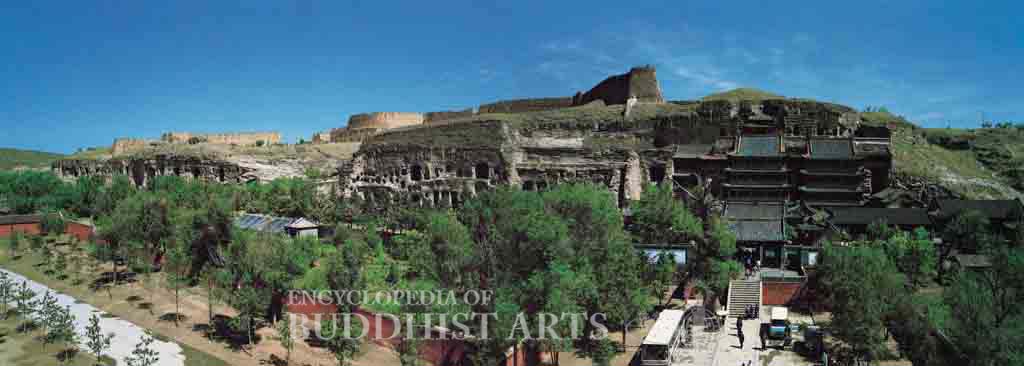
Yungang Grottoes
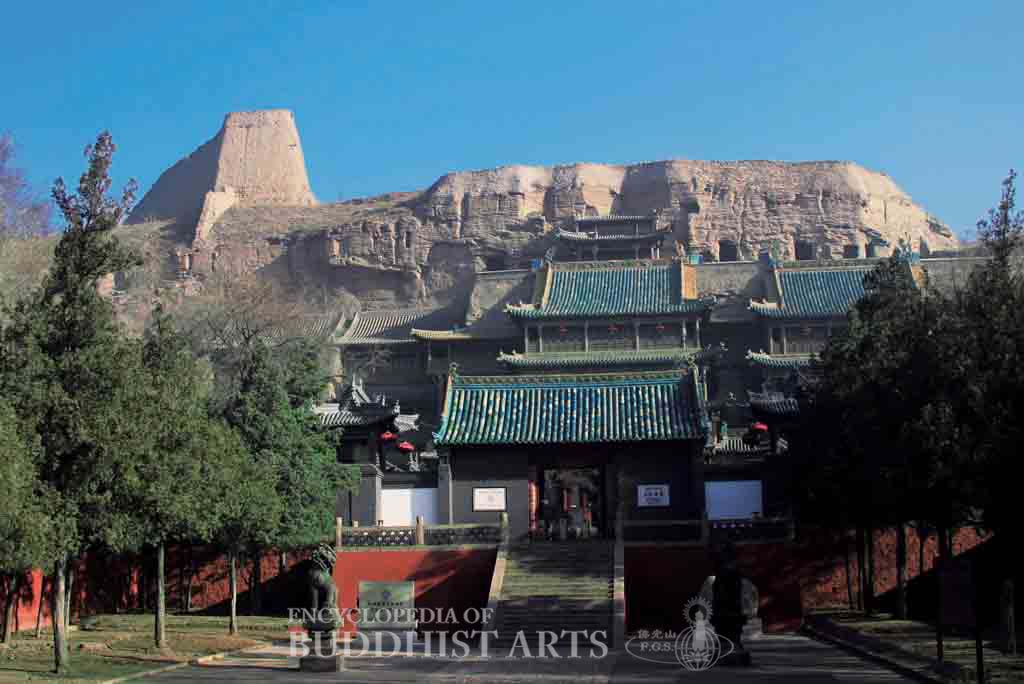
Yungang Grottoes
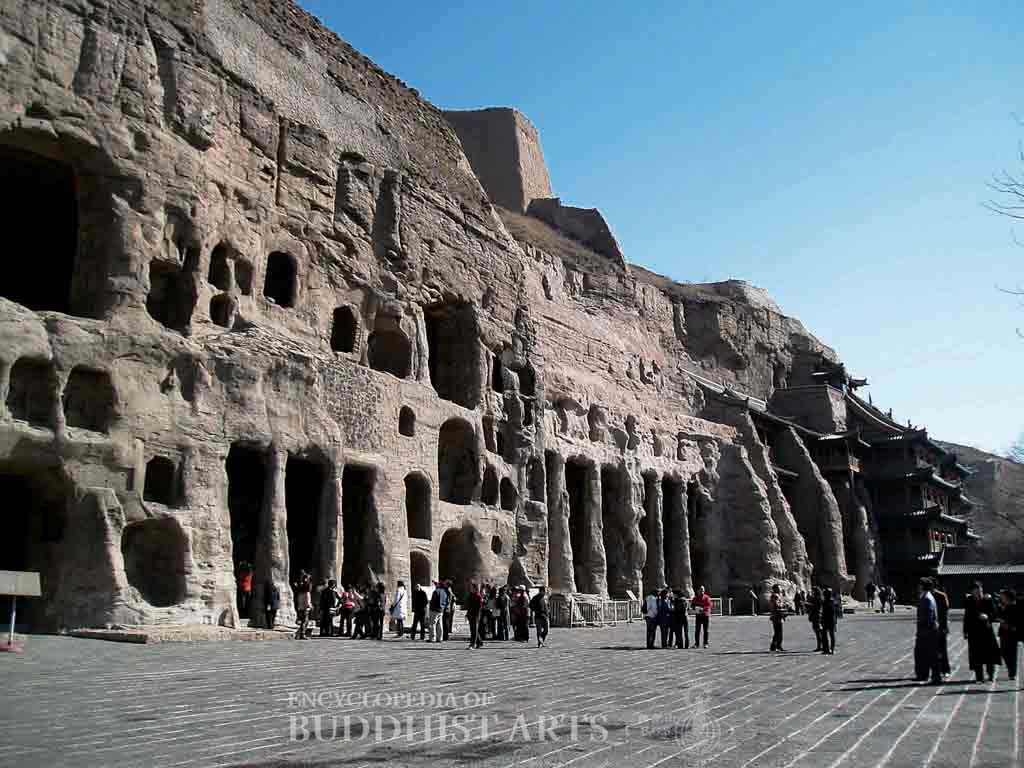
Yungang Grottoes: Grottoes 5 to 13
Yungang Grottoes
CHINA, Shanxi, Datong
Previously known as Lingyan, the Yungang Grottoes are located 15 km west of the city of Datong, on the northern shore of the Wuzhou River. The Yungang Grottoes were listed as a National Cultural Historic Site in 1961 and a UNESCO World Heritage Site in 2001.
Construction of the grottoes began during the Northern Wei dynasty (386–534), some time after the capital was moved to Pingcheng (present day Datong) in the year 398. The starting date of construction is uncertain. One source claims the years 414 to 415, another dates them to 453, and the third suggests the year 460. The historical text Book of Wei describes the construction of five grottoes at the site by the monk Tanyao in the early 460s, hence the subsequent naming of the Five Grottoes of Tanyao. Imperially-funded construction continued for over 30 years, tapering off when the capital was moved to Luoyang in the year 494. Smaller-scale work continued at Yungang until approximately 520 to 525, with only minor additions and repairs done thereafter.
Currently, the 45 major grottoes located at Yungang span over 1 km from east to west. The site encompasses over 1,100 grottoes and niches of various sizes, which contain over 51,000 carved figures. The major grottoes are generally located in three areas: the east area, consisting of Grottoes 1 to 4; the central area, with Grottoes 5 to 13; and the west area, with Grottoes 14 to 45.
Construction at the grottoes is thought to have taken place in three phases, defined primarily by the evolution of the content, style, and design of the layout and carvings. The first phase of construction began during the rule of Emperor Wencheng (reigned 452–465), when monk Tanyao constructed what are now known as Grottoes 16 to 20, and continued until the year 465. The great Buddha grottoes dating to this period are all large in scale, with U-shaped layouts, vaulted ceilings, and arched entrances, above which are windows. In addition, each of these grottoes features a massive Buddha sculpture which takes up the majority of the space within. This is a prominent characteristic of Buddhist caves dating to the early Northern Wei dynasty. The main sculptures featured at the site typically depict the Buddhas of the Past, Present, and Future, flanked by attending Bodhisattvas.
The second phase of construction at Yungang began around the year 471 and continued until 494. Grottoes 1 to 3 in the east and Grottoes 5 to 13 in the central area were constructed during this period, during the cultural reforms instituted by Emperor Xiaowen (reigned 471–499). The funding and construction of these second period grottoes were commissioned by local governments and the general public rather than exclusively by imperial patrons. Evidence of this shift can be found in Grotto 11, where the upper section of the east wall contains inscriptions recording the involvement of 54 local sponsors in the construction of 94 Bodhisattva figures in the year 484. This inscription is among the earliest at the Yungang Grottoes, and provides a valuable source of historical and cultural information.
Characteristic elements of construction and carvings created during the second period include the creation of twin grottoes and the development of richer themes and content. The majority of these grottoes feature either a central pillar or a large Buddha sculpture surrounded by a circumambulation corridor. The figures carved within these grottoes are smaller in scale than those created during the first period of construction, and depict a variety of themes, including Sakyamuni Buddha, Maitreya Buddha, Sakyamuni and Prabhutaratna Buddhas, and illustrations of the Lotus Sutra and the Vimalakirti Sutra. At this time, loose robes tied at the waist became the standard for Buddhist garments. Also featured within the grottoes are numerous illustrations of scenes from the Life of the Buddha, Jataka tales, and other Buddhist stories. A variety of different niche styles are found throughout the grottoes, mostly influenced by Chinese architecture. They include arched niches, draped niches, house-shaped niches, pagodas, and other imitation wood structures.
The third phase of construction spanned approximately 494 to 525. The grottoes constructed during this phase were funded exclusively by private donors, as imperial patronage ceased when the capital moved. Approximately 150 grottoes and niches of varying sizes were constructed during this period, including Grottoes 4, 14, 15, and 20. Most of these are smaller or mid-sized compared to those constructed earlier. Characteristics of these third period grottoes include a neat, organized layout of sculptures, flat ceilings, and squared entrances without upper windows. There is more variety among these grottoes, with some consisting of three walls and three niches, some with four walls and two niches, some with a central pillar, and others almost entirely filled with small images of the Thousand Buddhas. The figures carved within these grottoes and niches are characterized by delicate features and long necks. Garments with fine detailing, such as overlapping and complicated weaves, are particularly characteristic of late Northern Wei Buddhist art. In addition to niches created in newly constructed grottoes, many others were added within already existing grottoes.
For more details, go to the Encyclopedia of Buddhist Arts: Caves T-Z, page 1632.
Cite this article:
author = Hsingyun and Youheng and Johnson, Peter and Mankuang and Huntington, Susan and Edson, Gary and Neather, Robert,
booktitle = {Encyclopedia of Buddhist Arts: Caves T-Z},
pages = 1632,
title = {{Yungang Grottoes}},
volume = 9,
year = {2016}}