
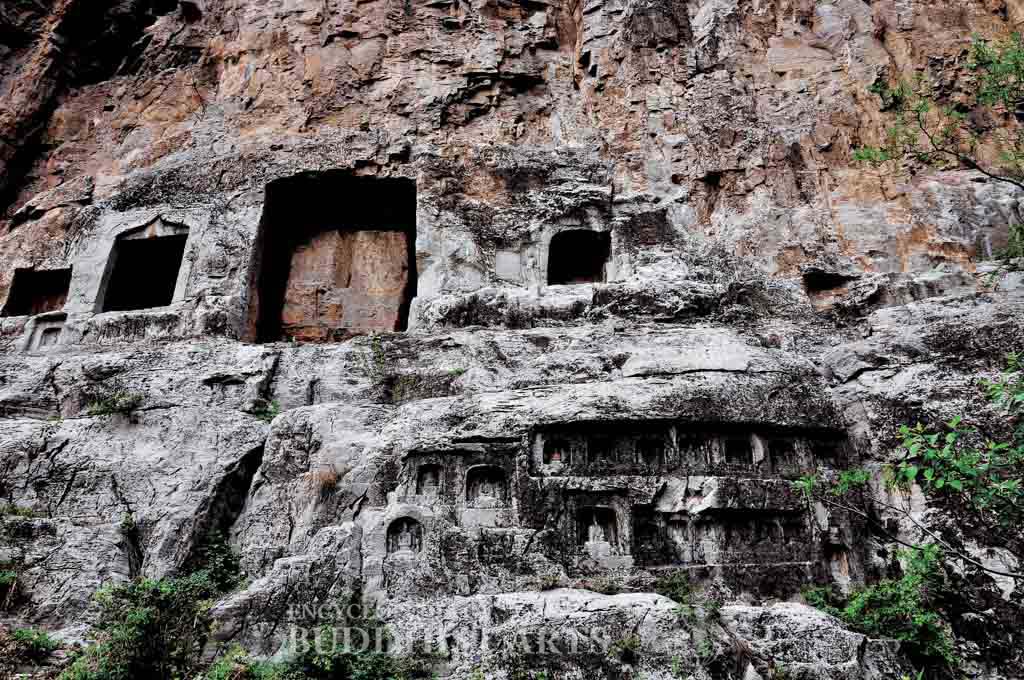
Wuyanshan Rock Carvings
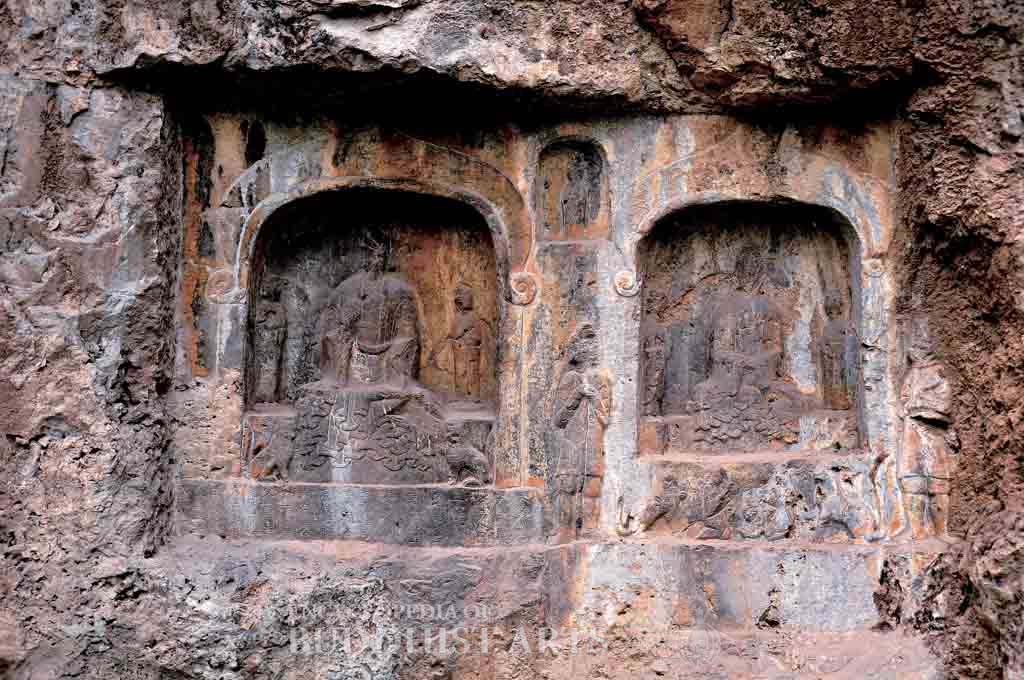
Wuyanshan Rock Carvings: Buddha Niches
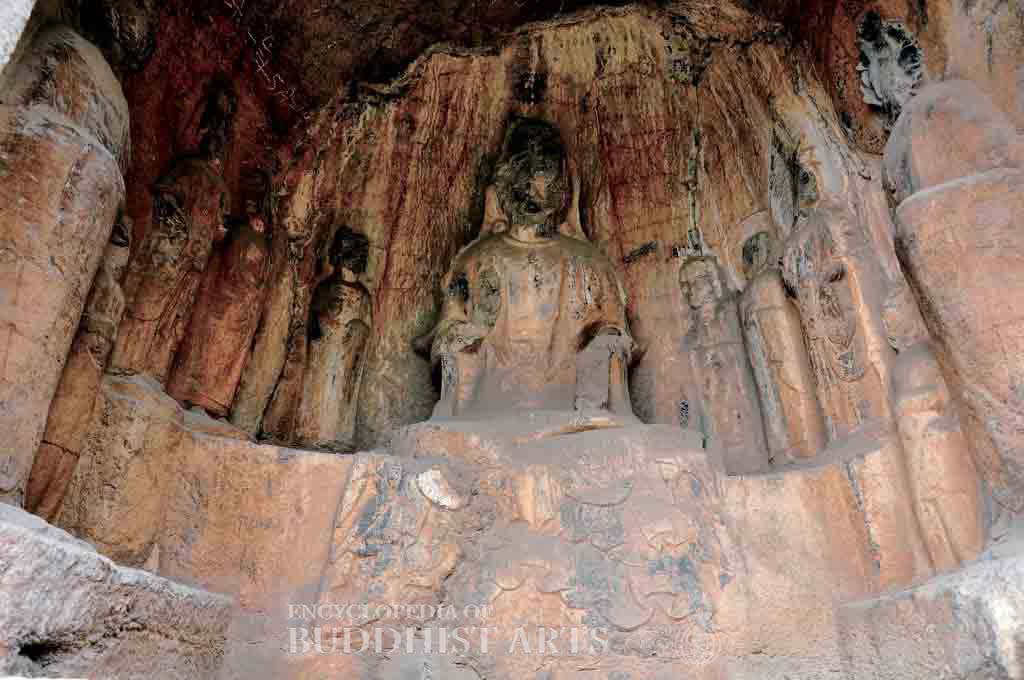
Wuyanshan Rock Carvings: Buddha Niche
Wuyanshan Rock Carvings
CHINA, Henan, Hebi
These carvings, located 400 m west of the small village near Hebiji village, were created over the course of eight years from 542 to 549, during the Eastern Wei dynasty. The site was listed as a Provincial Cultural Heritage Site in 1986.
The carvings extend along a mountainside running northeast to southwest. The complex consists of 41 niches differing in size, approximately 150 statues, 10 inscriptions, and 40 Dharma protecting lions. The Buddha niches were created in a systematic fashion, with all the Buddhas seated in full lotus position and many portrayed teaching the Dharma or practicing meditation. The Buddhas wear loose monastic robes tied at the waist over inner robes knotted at the chest. The robes worn gracefully over the figures’ torsos drape onto the thrones. Most of the niche statues are well-preserved, and the inscriptions are clear and precise.
For more details, go to the Encyclopedia of Buddhist Arts: Caves T-Z, page 1512.
Cite this article:
author = Hsingyun and Youheng and Johnson, Peter and Mankuang and Huntington, Susan and Edson, Gary and Neather, Robert,
booktitle = {Encyclopedia of Buddhist Arts: Caves T-Z},
pages = 1512,
title = {{Wuyanshan Rock Carvings}},
volume = 9,
year = {2016}}