
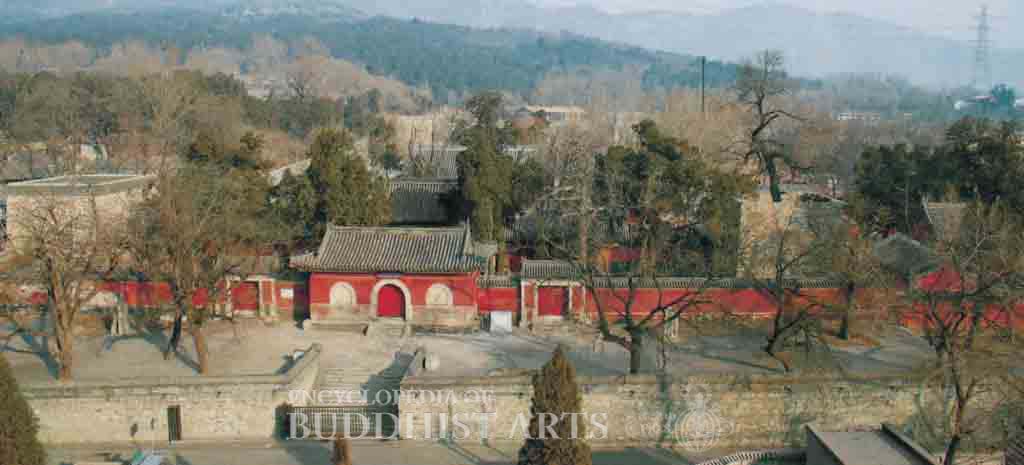
Cheng’en Temple
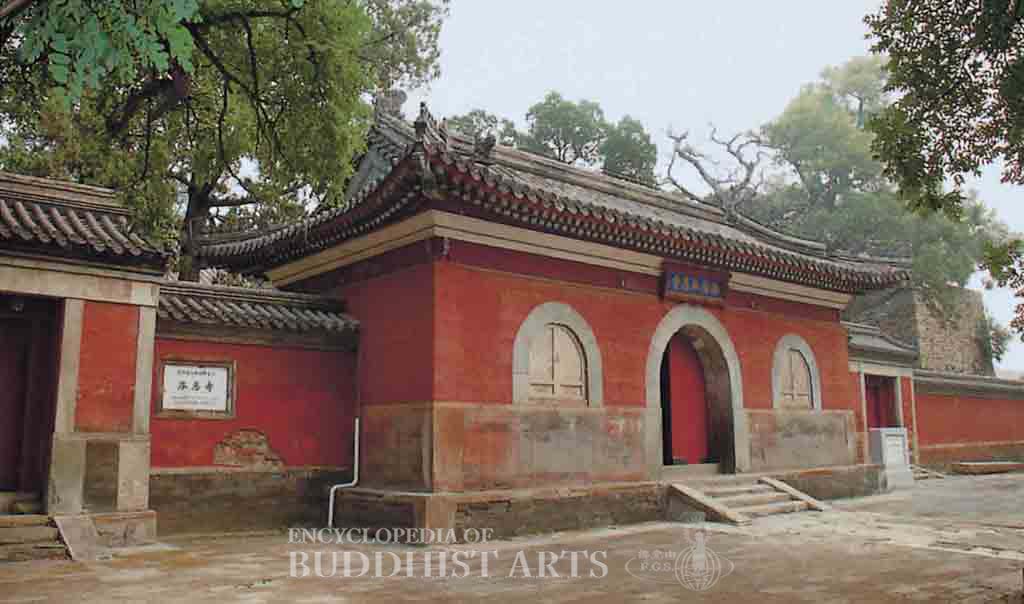
Cheng’en Temple: Main Temple Gate
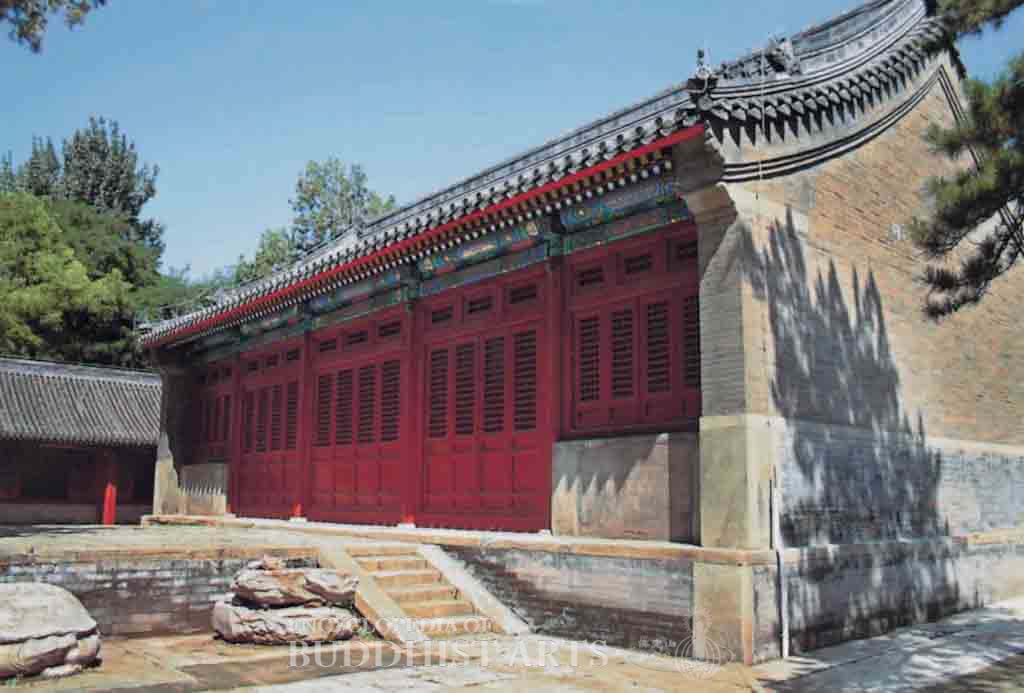
Cheng’en Temple: Great Hero Hall
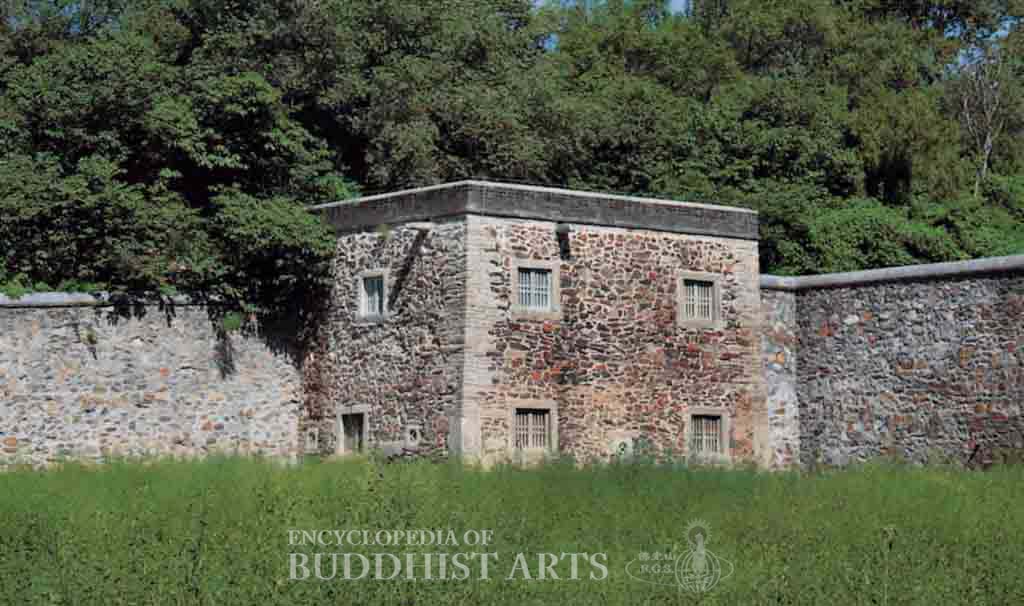
Cheng’en Temple: Brick Building
Cheng’en Temple
CHINA, Beijing
The temple is one of the better preserved temple complexes from the Ming dynasty (1368–1644). It was built between 1510 and 1513 and was repaired three times during the Qing dynasty (1644–1911). It was listed as a National Cultural Heritage Site in 2006.
Facing south, the temple has four courtyards. The principal buildings include the main temple gate, Heavenly King Hall, Great Hero Hall, and the Dharma Hall. A brick building is located at each corner of the complex, which is a rare feature of the Ming and Qing dynasties. The three-bay wide main temple gate has a single-eave hip-and-gable roof covered in round tiles.
The three-bay wide Heavenly King Hall has a single-eave hip-and-gable roof. The interior of the hall features Ming dynasty murals. The east and west walls are decorated with four murals of a flying dragon painted in yellow, green, blue, and white. The murals on either side of the north wall depict the subject of releasing animals. The murals were created with the use of gold leaf.
The five-bay wide Great Hero Hall is built on a high base and has a single-eave hip-and-gable roof. It used to house a 2.5 m high statue of Sakyamuni Buddha.
For more details, go to the Encyclopedia of Buddhist Arts: Architecture A-F, page 139.
Cite this article:
author = Hsingyun and Youheng and Johnson, Peter and Mankuang and Lancaster, Lewis,
booktitle = {Encyclopedia of Buddhist Arts: Architecture A-F},
pages = 139,
title = {{Cheng’en Temple}},
volume = 1,
year = {2016}}