
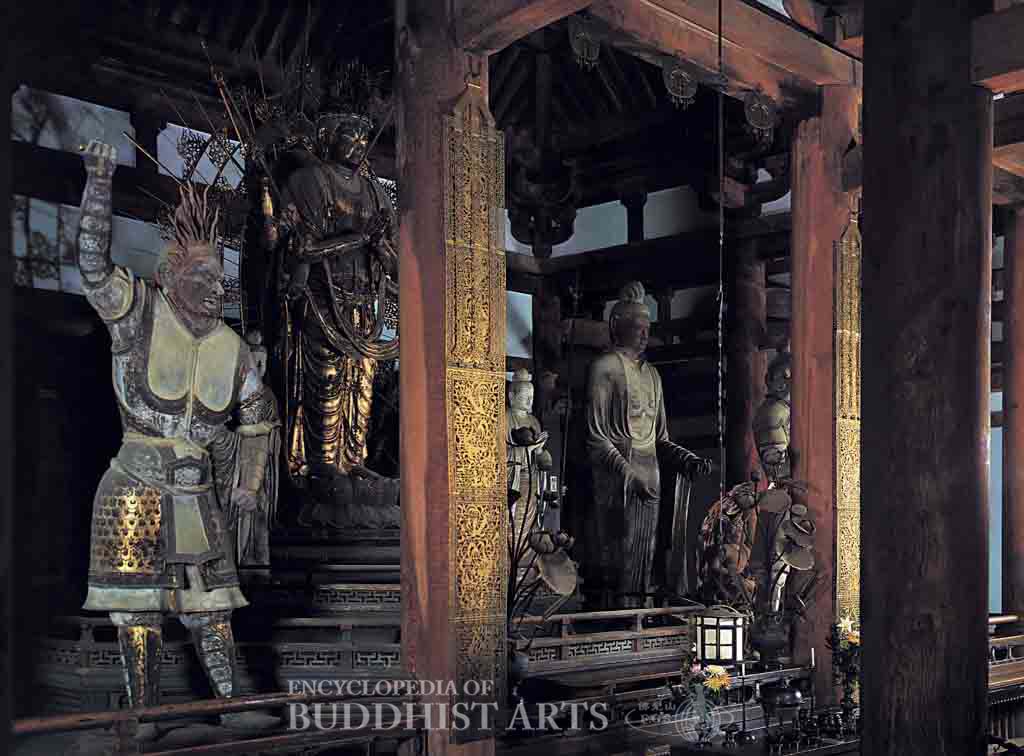
Todaiji Temple Sculptures: Lotus Hall
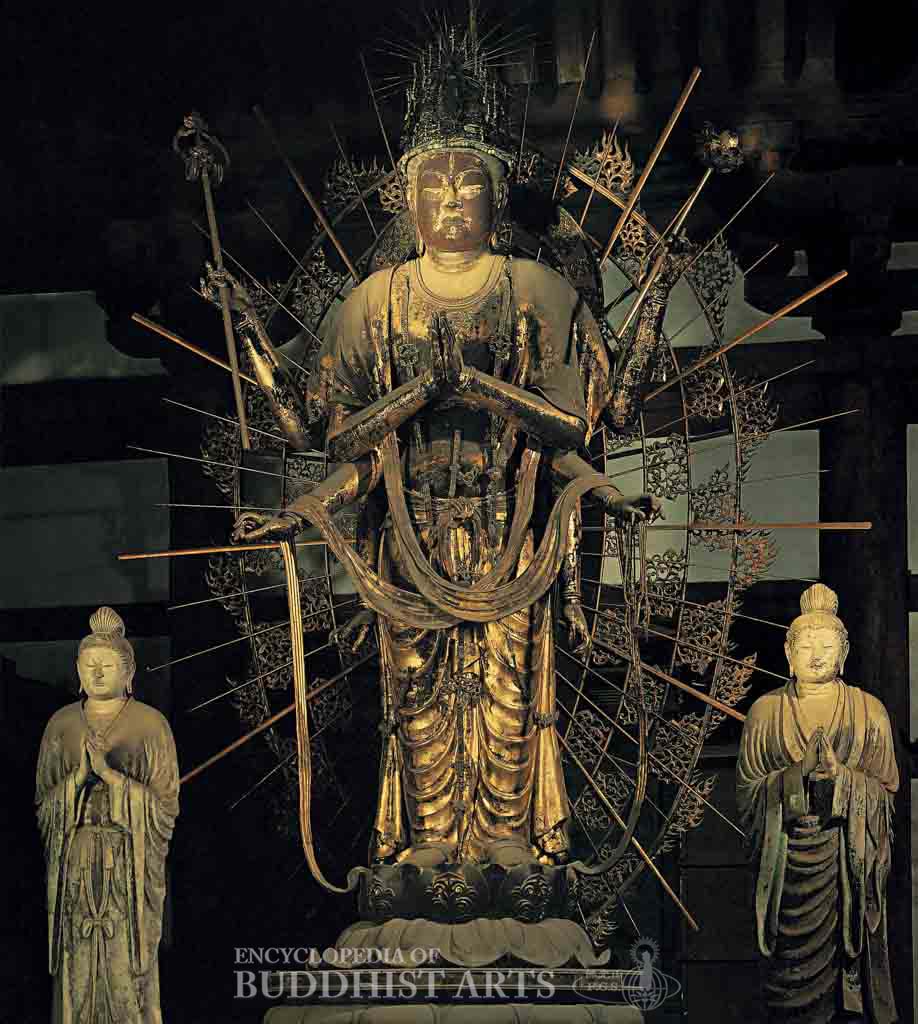
Todaiji Temple Sculptures: Lotus Hall - Amoghapasa Avalokitesvara with Suryaprabha and Candraprabha
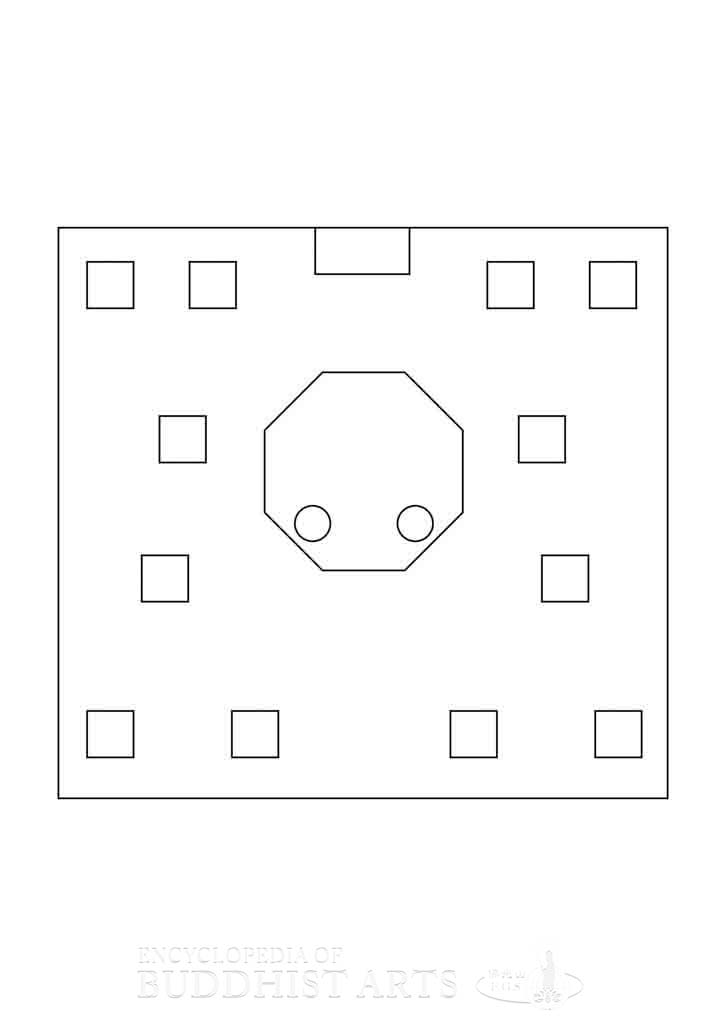
Todaiji Temple Sculptures: Lotus Hall (plan)
Todaiji Temple Sculptures
JAPAN, Nara
Todaiji Temple was founded in 728. The sculptures housed in various halls, including the Golden Hall, Lotus Hall, ordination hall, and founder’s hall, have high historical value and served as models for later Buddhist sculptures. Many sculptors were involved in the project, including Kuninaka no Muraji Kimimaro who led the sculpting work of the Vairocana Buddha statue in the Golden Hall.
The sixteen statues in the Lotus Hall are separated by walkways so that devotees can circumambulate and do prostrations. Standing at its center is a rare combination with Amoghapasa Avalokitesvara flanked by the Suryaprabha and Candraprabha Bodhisattvas, which may have been relocated from elsewhere. Avalokitesvara, realistically sculpted in the Vajrayana style, is an example of the hollow dry lacquer technique. Other statues using this technique include Brahma, Sakra, warriors, and Four Heavenly Kings. Clay statues in the hall include Vajrapani, Sarasvati, and Mahadevi.
The statue of Master Roben in the founder’s hall is the earliest existing sculpture from the Heian period (794–1185). Artworks of the Kamakura period (1185–1333) include statues of Ksitigarbha Bodhisattva from the Celebration Hall, Master Shunjobo Chogen in Chogen Hall, and the warriors on both sides of the south gate. Most of these pieces are National Treasures.
The temple also houses valuable historical artifacts including a gilt bronze statue of Prince Siddhartha, sculpted in 752, the inscribed board on the west gate from the reign of Emperor Shomu (reigned 724–749), the gilt bronze statue of a Bodhisattva in Contemplation and a cypress wood sculpture of King Taishan.
For more details, go to the Encyclopedia of Buddhist Arts: Sculpture St-Z, page 1212.
Cite this article:
author = Hsingyun and Youheng and Lovelock, Yann and Chou, Yuan and Huntington, Susan and Edson, Gary and Neather, Robert,
booktitle = {Encyclopedia of Buddhist Arts: Sculpture St-Z},
pages = 1212,
title = {{Todaiji Temple Sculptures}},
volume = 13,
year = {2016}}