
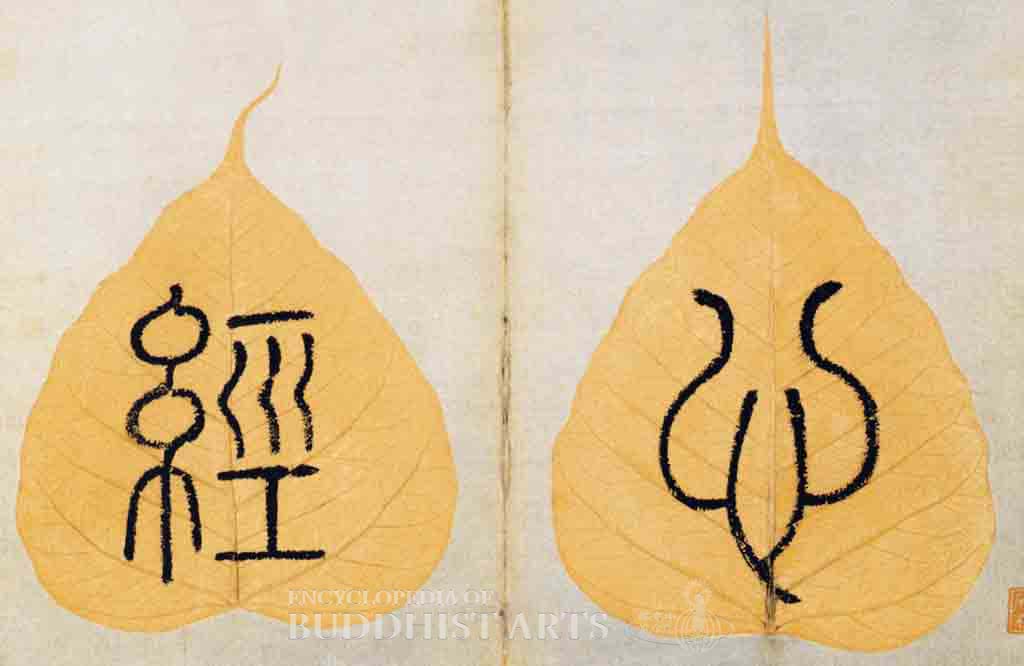
Heart Sutra (cover)
Ink on bodhi leaf
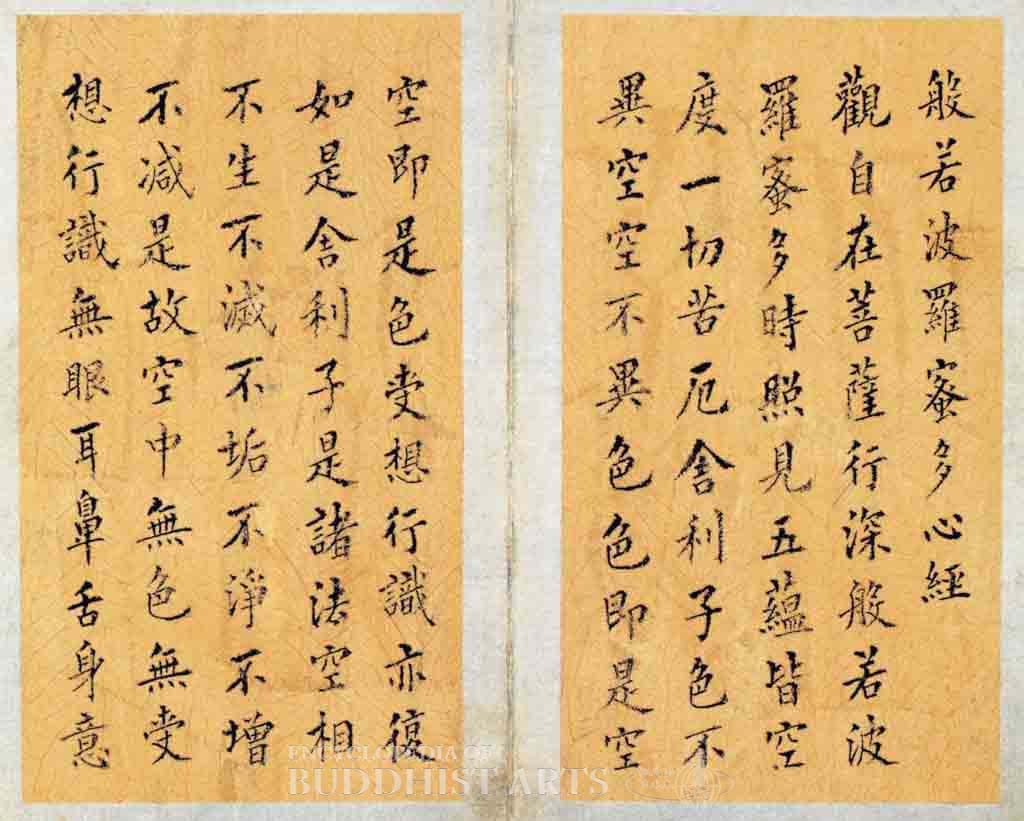
Heart Sutra (detail)
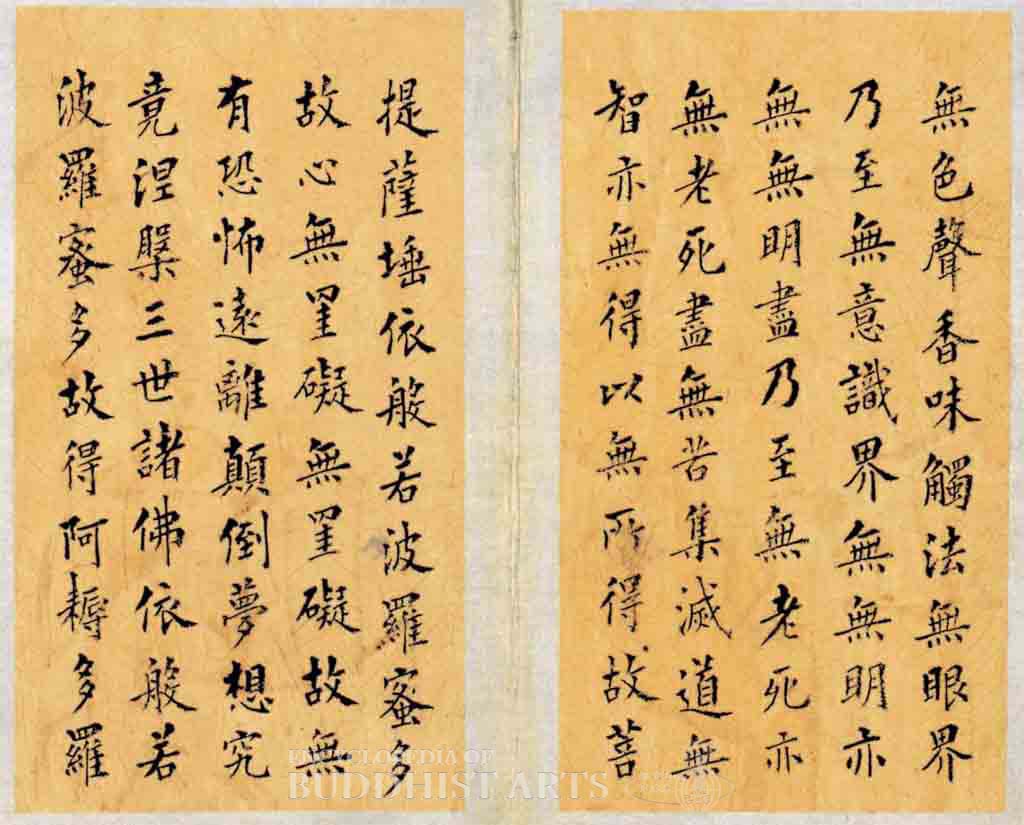
Heart Sutra (detail)
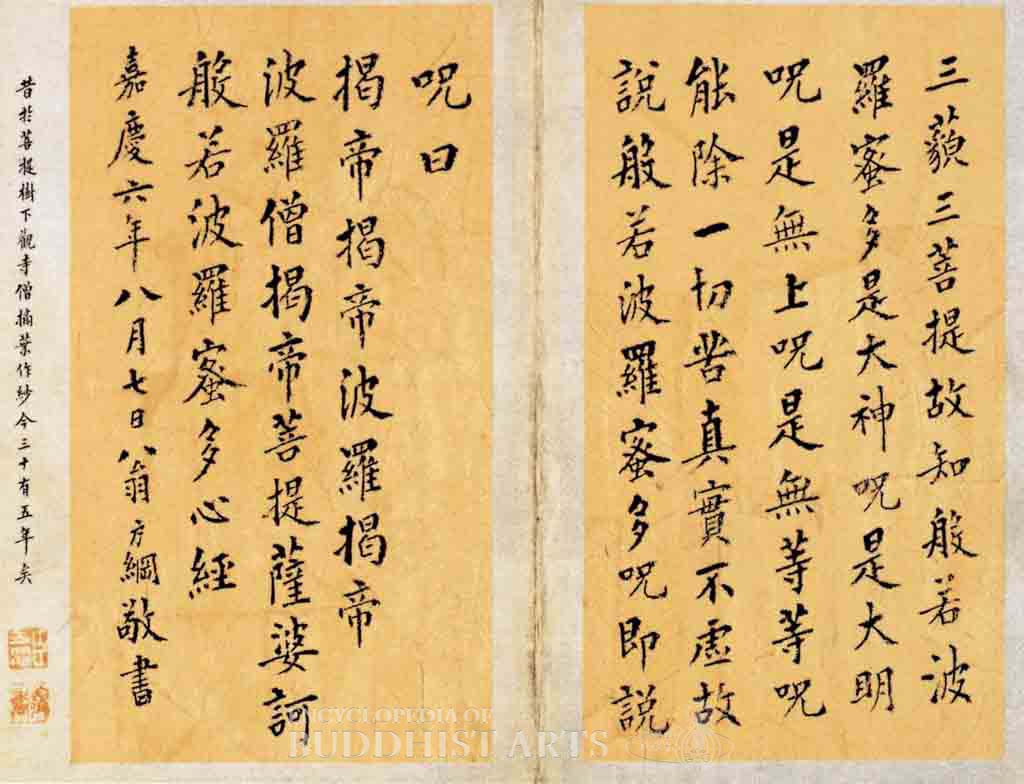
Heart Sutra (detail)
Heart Sutra
CHINA; Qing dynasty
This calligraphic work, scripted by Weng Fanggang, utilizes leaves from a Bodhi tree for the cover of the Heart Sutra manuscript. The sutra was fabricated as an accordion-fold book with four spreads, each measuring 16.5 cm high by 9.2 cm wide. Among the collections in the Palace Museums of both Beijing and Taipei, there are several sutras in accordion fold, often containing images of Buddhas and venerable figures illustrated on Bodhi tree leaves. These collections provide insight into the kind of offerings the palaces received. The Heart Sutra was popularly copied throughout history, but for Emperor Qianlong (reigned 1736–1795) of the Qing dynasty, it was a ritual practice in which he diligently persisted for several years. It is believed that Weng Fanggang created this work under such a conducive influence.
Weng Fanggang, also known as Zhengsan or Zhongxu, was an important scholar, calligrapher, and epigrapher of the Qing dynasty (1644–1911). He was skilled in the appraisal and authentication of calligraphic works, upon many of which he left long postscripts. Much like Yu Shinan and Ouyang Xun, many of the postscripts he wrote showed an order seen in the Tang regular script, which carried a running script slant while retaining the solemnity of the regular style. The same trait is seen in this work, although the character form is comparably spacious. This attribute noticeably limits the running script component and sets an official tone to the manuscript.
For more details, go to the Encyclopedia of Buddhist Arts: Calligraphy, page 94.
Cite this article:
author = Hsingyun and Youheng and Youlu and Pokorski, Stefanie and Mankuang and Edson, Gary,
booktitle = {Encyclopedia of Buddhist Arts: Calligraphy },
pages = 94,
title = {{Heart Sutra}},
volume = 17,
year = {2016}}