
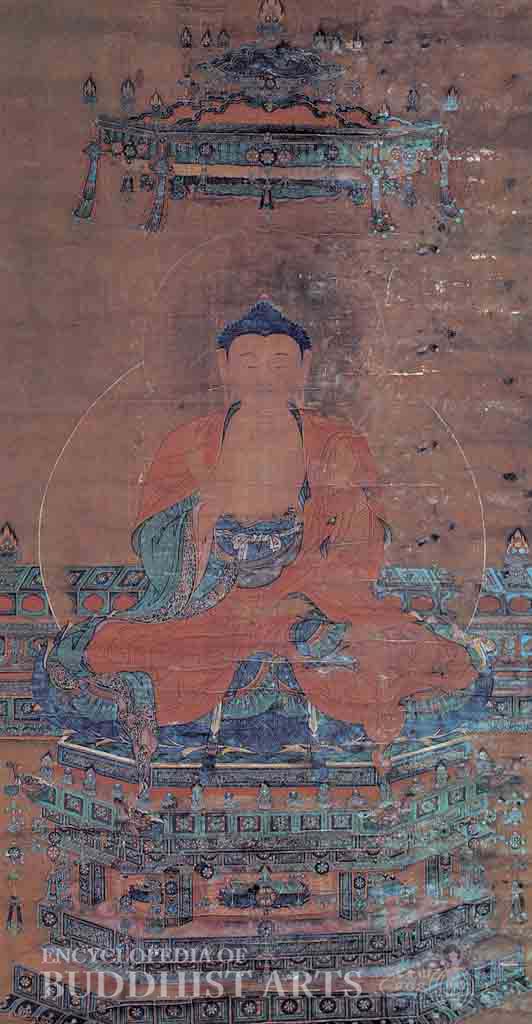
Baoning Temple: Water and Land Dharma Service Collection - Vairocana Buddha
Ink and color on silk
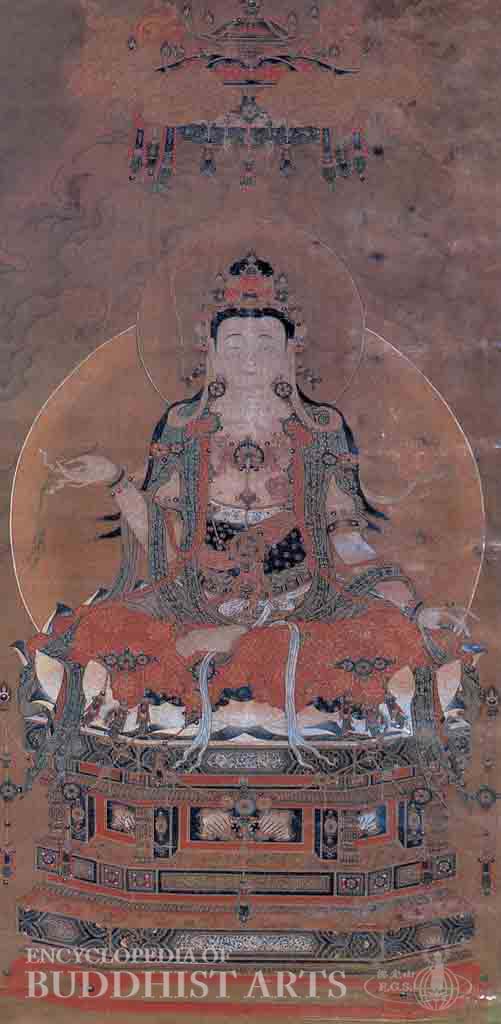
Baoning Temple: Water and Land Dharma Service Collection - Avalokitesvara
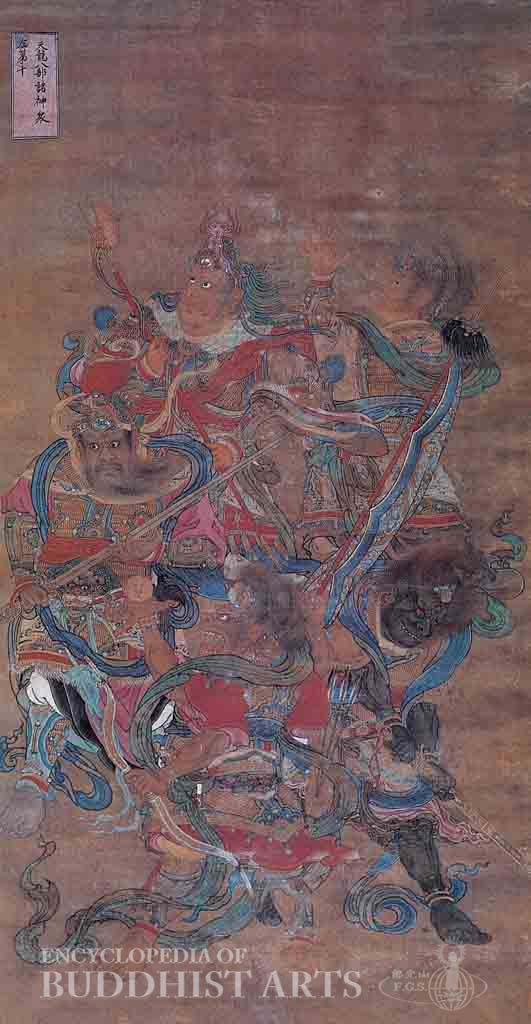
Baoning Temple: Water and Land Dharma Service Collection - Eight Classes of Dharma Protectors
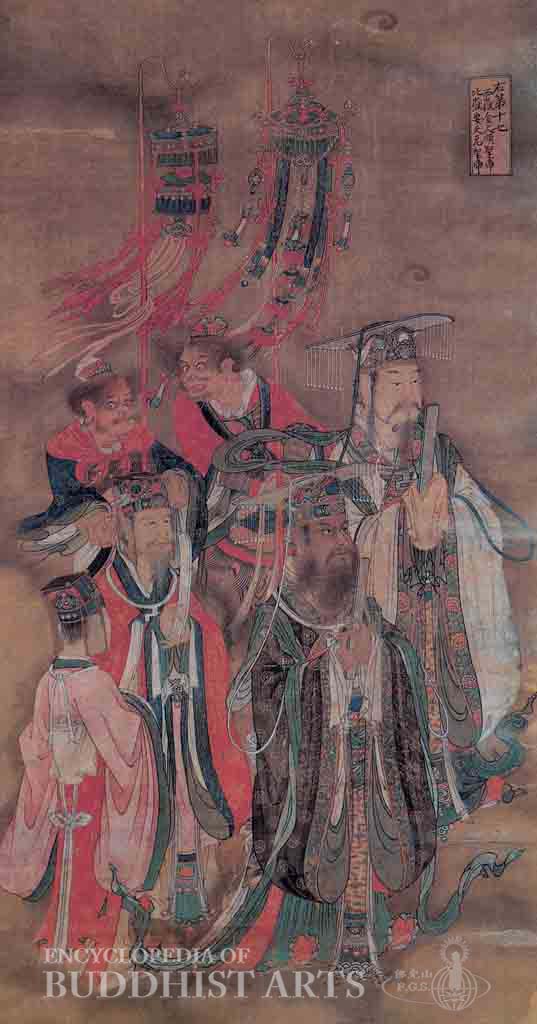
Baoning Temple: Water and Land Dharma Service Collection - Deities of the West and North Mountains
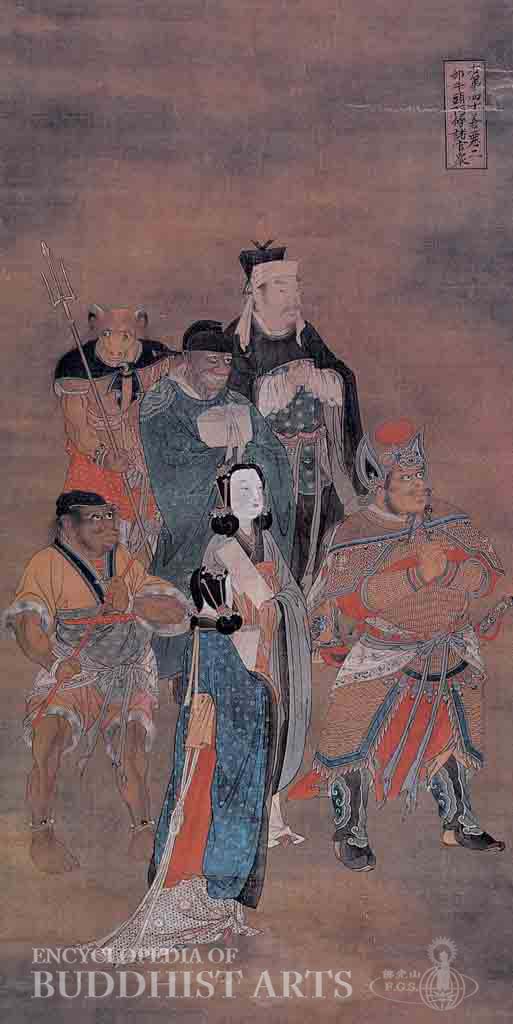
Baoning Temple: Water and Land Dharma Service Collection - Hell Guardians
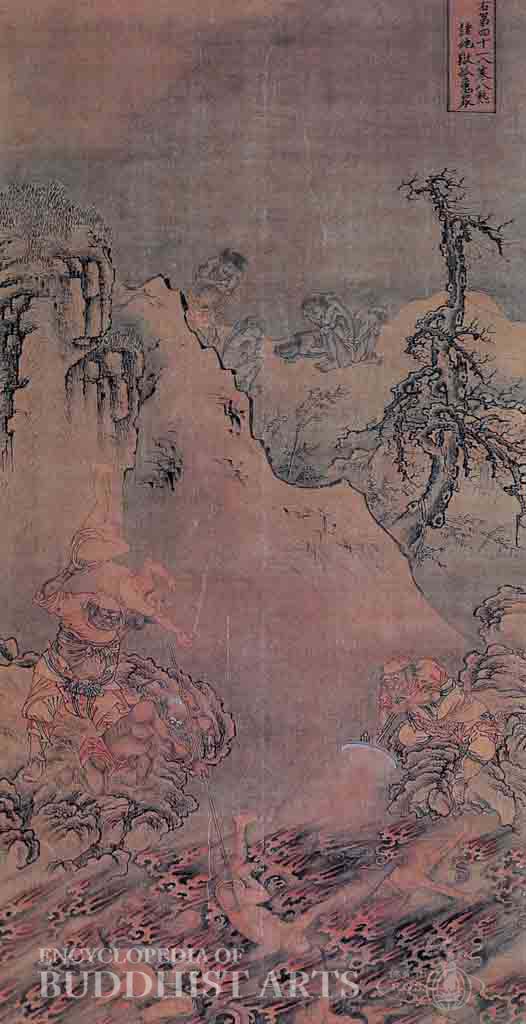
Baoning Temple: Water and Land Dharma Service Collection - Eight Cold and Eight Hot Hells
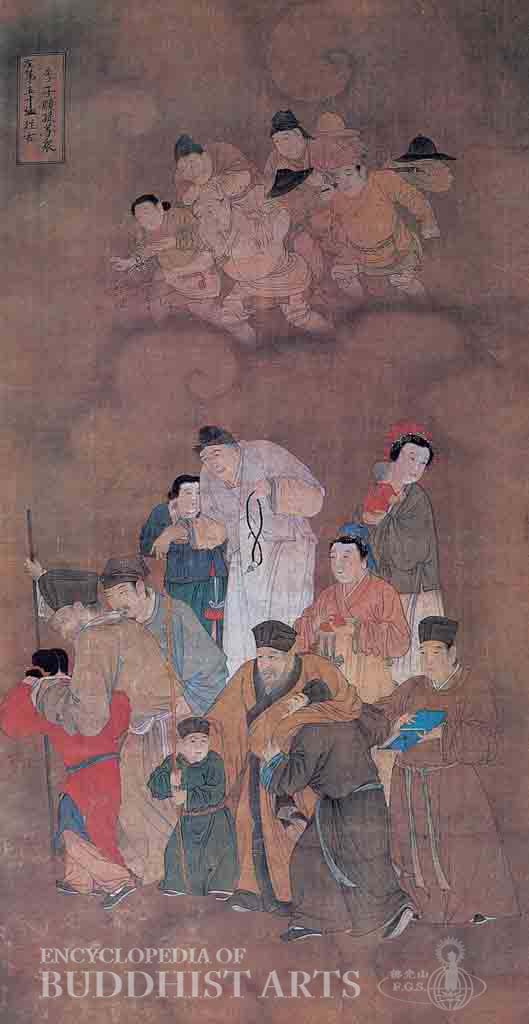
Baoning Temple: Water and Land Dharma Service Collection - Filial Descendants
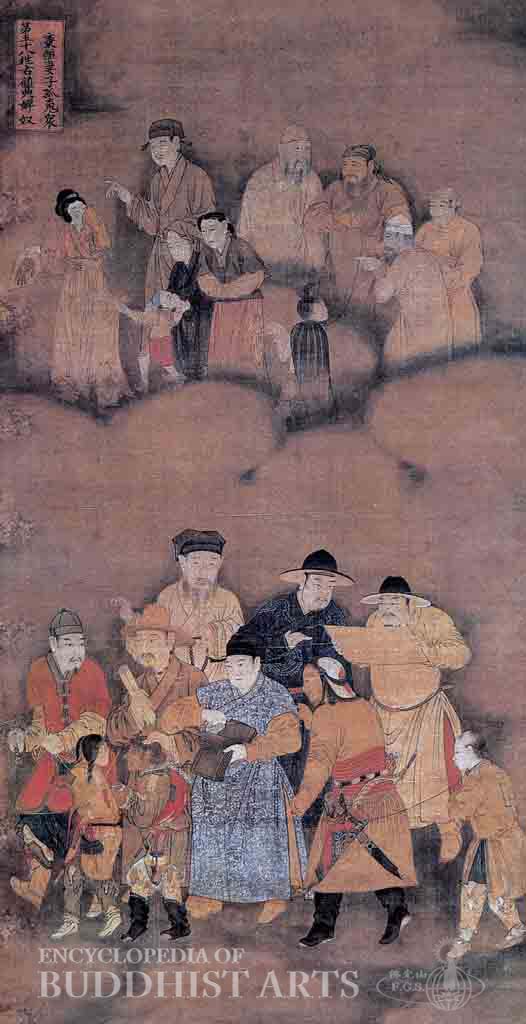
Baoning Temple: Water and Land Dharma Service Collection - Torn Families and Slaves
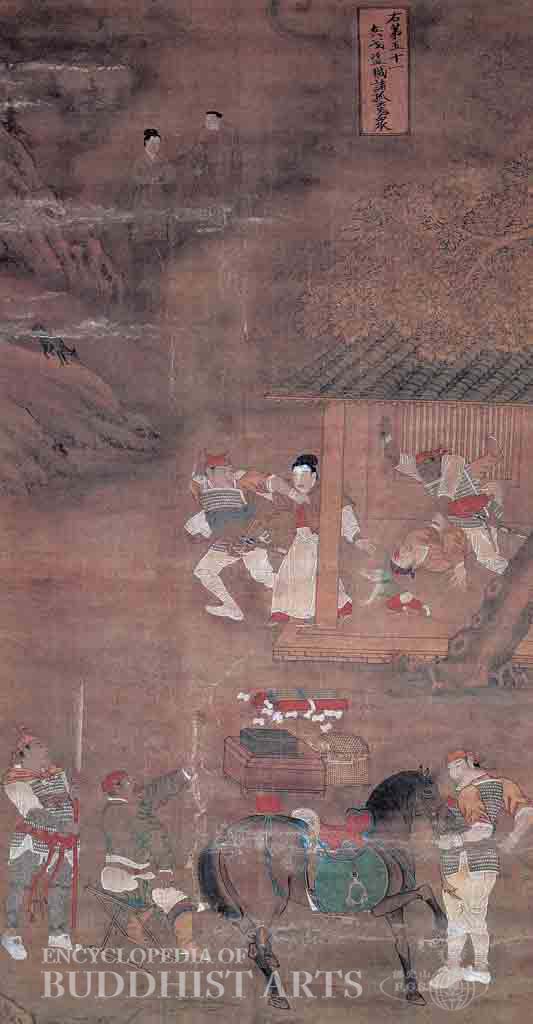
Baoning Temple: Water and Land Dharma Service Collection - Soldiers Looting and Murdering Civilians
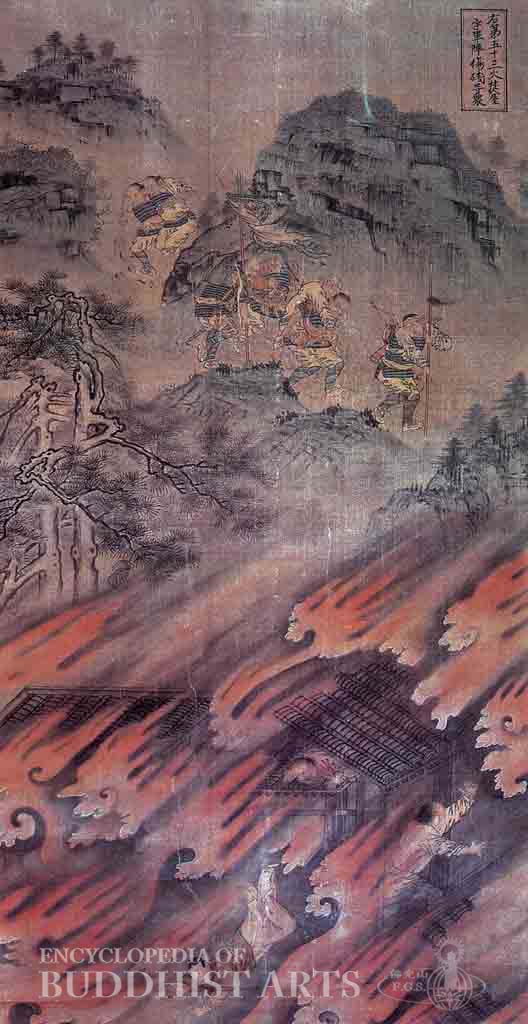
Baoning Temple: Water and Land Dharma Service Collection - Wounded Soldiers and People Burning in Buildings
Baoning Temple: Water and Land Dharma Service Collection
CHINA, Shanxi, Youyu; Ming dynasty
Part of the collection of the Shanxi Museum, this set of Ming dynasty (1368–1644) paintings from Baoning Temple was painted between 1457 and 1460. According to a notation made during a 1705 reframing, the set was painted by court artists. The Water and Land Dharma Service began during the rule of Emperor Wu (reigned 502–549) of the Liang dynasty (502–587). The emperor had a dream in which a monk told him a way to help the immeasurable suffering beings, whether in water or on land, by holding an offering service for them and inviting the aid of enlightened beings. Thus, under the consultation of Chan Master Baozhi, a liturgy for a Dharma service was composed, and the first service was held at Jinshan Temple. During the service, paintings are used to represent the beings who are invited to attend. Enlightened beings such as Buddhas, Bodhisattvas, Arhats, Wisdom Kings, and Dharma protectors are in the upper hall. The lower hall is for unenlightened beings from the six realms of existence.
The collection consists of 139 items. In addition to the original 136 paintings from the Ming dynasty, there are three Qing dynasty texts. The paintings include individual depictions of nine Buddhas, ten Bodhisattvas, ten Wisdom Kings, and the Burning-Mouth Ghost King. The Sixteen Arhats are portrayed in eight paintings. The remaining paintings illustrate the six realms of existence. Many of them depict suffering and tribulations to encourage people to seek refuge in the Triple Gem. All of the paintings are done on silk and feature accurately proportioned figures with unique facial expressions. They are intricately detailed and vividly colored. The areas where white powdered shell has been applied are particularly bright. Gold was also added, giving the paintings a splendid appearance.
For more details, go to the Encyclopedia of Buddhist Arts: Painting A-H, page 92.
Cite this article:
author = Hsingyun and Youheng and Youlu and Wilson, Graham and Manho and Mankuang and Huntington, Susan,
booktitle = {Encyclopedia of Buddhist Arts: Painting A-H},
pages = 92,
title = {{Baoning Temple: Water and Land Dharma Service Collection}},
volume = 14,
year = {2016}}