
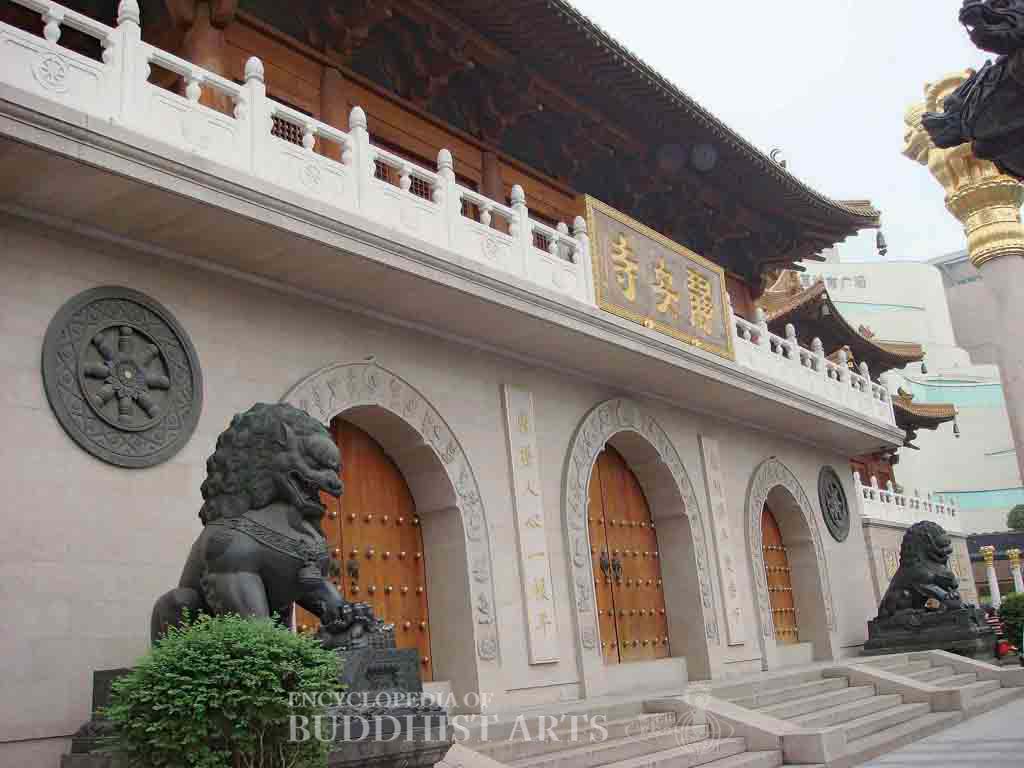
Jing’an Temple
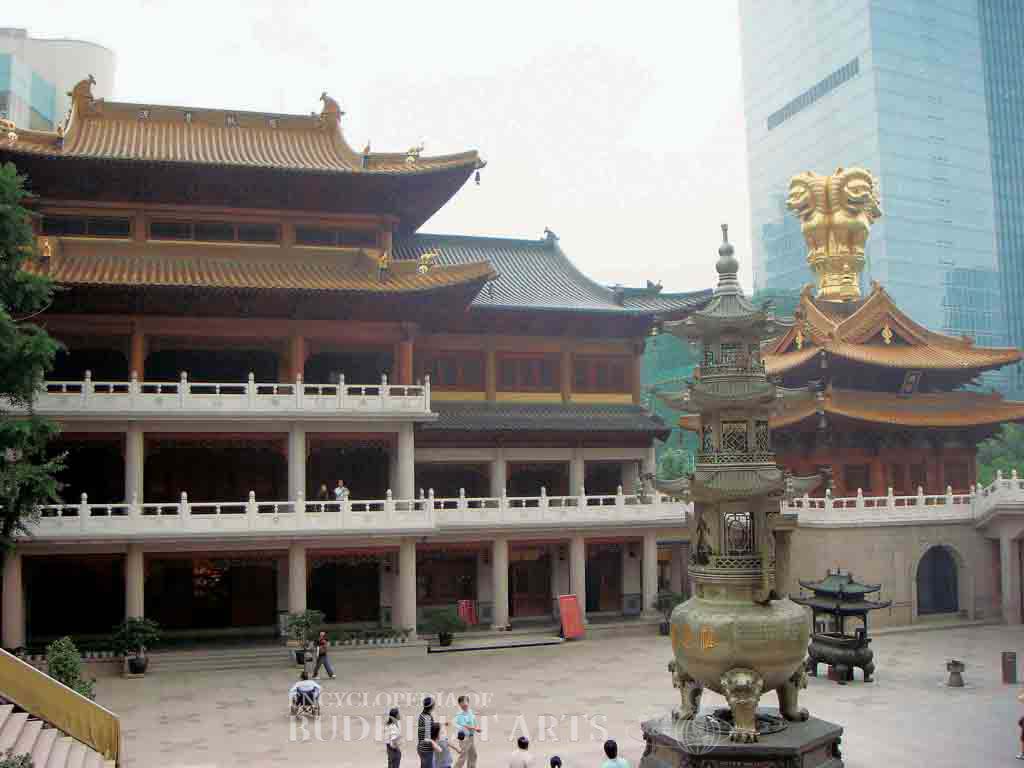
Jing’an Temple
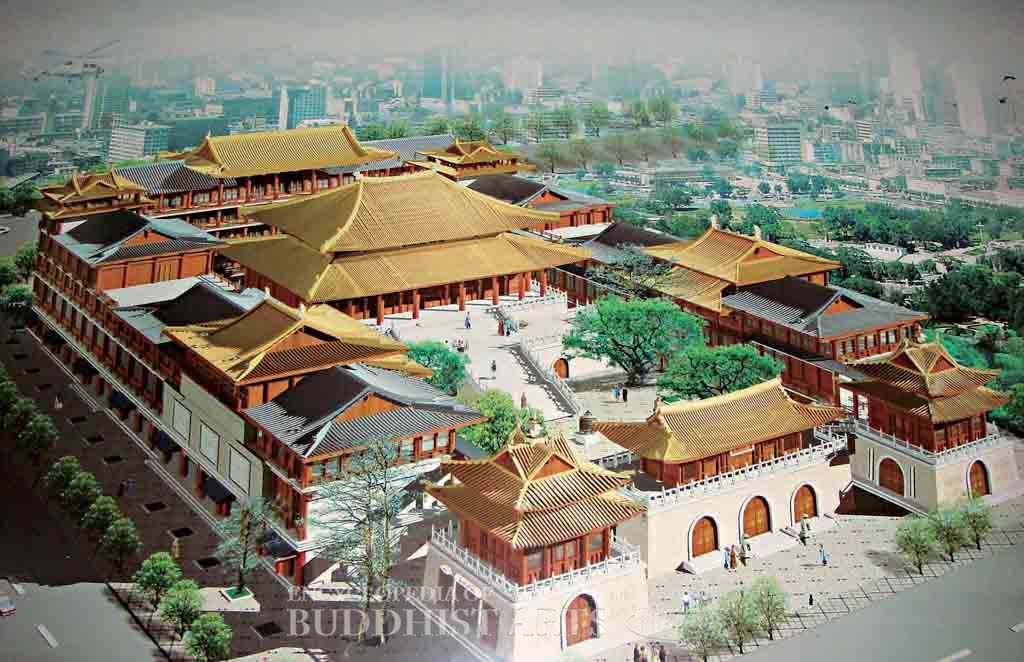
Jing’an Temple
Jing’an Temple
CHINA, Shanghai
Jing’an means Peace and Tranquility. According to stele inscriptions, the temple was founded in 247 during the Three Kingdoms Period. In 1216 during the Southern Song dynasty, the temple was forced to move to its current location due to the realignment of the Yangtze River. The temple has flourished and declined a number of times in its history. Major repair work was carried out during the rule of Emperor Guangxu (reigned 1875–1908) of the Qing dynasty. It was converted to a plastics factory during the Cultural Revolution and an extensive rebuilding program lasting many years was started in the 1980s. It was listed as a key Buddhist temple in the Han region of China in 1983.
The principal buildings are the main temple gate, Heavenly King Hall, Great Hero Hall, Hall of the Three Sages, abbot’s quarters, and the chanting hall. The Great Hero Hall has a double-eave hip-and-gable roof. A jade statue of Sakyamuni Buddha from Myanmar is enshrined within the hall. It is 3.9 m high, 2.6 m wide, and weighs 11 t. Along the sides there are statues of the Eighteen Arhats covered in gold leaf. In front of the Great Hero Hall there stands a large incense burner with a pavilion-style roof. The roof has three layers and steel bells hang from the eaves. The temple houses precious artifacts, such as a large bell from 1369 of the Ming dynasty, stone Buddha statues from the Southern and Northern Dynasties period (386–589), Buddhist canons from various dynasties, and calligraphy scrolls from famous scholars.
For more details, go to the Encyclopedia of Buddhist Arts: Architecture G-L, page 521.
Cite this article:
author = Hsingyun and Youheng and Johnson, Peter and Mankuang and Lancaster, Lewis,
booktitle = {Encyclopedia of Buddhist Arts: Architecture G-L},
pages = 521,
title = {{Jing’an Temple}},
volume = 2,
year = {2016}}