
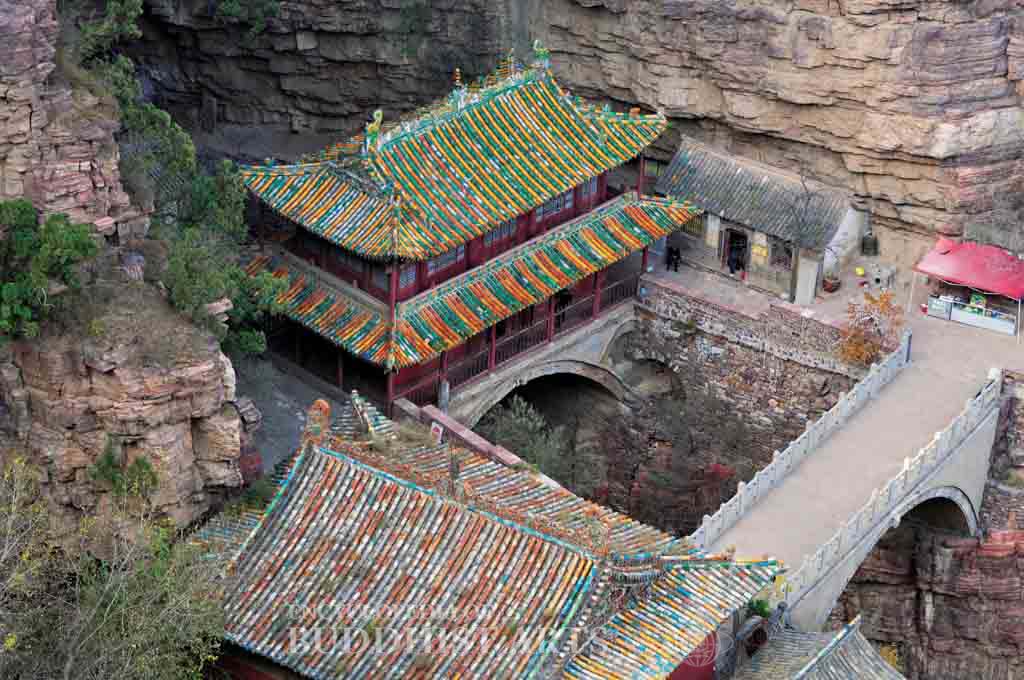
Fuqing Temple
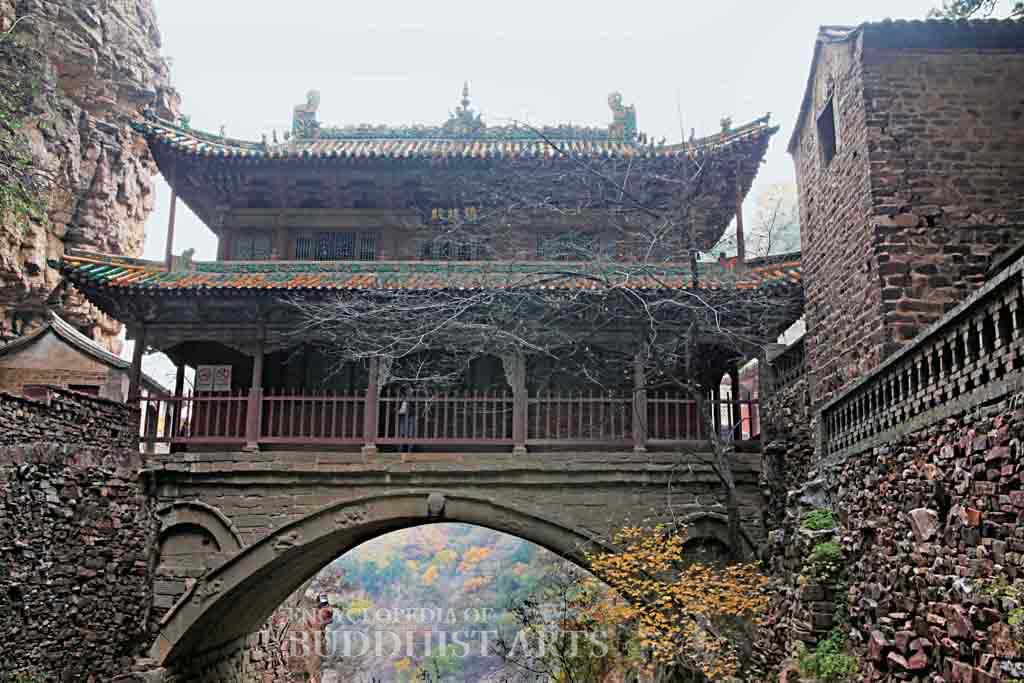
Fuqing Temple: Great Hero Hall
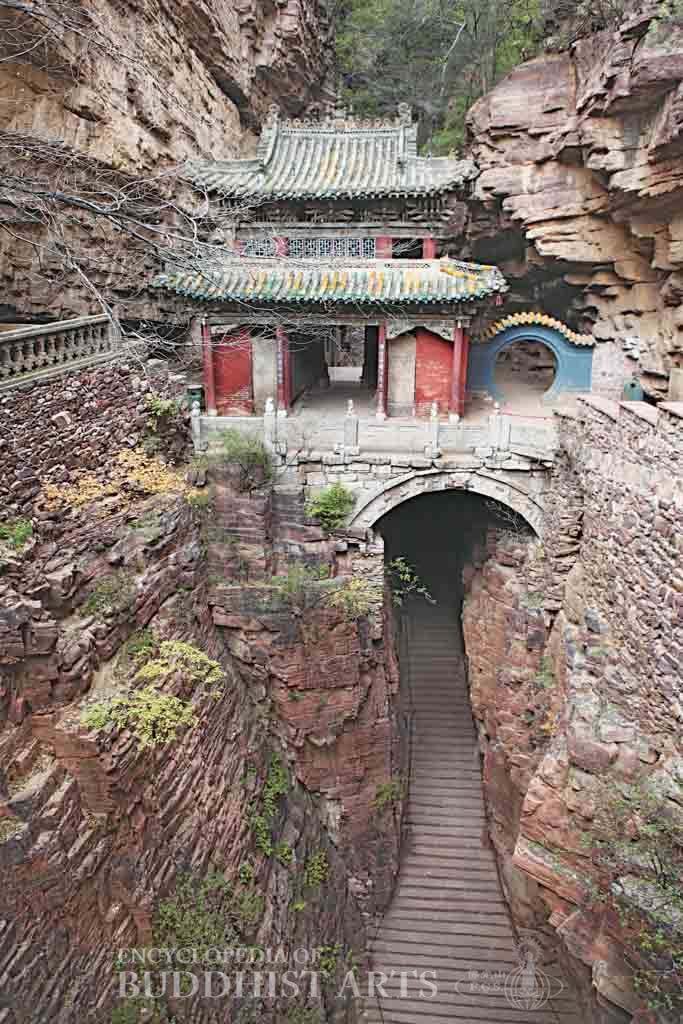
Fuqing Temple: Heavenly King Hall
Fuqing Temple
CHINA, Hebei, Shijiazhuang
Fuqing means Blessings and Celebration. Although the date of its construction is unknown, it is thought that Princess Miaoyang practiced Buddhism here during the rule of Emperor Wen (reigned 581–604) of the Sui dynasty. A number of repairs and renovations have been carried out at different times. The current buildings date to the Ming (1368–1644) and Qing (1644–1911) dynasties. It was listed as a National Cultural Heritage Site in 2006.
The principal buildings include the main temple gate, Heavenly King Hall, Great Hero Hall, Stele Pavilion, Great Buddha Hall, Perfect Enlightenment Hall, Lord Guan Shrine, Lingguan Shrine, Princess Shrine, Shuzhuang Building, and the Mahayana Lotus Sutra Pagoda. The main temple gate is a standalone wooden gateway built during the Qing dynasty. It has an overhanging gable roof and consists of a main building and a subsidiary building.
The five-by-three bay Great Hero Hall is the main hall and it is also called Bridge Hall. Facing east, the building rests upon a single-arch stone bridge, which is 15 m long and 9 m wide. The bridge is suspended between two cliffs. The hall has a double-eave hip-and-gable roof covered in orange and green glazed tiles. A veranda encircles the whole building. Inside there are seated statues of Sakyamuni Buddha, Medicine Buddha, and Vairocana Buddha, as well as the Eighteen Arhats. Murals from the late Qing dynasty can be found on the north and south walls.
The three-by-two bay Heavenly King Hall is also called the Small Bridge Hall. It is also located on a small stone bridge that is suspended between two cliffs. It has a double-eave hip-and-gable roof. According to the stele found there, both the bridge and building were built during the rule of Emperor Shizong (reigned 1161–1189) of the Jin dynasty.
The temple houses a stele from the Song dynasty (960–1279), and a sutra pillar from the Yuan dynasty (1271–1368).
For more details, go to the Encyclopedia of Buddhist Arts: Architecture A-F, page 346.
Cite this article:
author = Hsingyun and Youheng and Johnson, Peter and Mankuang and Lancaster, Lewis,
booktitle = {Encyclopedia of Buddhist Arts: Architecture A-F},
pages = 346,
title = {{Fuqing Temple}},
volume = 1,
year = {2016}}