
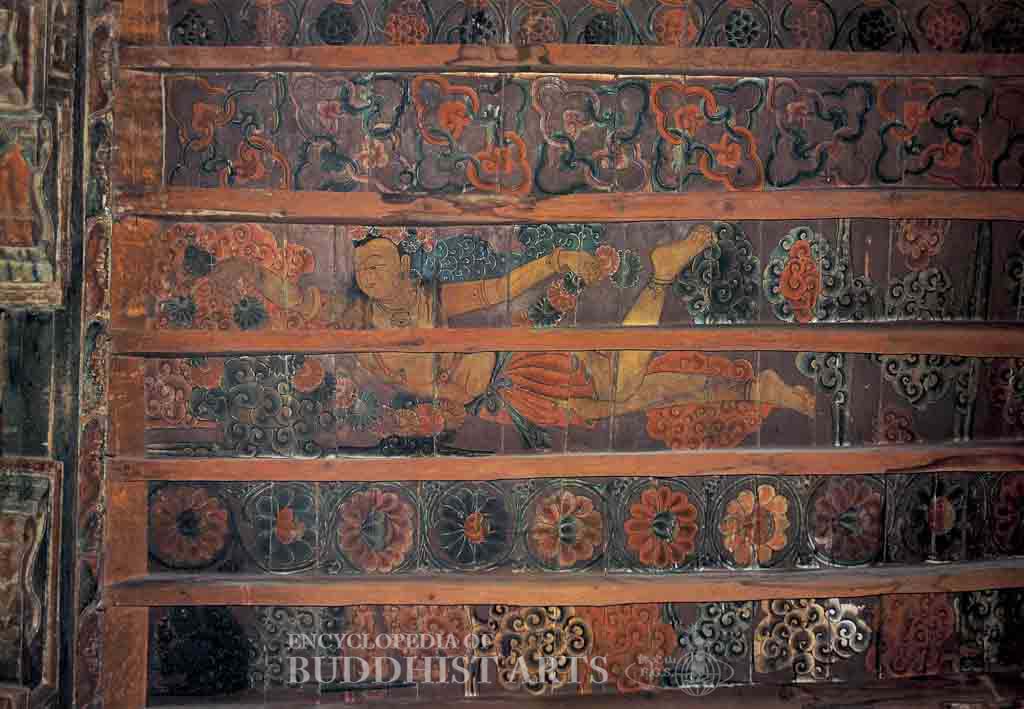
Toling Monastery Murals: Central Hall - Ceiling (detail)
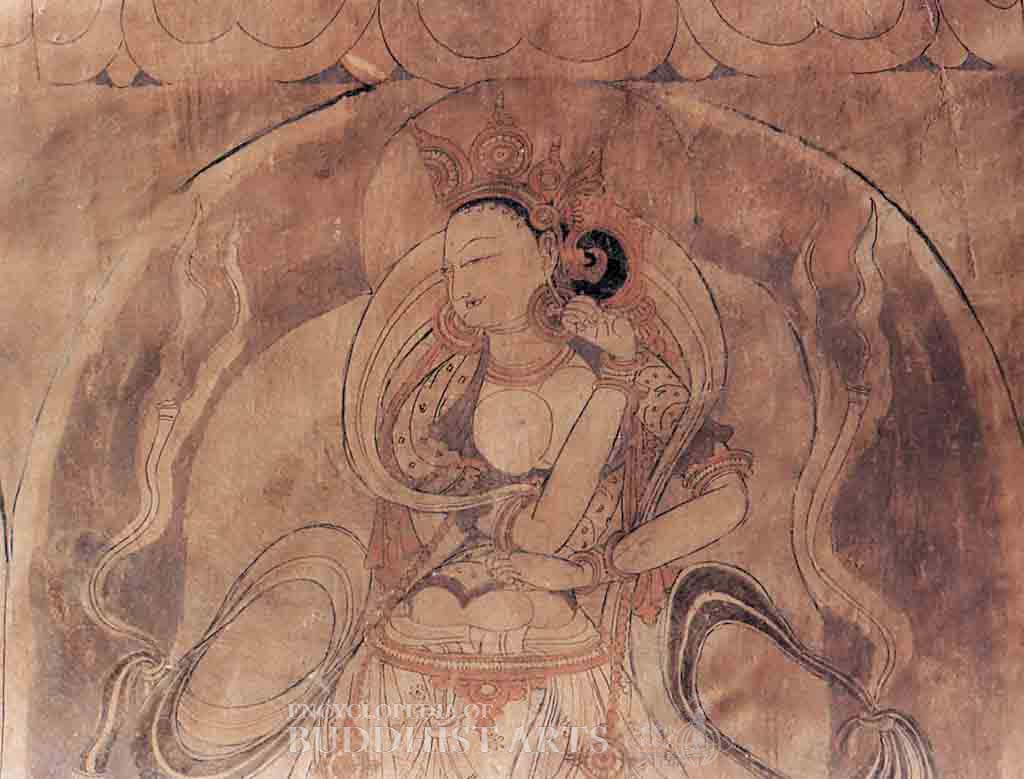
Toling Monastery Murals: Central Hall Entrance Hall - Vajranrti (detail) (east wall)
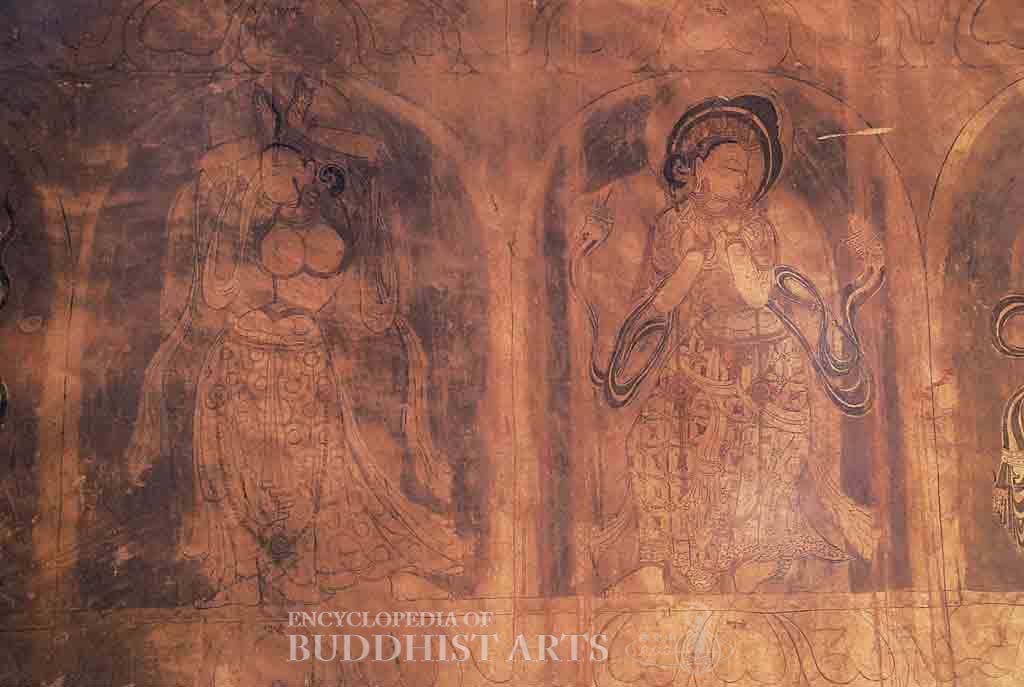
Toling Monastery Murals: Central Hall Entrance Hall - Vajranrti (east wall)
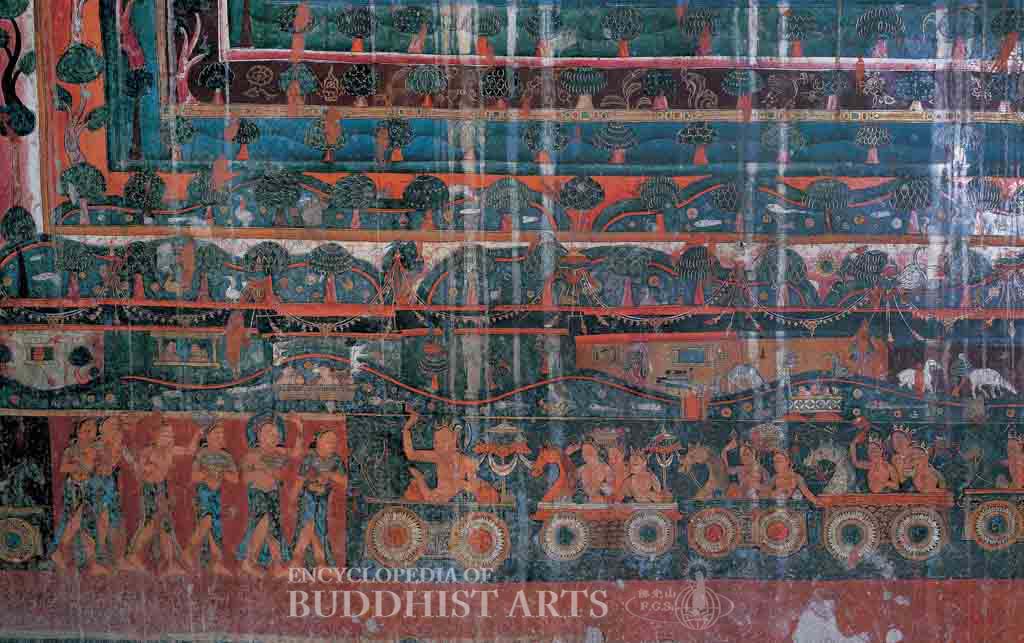
Toling Monastery Murals: White Hall - Life of the Buddha (detail)

Toling Monastery Murals: White Hall - Life of the Buddha (detail)
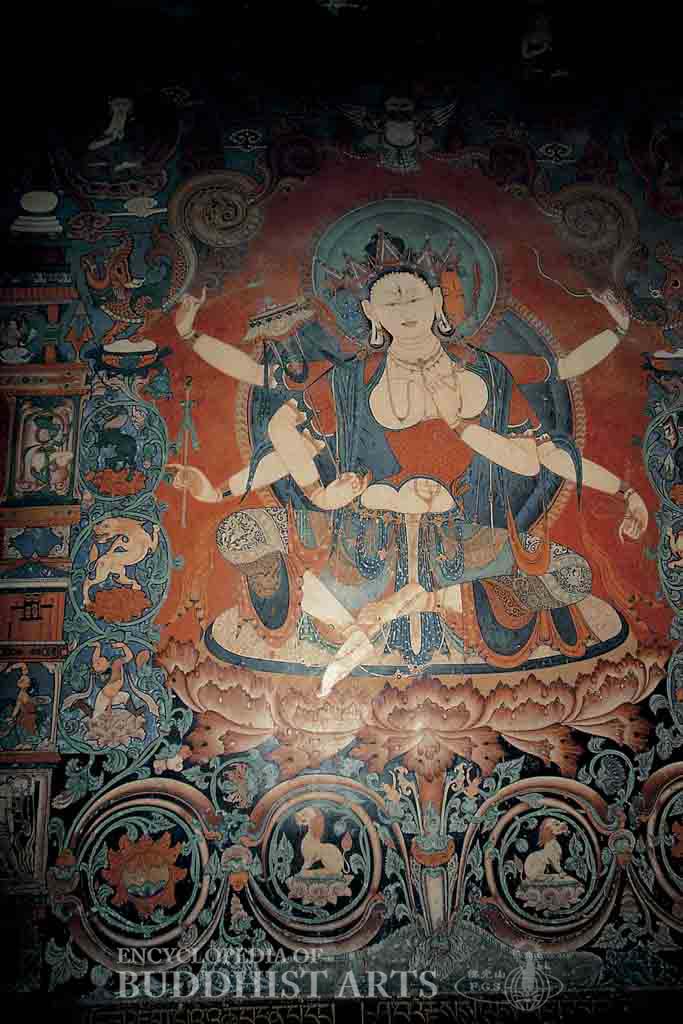
Toling Monastery Murals: White Hall - Usnisa Sitatapatra (east wall)
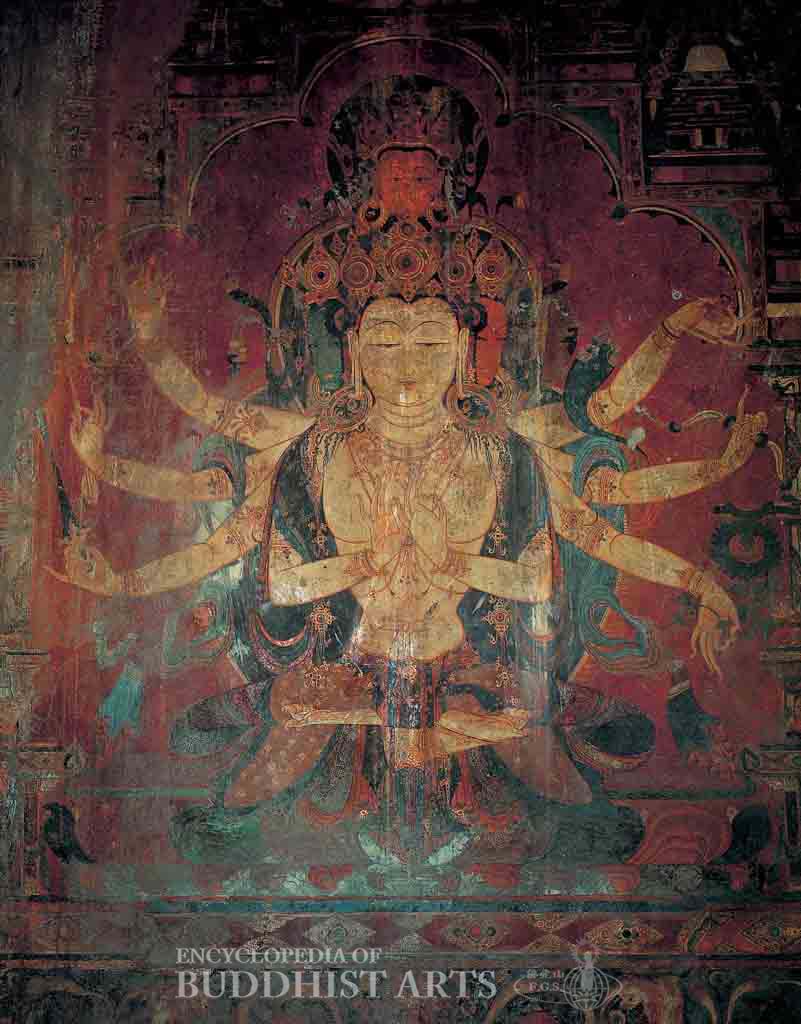
Toling Monastery Murals: Eight-Armed Tara
Toling Monastery Murals
CHINA, Tibet, Ngari; Guge Kingdom
Toling Monastery is located in the west of Tibet, 20 km from the ruins of the Guge Kingdom, on the south bank of the Sutlej River. It was constructed in 996 on the orders of the Guge king and Lama Yeshe O. The 15th century murals in the central hall, White Hall, and Protector Shrine of Toling Monastery represent a unique blend of the artistic styles of the Guge Kingdom and the Tibetan Empire. Although parts of the monastery are badly damaged, many murals are still well preserved.
The east-facing central hall is comprised of an entrance hall, an assembly hall, and an inner shrine. The interiors of these structures are completely covered with murals, including images of Buddhas, Bodhisattvas, heavenly beings, Naga Kings, the Naga Girl, and kalavinkas. The ceilings are decorated with depictions of apsaras, animals, and flora. A famous mural on the west wall of the inner shrine shows King Ode of the Guge Kingdom meeting with the great Indian Master Atisa. Scenes from the Life of the Buddha are painted in the lower register of the south wall of the inner shrine. Two rows of sixteen images of Vajranrti are painted to either side of the doorway on the front (east) wall of the entrance hall.
The ceiling of the south-facing White Hall is covered with images of lotuses, scrolling vines, and clouds. On the east wall, there are depictions of Parnasavari, Prajnaparamita, and Sarasvati, as well as lively scenes of the celebration for the opening of the monastery. A large mural of Vaisravana, Heavenly King of the North, and his retinue is painted on the left side of the front (south) wall. On the west wall, Vajrapani Bodhisattva is shown sitting on a throne below a niche topped with the open mouth of a serpent, a decorative feature rarely seen in the Tibetan region. There are also scenes from the Life of the Buddha, including the Return to Kapilavastu, flanking a central image of the Buddha teaching the Dharma.
For more details, go to the Encyclopedia of Buddhist Arts: Painting P-Z, page 924.
Cite this article:
author = Hsingyun and Youheng and Youlu and Wilson, Graham and Manho and Mankuang and Huntington, Susan,
booktitle = {Encyclopedia of Buddhist Arts: Painting P-Z},
pages = 924,
title = {{Toling Monastery Murals}},
volume = 16,
year = {2016}}