
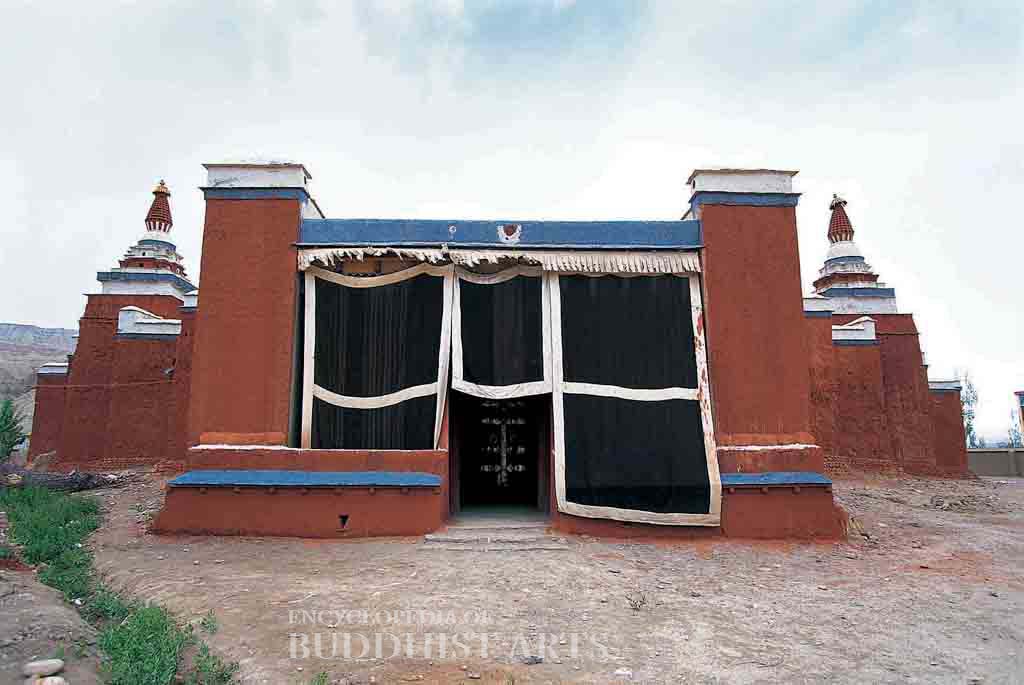
Toling Monastery: Mandala Shrine of Yeshe O
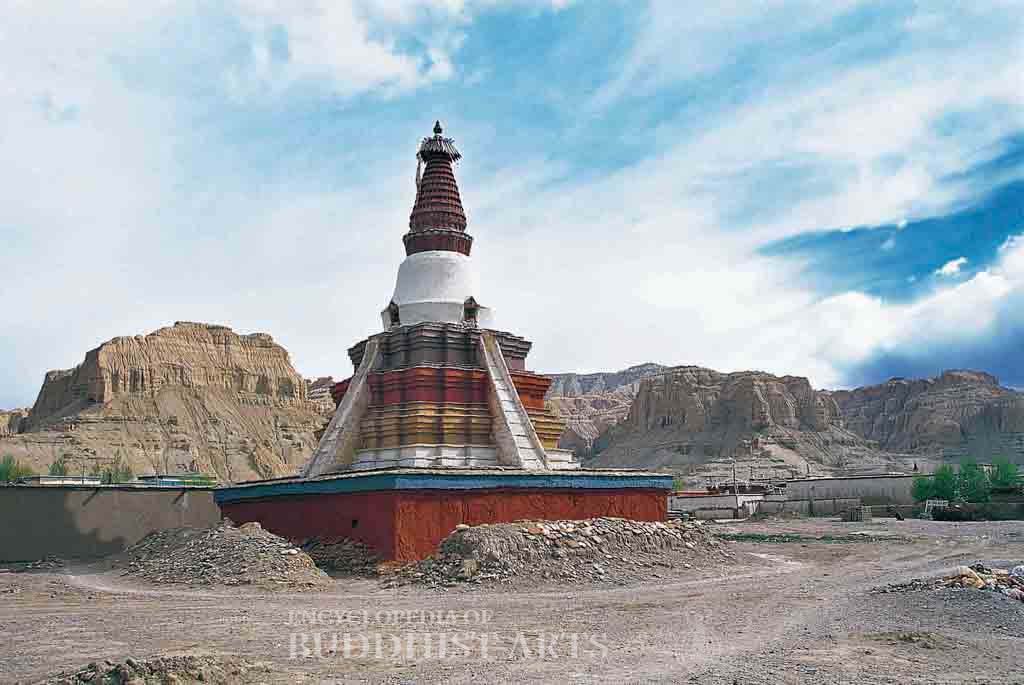
Toling Monastery: Stupa

Toling Monastery
Toling Monastery
CHINA, Tibet, Ngari
Toling means to Fly High and Never Fall. The monastery is situated in the far west of Tibet on the south bank of the Langchen Tsangpo, which is over 20 km east of the Guge Kingdom. Toling is the oldest Buddhist monastery in the Ngari region of Tibet. It was constructed in 996 by Yeshe O, a king and royal lama of the Guge Kingdom. It was at this monastery that Rinchen Sangpo translated sutras and instructed his disciples. In 1042, Atisa came to Tibet from India at the invitation of King Jangchub O and stayed at Toling Monastery for three years. In 1076, the Ceremony of the Fire Dragon Year was held under the sponsorship of King Tsede of the Guge Kingdom. Eminent monks from U-Tsang and Kham arrived at the monastery to participate in the ceremony. Toling Monastery was listed as a National Cultural Heritage Site in 1996.
The layout of the monastery is rectangular and consists of halls, monastic quarters, and a forest of stupas. The main buildings include the Mandala Shrine of Yeshe O, the White Hall, the central hall, also known as the Red Hall, and the Protector Shrine. The monastic quarters are situated on the south and north sides of the complex, while the forest of stupas is located in the north and northwest. The Mandala Shrine of Yeshe O stands in the west of the complex. It is square with multiple corners and consists of five central shrines, 18 surrounding shrines and a stupa at each of the four corners. Between the central and the surrounding shrines, there are open corridors. The five central shrines symbolize Mount Sumeru, while the surrounding shrines represent the continents. The stupas at the four corners symbolize the Four Heavenly Kings. There are four outer stupas which are generally intact and of great importance to the composition of the monastery complex.
The central hall is the best preserved building in the monastery. It consists of an entrance hall, an assembly hall, and an inner shrine. The murals of the central hall, White Hall, and Protector Shrine were painted after the 15th century and contained themes and styles that were greatly influenced by Tibetan traditions, but with distinctive Guge characteristics. They are unique among Tibetan murals in terms of their painting styles. There are Indian and Nepalese influences in the architecture, which is characteristic of architecture in western Tibet.
For more details, go to the Encyclopedia of Buddhist Arts: Architecture T-Z, page 1143.
Cite this article:
author = Hsingyun and Youheng and Johnson, Peter and Mankuang and Lancaster, Lewis,
booktitle = {Encyclopedia of Buddhist Arts: Architecture T-Z},
pages = 1143,
title = {{Toling Monastery}},
volume = 4,
year = {2016}}