
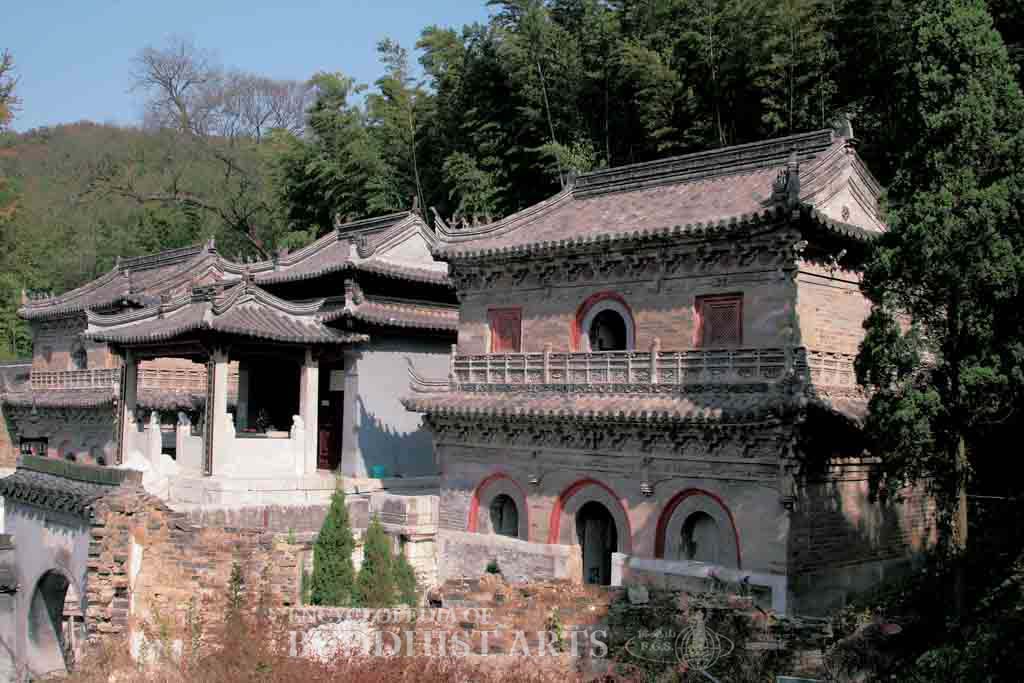
Longchang Temple: Beamless Hall and Copper Hall
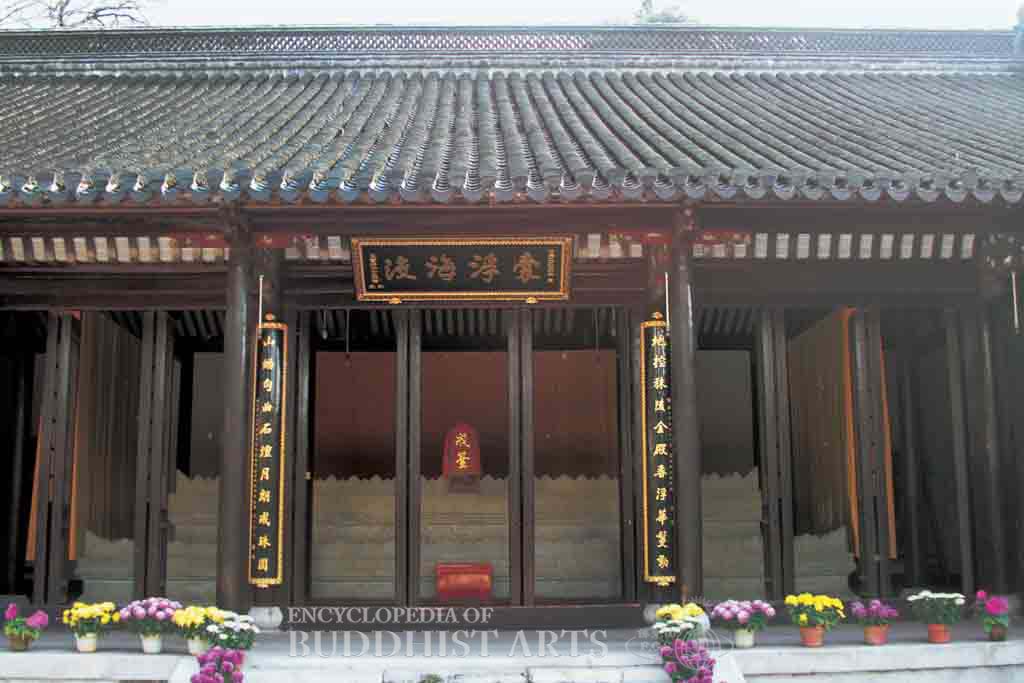
Longchang Temple: Ordination Hall
Longchang Temple
CHINA, Jiangsu, Zhenjiang
Longchang means Prosperity, and this temple is located on Baohuashan (Treasured Flower Mountain). It has always been known for its strict adherence to the Vinaya. Since the Qing dynasty (1644–1911), seventy percent of China’s monastics have been ordained here, giving it the reputation of the leading monastery of the Vinaya school. The temple was built in 502 during the Liang dynasty, and was expanded in 1605 during the Ming dynasty. The existing buildings date back to the Ming (1368–1644) and Qing dynasties. The temple was listed as a key Buddhist temple in the Han region of China in 1983.
The principal structures of the temple include the main temple gate, Great Hero Hall, Skanda Hall, Copper Hall, Beamless Halls, ordination hall, Great Compassion Building, and the Posadha Hall. The full name of the Copper Hall is Avalokitesvara Golden Hall; it was built in 1605 during the Ming dynasty. It is commonly known as the Copper Hall because it was originally built using copper. However, it is now a brick and timber structure with a single-eave hip-and-gable roof.
On either side of the Copper Hall there are the two Beamless Halls, which were built in 1605. The buildings are similar in size and are constructed from brick, utilizing arches with no supporting timber framework. From the outside the buildings appear to be three bays wide, but in reality they are only one bay wide, making them the smallest beamless halls from the Ming dynasty. They are two stories high with a door and two windows on each story. Both second stories are surrounded by balustrades that feature exquisitely carved square lattice panels. The five-bay wide Ordination Hall was originally constructed in timber, but was reconstructed in stone during the rule of Emperor Kangxi (reigned 1661–1722) of the Qing dynasty. The ordination platform is two tiers high and surrounded by lotus-shaped railings.
For more details, go to the Encyclopedia of Buddhist Arts: Architecture G-L, page 683.
Cite this article:
author = Hsingyun and Youheng and Johnson, Peter and Mankuang and Lancaster, Lewis,
booktitle = {Encyclopedia of Buddhist Arts: Architecture G-L},
pages = 683,
title = {{Longchang Temple}},
volume = 2,
year = {2016}}