
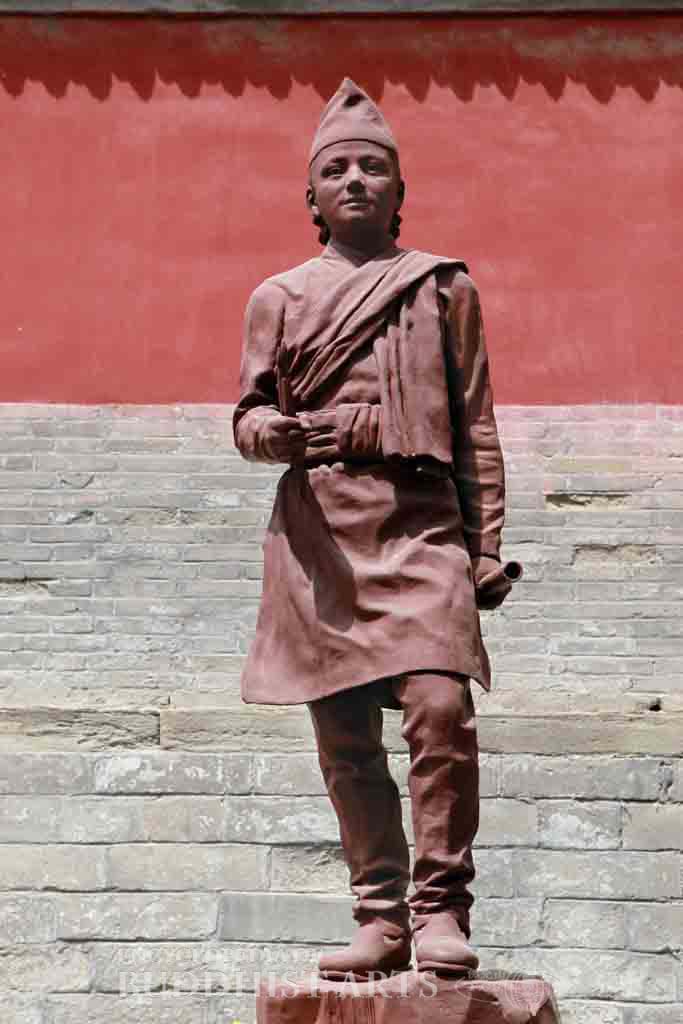
Araniko; Dated 2000
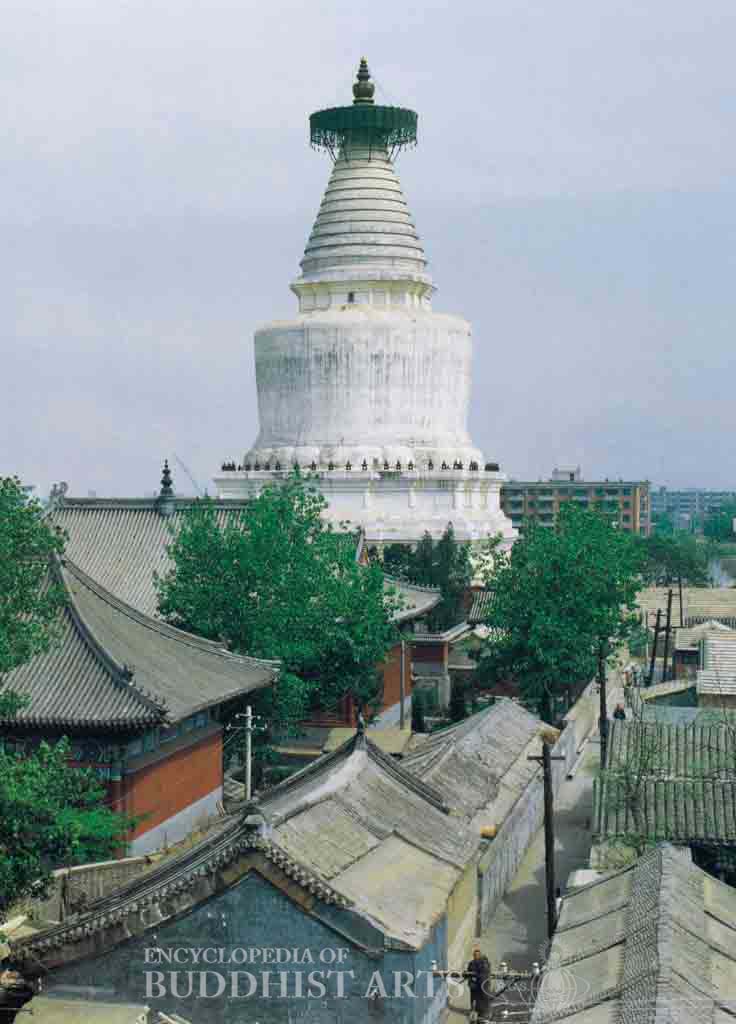
White Stupa designed by Araniko
Araniko
NEPAL; Yuan dynasty
Araniko, also known as Aniko or Anige, was a Nepalese sculptor, architect, and artisan. He was an imperial descendant of Nipala (present day Nepal) and showed talents in the arts and Buddhist practice at a young age. In 1260, the National Master, Phagpa, received an edict to build a golden pagoda in Sakya, Tibet, China. Over 80 artisans were chosen to participate in the project. Araniko, who was 17 years old at the time, volunteered to take the lead. A year later, after the pagoda was completed, Phagpa took him on as his disciple and suggested he work for the imperial court. After the successful completion of Kublai Khan’s (reigned 1260–1294) request of him to cast a bronze figure model for acupuncture practice, he was entrusted to work on more projects. He eventually went on to supervise all imperial artisans. In 1278, he was promoted to chancellor.
Throughout his career, Araniko oversaw the construction of many temples and pagodas, both Buddhist and Daoist. The most well-known is the White Stupa at Miaoying Temple in Beijing. Araniko was also skilled in casting Buddhist, Daoist, and Confucian figures and there are several hundred of his works surviving. Additionally, he produced various vessels and instruments for the court and painted portraits of the emperors and empresses. His integration of Chinese with Tibetan art contributed tremendously to the promotion of cultural exchange between China and Nepal. Among Araniko’s many outstanding disciples, his son Asanga and his pupil Liu Yuan obtained the essence of his skills and went on to become artisans in the imperial court.
For more details, go to the Encyclopedia of Buddhist Arts: People, page 2.
Cite this article:
author = Hsingyun and Youheng and Youlu and Pokorski, Stefanie and Yichao and Mankuang and Miaohsi,
booktitle = {Encyclopedia of Buddhist Arts: People },
pages = 2,
title = {{Araniko}},
volume = 19,
year = {2016}}