

Bich Dong Temple: Main Gate
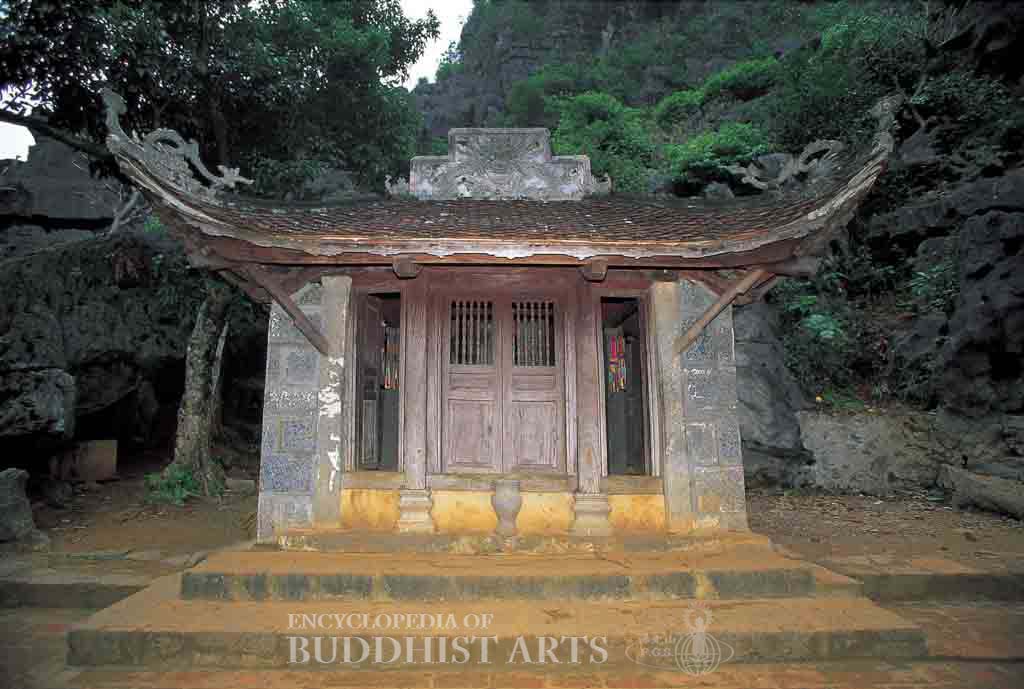
Bich Dong Temple: Upper Hall
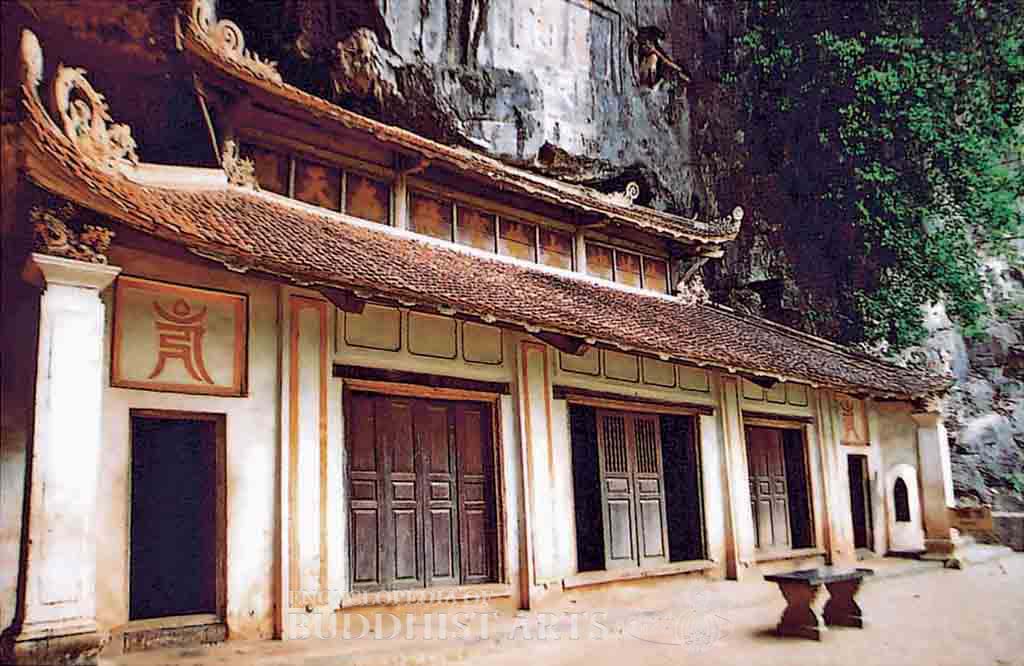
Bich Dong Temple: Middle Hall
Bich Dong Temple
VIETNAM, Ninh Binh, Gia Vien
Bich Dong means Green Cave. Built during the Later Le dynasty (1428–1527, 1533–1789), the temple has been preserved in good condition. In 1773, Nguyen Nghiem, the father of the poet Nguyen Du, visited the location and, touched by the beauty of the scenery, gave it its present name. It is listed as a National Cultural Heritage Site.
The temple consists of the main gate, lower hall, middle hall, and upper hall. The three buildings are wooden and are built on the steep slope of the limestone mountain. The lower hall is a double-eave structure. The five-bay wide middle hall, which functions as the main hall, has a double-eave hip-and-gable roof. It houses a statue of Sakyamuni Buddha. The characters “Bich Dong” are carved on the cliff above the middle temple. The three-bay wide upper hall has a single-eave roof. It is dedicated to Avalokitesvara Bodhisattva. The temple contains a stone stele with a record of the temple’s abbots.
For more details, go to the Encyclopedia of Buddhist Arts: Architecture A-F, page 80.
Cite this article:
author = Hsingyun and Youheng and Johnson, Peter and Mankuang and Lancaster, Lewis,
booktitle = {Encyclopedia of Buddhist Arts: Architecture A-F},
pages = 80,
title = {{Bich Dong Temple}},
volume = 1,
year = {2016}}